Influence of Ball Milling on CaO Crystal Growth During Limestone and Dolomite Calcination: Effect on CO2 Capture at Calcium Looping Conditions

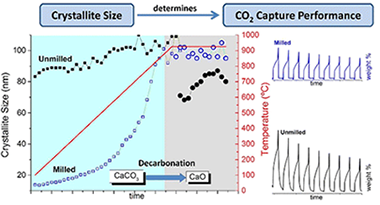
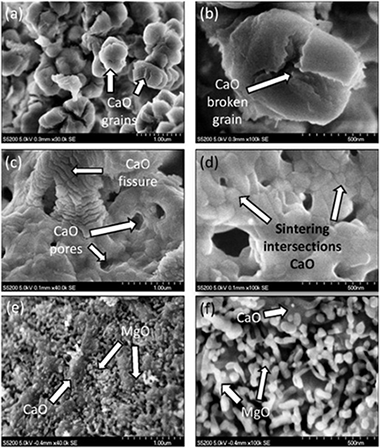
Under Calcium-Looping “realistic” operation conditions (high CO2 concentration and temperature), the multicycle CO2 capture capacity performance of CaO derived from limestone and dolomite is inversely related to its crystallite size. Ball-milling the raw sorbents results in the formation of larger nascent CaO nanocrystals during the calcination. Constraint sintering effect due to inert compounds such as dolomitic…

Combined TGA-MS kinetic analysis of multistep processes. Thermal decomposition and ceramification of polysilazane and polysiloxane preceramic polymers

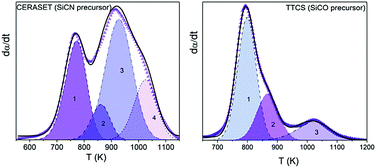
The polymer-to-ceramic transformation kinetics of two widely employed ceramic precursors, 1,3,5,7-tetramethyl-1,3,5,7-tetravinylcyclotetrasiloxane (TTCS) and polyureamethylvinylsilazane (CERASET), have been investigated using coupled thermogravimetry and mass spectrometry (TG-MS), Raman, XRD and FTIR. The thermally induced decomposition of the pre-ceramic polymer is the critical step in the synthesis of polymer derived ceramics (PDCs) and accurate kinetic modeling is key…

Enhanced carbon nanotube dispersion in 3YTZP/SWNTs composites and its effect on room temperature mechanical and electrical properties

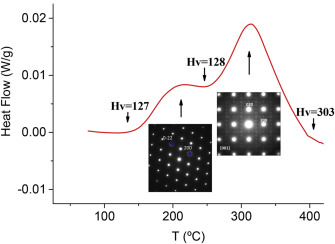
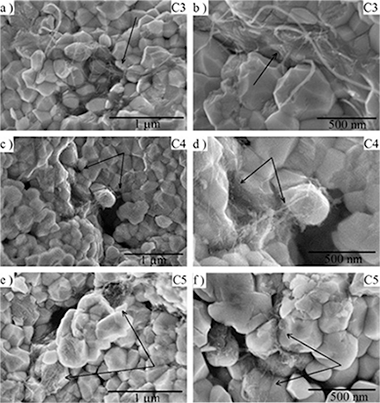
In this work, several modifications of the colloidal processing technique and spark plasma sintering (SPS) to prepare yttria tetragonal zirconia composites (YTZP) with single walled carbon nanotubes (SWNT) have been tested with the aim of eliminating SWNT agglomerates. These modifications include high versus low energy ultrasonic agitation during colloidal processing, lyophilization of the 3YTZP/SWNT slurry…

Magnesium hydride for energy storage applications: The kinetics of dehydrogenation under different working conditions

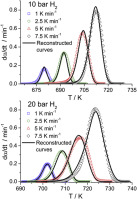
A new approach to the kinetics of magnesium hydride dehydrogenation is considered. A model able to predict the dehydrogenation under different experimental conditions has been proposed. A new combined kinetic analysis method, which considers the thermodynamic of the process according to the microreversibility principle, has been used for performing the kinetic analysis of data obtained…

On the relevant role of solids residence time on their CO2 capture performance in the Calcium Looping technology

The multicycle CO2 capture performance of CaO derived from natural limestone and dolomite has been investigated by means of thermogravimetry under realistic Calcium-Looping conditions, which necessarily involve high CO2 concentration and high temperatures in the calcination stage and fast transitions between the carbonation and calcination stages. Natural dolomite allows reducing the calcination temperature as compared…

On the Multicycle Activity of Natural Limestone/Dolomite for Thermochemical Energy Storage of Concentrated Solar Power

Cheap, efficient, and non-toxic energy storage technologies are urgently needed to handle the rapidly increasing penetration of intermittent renewable energies into the grid. This work explores the use of limestone and dolomite for energy storage in concentrated solar power (CSP) plants by means of the calcium looping (CaL) process based on the multicycle carbonation/calcination of…

Constant rate thermal analysis of a dehydrogenation reaction

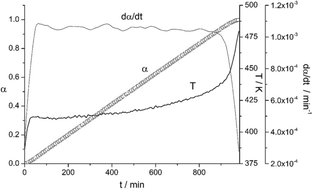
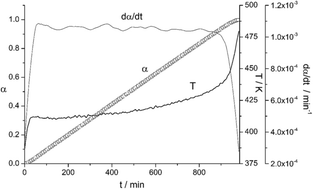
The Constant Rate Thermal Analysis (CRTA) procedure has been employed for the first time to study the kinetics of MgH2 dehydrogenation by thermogravimetry under high vacuum. CRTA implies controlling the temperature in such a way that the decomposition rate is maintained constant all over the process, employing the mass change as the experimental signal proportional to…