Design of highly stabilized nanocomposite inks based on biodegradable polymer-matrix and gold nanoparticles for Inkjet Printing

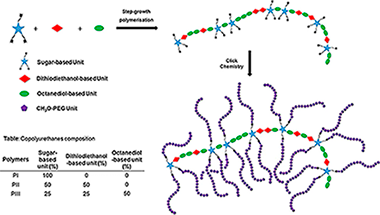
Nowadays there is a worldwide growing interest in the Inkjet Printing technology owing to its potentially high levels of geometrical complexity, personalization and resolution. There is also social concern about usage, disposal and accumulation of plastic materials. In this work, it is shown that sugar-based biodegradable polyurethane polymers exhibit outstanding properties as polymer-matrix for gold…

The Calcium-Looping (CaCO3/CaO) process for thermochemical energy storage in Concentrating Solar Power plants

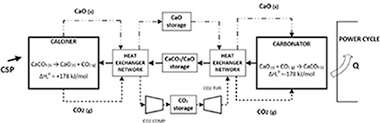
Energy storage based on thermochemical systems is gaining momentum as a potential alternative to molten salts in Concentrating Solar Power (CSP) plants. This work is a detailed review about the promising integration of a CaCO3/CaO based system, the so-called Calcium-Looping (CaL) process, in CSP plants with tower technology. The CaL process relies on low cost,…

Influence of pre-deformation on the precipitation hardening in Cu-Ni-Si alloy

The effects of pre-deformation on the precipitation processes in a Cu-2.8 Ni-1.4 Si (at.%) alloy were studied using differential scanning calorimetric (DSC), transmission electron microscopy (TEM) and microhardness measurements. The calorimetric curves shows the presence of one exothermic reaction attributed to the formation of delta-Ni2Si precipitates in the copper matrix that was confirmed by TEM.…

The influence of mechanical activation process on the microstructure and mechanical properties of bulk Ti2AlN MAX phase obtained by reactive hot pressing

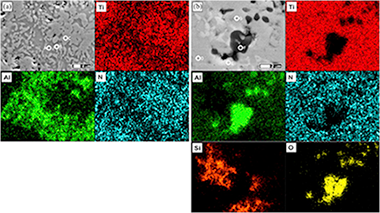
The effect of mechanical activation process on the microstructure and mechanical properties of bulk nanostructured Ti2AlN compound has been investigated in this work. The mixture of Ti and AlN powders was prepared in a 2:1 molar ratio, and a part of this powder was subjected to a high-energy milling process under argon atmosphere for 10…

Mechanically induced combustion synthesis and thermoelectric properties of nanostructured strontium hexaboride (SrB6)

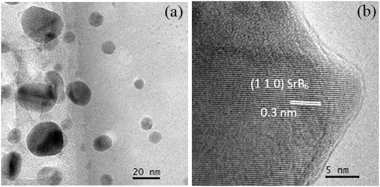
The nanoparticles of strontium hexaboride (SrB6) were synthesized by a mechanically induced magnesiothermic combustion in the Mg/B2O3/SrO system. Ignition time in this system was recorded to be 23 min of milling. X-ray diffraction(XRD), X-ray photoelectron spectroscopy (XPS), and high-resolution transmission electron microscopy (HRTEM) techniques were used to characterize the combustion product. Thermal analysis was employed to assess the formation mechanism. It was revealed that Mg initially reduced…

Effects of Boron Addition on the Microstructure and Mechanical Properties of (Ti,Ta)(C,N)-Co Based Cermets

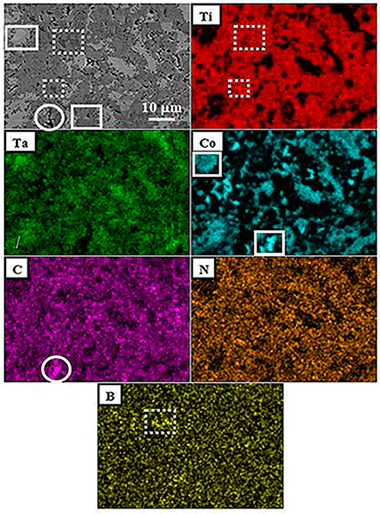
In this work, a titanium-tantalum carbonitride based cermet, with cobalt as the binder phase and boron as a sintering additive, was developed by a mechanically induced self-sustaining reaction process using two different methodologies. The boron additive was added to prevent the formation of brittle intermetallic compounds generally formed during the liquid phase sintering step due…

Manufacturing optimisation of an original nanostructured (beta plus gamma)-TiNbTa material

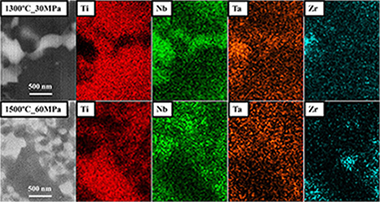
An original (beta + gamma)-TiNbTa material was manufactured by an optimised powder metallurgy treatment, based on a mechanical alloying (MA) synthesis, carried out at low energy, and a subsequently field assisted consolidation technique, the pulsed electric current sintering (PECS). The successful development of this (beta + gamma)-TiNbTa material was possible by the optimisation of the…

Effect of heat treatment on apatite coatings deposited on pre-calcified titanium substrates

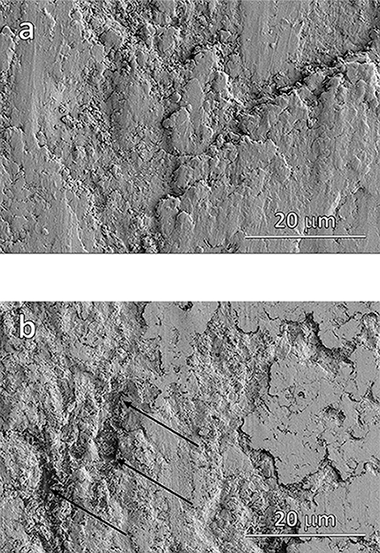
Titanium and its alloys are considered interesting materials for endosseous implants. However, they still present drawbacks related to their in-vivo behavior that can be overcome by coatings, such as apatite. This work focuses on the deposition of apatite coatings on commercially pure titanium (grade II) substrates previously pre-calcified. The influence of the temperature used in…