Analysis of conductivity in 8YSZ ceramics during AC-flash processes: A two-barrier ionic transport model approach

This work offers a systematic study of the electrical conductivity in dense 8 mol% yttria-stabilized zirconia (8YSZ) during non-isothermal and isothermal AC-flash conditions under a fixed applied voltage. Conductivity data were interpreted using a two-barrier ionic transport model which is able to capture the non-Arrhenius behavior commonly found for 8YSZ. The analysis of the conductivity…

Synergistic enhancement of hydraulic endodontic cement via zinc-enriched mesoporous bioactive glass integration

Objective: To develop an innovative hydraulic bioceramic (HB) formulation by incorporating zinc-functionalized mesoporous bioactive glass (MBG-Zn) into a commercial calcium silicate-based cement (ProRoot MTA White), aiming to enhance bioactivity, accelerate setting kinetics, and improve clinical performance. Methods: A modified cement (MTA-MBG-Zn) was processed by blending MTA with 15 wt% MBG-7.5Zn. The physicochemical properties, including crystalline…

Persistent Nanophosphors: Poised to Outperform Bulk Counterparts?

The design of advanced materials often reveals how apparent imperfections, such as structural defects or impurities, can be transformed into functional advantages. In insulating oxide matrices, the controlled introduction of dopant ions is the first step toward efficient photoluminescence. Later, the engineering of additional defects, often detrimental for photoluminescence, gives rise to unique capabilities for…

Histological Tissue Response to Calcium Silicate-Based Cements Assessed in Human Tooth Culture Models: A Systematic Review

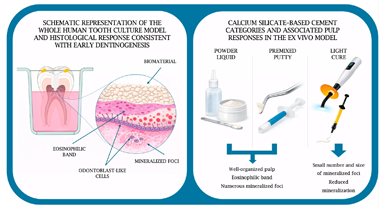
Ex vivo human tooth culture models preserve the native dentine-pulp complex and offer a translational platform to study pulp-capping biomaterials. This systematic review aimed to synthesize the evidence on histological pulp tissue responses to calcium silicate-based cement (CSCs) used for direct pulp capping in human tooth culture models. The review followed PRISMA 2020 guidance. Eligible…

Unveiling of Unpaired Surface Spins Regulated Magnetism in 2D α-Te Nanosheets: an Implication on Magnetoelectric Driven Hydrogen Evolution

Quasi-2D tellurium (Te) unlocks surface spins (of valence 5p4 electrons) of tunable ferromagnetic order and response to strain-engineered electronic properties of widespread applications. In spin-orbit coupling, the inversion symmetry is broken in a 1S0 -> 3S1 spin-transition of the ground electronic state, a synergetic pathway to charge spin-order under applied driving forces. The surface magnetism,…

Acoustic Wave-Powered Durable Icephobic Duplex Coating Design with Superior Deicing Performance

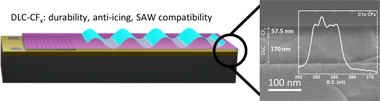
Piezoelectric thin film-based surface acoustic wave (SAW) deicing technology has recently emerged as an attractive and energy-efficient alternative with direct applications across multiple industrial sectors. However, the generation of SAWs on piezoelectric thin films, such as ZnO, faces diverse challenges, including its low long-term stability and variable wetting properties upon exposure to UV radiation and…

Efficient one-pot synthesis of ruthenium catalysts and their role in optimizing sugar alcohol production: Investigating structural sensitivity

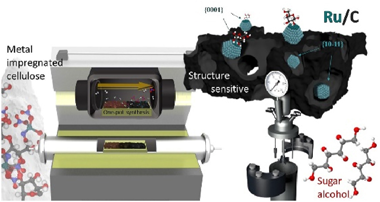
The study explores the feasibility of producing ruthenium catalysts supported on char through a one-pot synthesis, an original approach for the preparation of noble metal-based catalysts in this field. This method combines hightemperature stages, such as catalytic support carburization and catalyst activation, in a single step. The innovation represents a significant advancement in utilizing cellulose…

Engineering TNZT-coated titanium scaffolds via additive manufacturing and magnetron sputtering for bone tissue replacement

The biomechanical behavior and corrosion phenomena of porous metallic implants can compromise their clinical success. This work proposes modifying the surface of c.p. titanium scaffolds manufactured by 3D-printing (Direct Ink Writing), depositing a thin film of a beta-Ti alloy (Ti-35Nb-7Zr-5Ta) using the High-Power Impulse Magnetron Sputtering (HiPIMS) technique. The versatility of this technique has enabled…

Water-resistant hybrid perovskite solar cell – drop triboelectric energy harvester

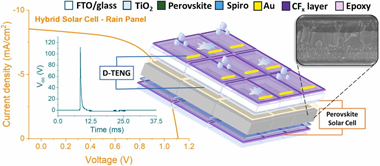
Hybrid energy-harvesting systems that combine perovskite solar cells (PSCs) with drop-driven triboelectric nanogenerators (D-TENGs) offer a compelling solution for continuous power generation under diverse weather conditions. Yet, the inherent vulnerability of halide perovskites to moisture and environmental stressors remains a critical barrier to their widespread deployment. To overcome this bottleneck, we introduce plasma-deposited fluorinated polymers…

Impurity-induced formation of Ti1-XZrXB2 solid solution ceramics during combined SHS-SPS sintering

Combination of self-propagating high-temperature synthesis (SHS) from Ti + B powder mixture followed by spark plasma sintering (SPS) is introduced for the fabrication of titanium diboride. Oxide impurities, including zirconium oxide and titanium oxide, are identified in the synthesized powders: the first one coming from the milling process after SHS to minimize agglomeration and the…