


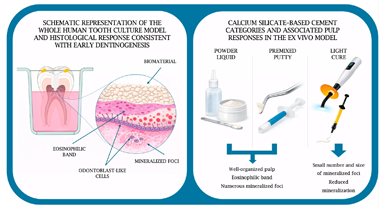
Ex vivo human tooth culture models preserve the native dentine-pulp complex and offer a translational platform to study pulp-capping biomaterials. This systematic review aimed to synthesize the evidence on histological pulp tissue responses to calcium silicate-based cement (CSCs) used for direct pulp capping in human tooth culture models. The review followed PRISMA 2020 guidance. Eligible studies were ex vivo whole human tooth culture models with direct pulp exposure treated with commercial or experimental CSCs and reporting histological outcomes. Risk of bias was assessed using the QUIN tool. Thirteen studies were included. Most used immature human third molars (from 15- to 19-year-old patients) and culture periods up to 28 days, with a minority extending observation to 45-90 days. Across hydraulic CSCs, Biodentine was the most frequently evaluated material, followed by ProRoot MTA and several experimental hydraulic and resin-modified formulations. Overall, hydraulic CSCs were consistently associated with biocompatible pulp responses and a pro-mineralization pattern characterized by periexposure mineralized foci/osteodentin-like tissue; where assessed, immunohistochemistry supported odontoblast-like differentiation. In contrast, the resin-modified CSC TheraCal LC and other experimental resin-modified CSCs showed more heterogeneous findings, with reports of absent, delayed, or less prominent mineralization compared with reference hydraulic CSCs. In intact human tooth culture models, hydraulic CSCs show reproducible biocompatibility and early mineralization features consistent with reparative dentinogenesis, whereas resin-modified CSCs demonstrate more variable histological performance.