Comparative investigation of TiAlC(N), TiCrAlC(N), and CrAlC(N) coatings deposited by sputtering of МАХ-phase Ti2 − хCrхAlC targets

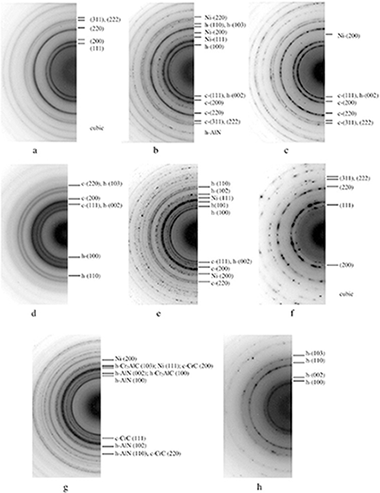
A comparative investigation of the structure and properties of TiAlC(N), TiCrAlC(N), and CrAlC(N) coatings deposited by sputtering of МАХ-phase Ti2 − хCrхAlC targets (where x = 0, 0.5, 1.5, and 2) in an Ar atmosphere or in a gaseous mixture of Ar + N2 is presented. The coatings were characterized in terms of their structure,…

Structural characteristics and morphology of SmxCe1−xO2−x/2 thin films

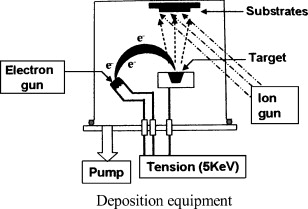
Effect of the deposition temperature (200 and 500 °C) and composition of SmxCe1−xO2−x/2 (x = 0, 10.9–15.9 mol%) thin films prepared by electron beam physical vapor deposition (EB-PVD) and Ar+ ion beam assisted deposition (IBAD) combined with EB-PVD on structural characteristics and morphology/microstructure was investigated. The X-ray photoelectron spectroscopy (XPS) of the surface and electron…

Chemical and electronic interface structure of spray pyrolysis deposited undoped and Al-doped ZnO thin films on a commercial Cz-Si solar cell substrate

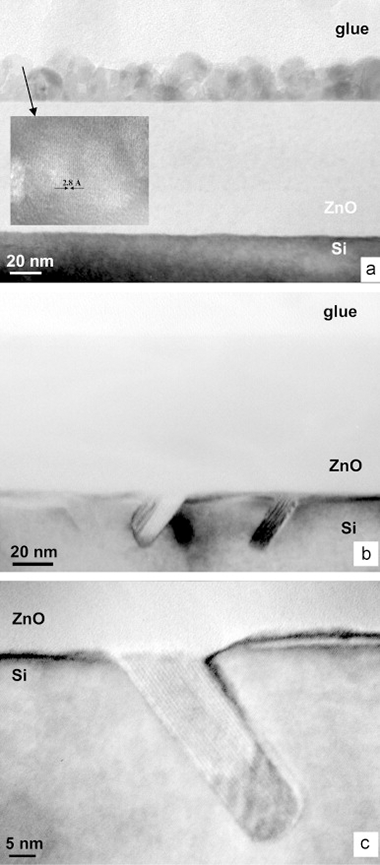
We have studied differences in the interface between undoped and Al-doped ZnO thin films deposited on commercial Si solar cell substrates. The undoped ZnO film is significantly thicker than the Al-doped film for the same deposition time. An extended silicate-like interface is present in both samples. Transmission electron microscopy (TEM) and photoelectron spectroscopy (PES) probe…

Identification of hydrogen and deuterium at the surface of water ice by reflection electron energy loss spectroscopy

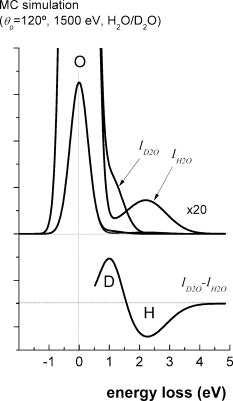
A nondestructive method to distinguish between hydrogen (H) and deuterium (D) at surfaces by reflection electron energy loss spectroscopy is presented. It is based on the analysis of the energy distributions of electrons elastically backscattered from surfaces containing H or D. We consider standard and deuterated water ices as test surfaces. The recoil energy of…

High surface area α-alumina preparation by using urban waste

A new method for preparing high surface area α-alumina from urban waste is proposed. The method consists of the precipitation of a precursor that contains bohemite mixed with a linear polymer and subsequently the thermal decomposition of the precursor by heating in nitrogen and air to 1200 °C. The resulting α-alumina consists of nanocrystals of…

Synthesis by pyrolysis of aerosols and ceramic application of Cr-doped CaYAlO4 red–orange pigments

The synthesis of red–orange Cr-doped YCaAlO4 pigments has been improved (softer thermal conditions and lower environmental impact) and optimised by using the pyrolysis of aerosols method. We also study the crystallochemical features of the Cr chromophore with special emphasis on its oxidation state which has not been yet clarified, finding that Cr(III) and Cr(IV) species…

Influence of sulfur on the structural, surface properties and photocatalytic activity of sulfated TiO2

TiO2 materials were prepared by sol–gel method and then impregnated with sulfuric acid and calcined using different temperatures and atmosphere (air and nitrogen). Systematic variation of these two experimental parameters makes possible to modulate the amount of surface sulfur from the impregnation procedure. The best photocatalyst for liquid phenol degradation was obtained after calcination at…

Mineralogical stability of phyllosilicates in hyperalkaline fluids: Influence of layer nature, octahedral occupation and presence of tetrahedral Al

Mineralogical changes in a set of phyllosilicates, differing in their layer nature, chemical composition, octahedral character, and Al content of the tetrahedral sheet, were analyzed after hydrothermal reaction in an alkaline solution. The composition of the alkaline solution was selected to simulate the first stage of cement degradation [NaOH-KOH-Ca(OH)2]. The reaction products have been analyzed…

Aluminium anodisation for Au-CeO2/Al2O3-Al monoliths preparation

The anodisation of aluminium monoliths was performed in order to generate an alumina layer that ensures a good adherence of the catalysts. In this study, it is demonstrated that the morphology of the produced alumina layer depends on time, temperature, current density and concentration of the selected electrolyte. When anodisation process with the extreme conditions…