Liquid-phase sintering of Ti(C,N)-based cermets. The effects of binder nature and content on the solubility and wettability of hard ceramic phases

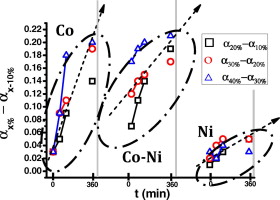
Different commercial TiC–TiN/Co/Ni mixtures were used as raw materials for Ti(C,N) cermets, and the effects of the sintering parameters (binder content, binder nature, sintering time and additives) on the final hard ceramic phase were studied at the sintering temperature of 1400 °C. When Co is used as the binder medium, it is possible to completely…

Electrical Properties of Stoichiometric BiFeO3 Prepared by Mechanosynthesis with Either Conventional or Spark Plasma Sintering

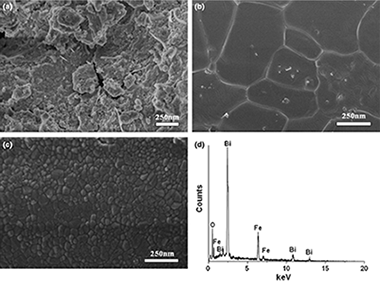
Phase-pure powders of stoichiometric BiFeO3 have been prepared by mechanosynthesis. Ceramics sintered by either conventional heating in air or spark plasma sintering (SPS) followed by oxidative anneal in air are highly insulating at room temperature with resistivity, extrapolated from the Arrhenius plots, of ~1016 Ωcm and activation energy 1.15(2) eV, comparable with those of a…

Cystine-capped CdSe@ZnS nanocomposites: mechanochemical synthesis, properties, and the role of capping agent

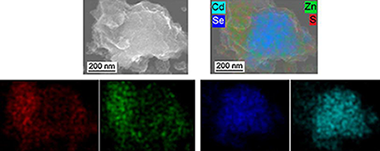
Cystine-capped CdSe@ZnS nanocomposites were synthesized mechanochemically with the aim to prepare a material which could be used in medicine for biosensing applications. Although synthesized CdSe@ZnS nanocomposites were capped with l-cysteine, cystine was formed from l-cysteine during the milling process. It was proven that water plays the key role in this oxidative transformation. The novel material…

Kinetic approach to partially overlapped thermal decomposition processes

Practical usefulness of the kinetic deconvolution for partially overlapped thermal decomposition processes of solids was examined by applying to the co-precipitated basic zinc carbonate and zinc carbonate. Comparing with the experimental deconvolutions by thermoanalytical techniques and mathematical deconvolutions using different statistical fitting functions, performance of the kinetic deconvolution based on an accumulative kinetic equation for…

Clarifications regarding the use of model-fitting methods of kinetic analysis for determining the activation energy from a single non-isothermal curve

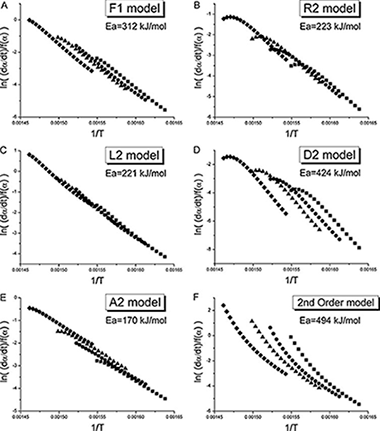
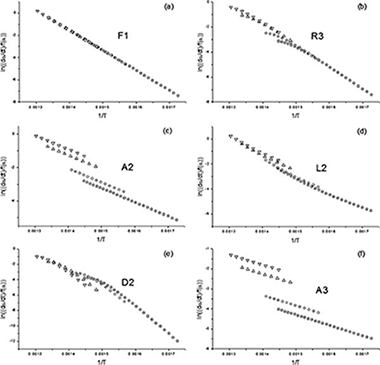
Background This paper provides some clarifications regarding the use of model-fitting methods of kinetic analysis for estimating the activation energy of a process, in response to some results recently published in Chemistry Central journal. Findings The model fitting methods of Arrhenius and Savata are used to determine the activation energy of a single simulated curve.…

Mechanochemical synthesis of Sb2S3 and Bi2S3 nanoparticles

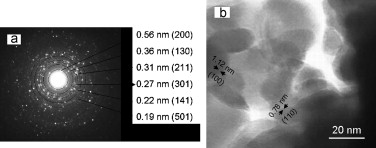
The mechanochemical synthesis of Sb2S3 and Bi2S3 nanoparticles has been studied, starting from the corresponding metals and sulfur and using high-energy mechanochemical processing in a planetary laboratory mill. XRD, specific surface area measurement, SEM and TEM (HRTEM) with ED were used for the characterization of the nanoparticles. The XRD patterns confirmed the production of Sb2S3…

Generalized master plots as a straightforward approach for determining the kinetic model: The case of cellulose pyrolysis

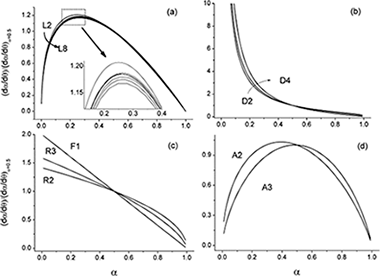
The thermal degradation of cellulose is a complex reaction and, despite the large amount of work by many investigators during the last decades, the actual understanding of the thermal decomposition kinetics is still very limited. Thus, while several mechanisms have been proposed to describe the process, the real model has not yet been clearly identified.…

Bulk TiCxN1−x–15%Co cermets obtained by direct spark plasma sintering of mechanochemical synthesized powders

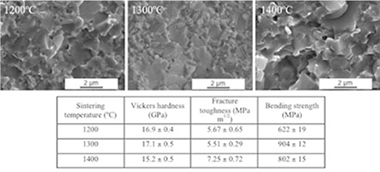
TiCxN1−x–15 wt.%Co cermets were obtained by a mechanically induced self-sustaining reaction (MSR) and sintered by spark plasma sintering (SPS) technique at different temperatures (1200–1400 °C) for 1 min in vacuum under a uniaxial load of 80 MPa. The evolution of microstructure and mechanical properties was investigated. SPS allowed high densification with limited grain growth at…