Effect of tantalum content on the microstructure and mechanical behavior of cermets based on (TixTa1−x)(C0.5N0.5) solid solutions

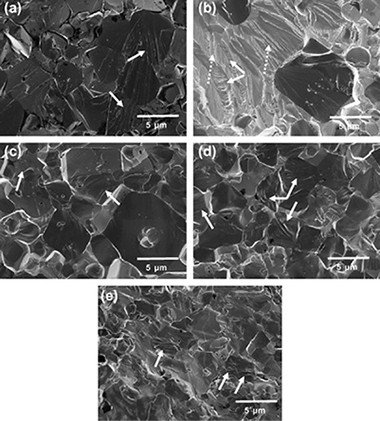
Titanium–tantalum carbonitride, (Ti, Ta)(C, N), based cermets with different Ti and Ta contents were prepared using a mechanically induced self-sustaining reaction and then densified using a pressureless sintering process. Complete microstructural and mechanical characterizations were performed on the materials, which revealed that the size of the carbonitride ceramic particle was significantly reduced when the Ta…

Bio-inspired mechanochemical synthesis of semiconductor nanomaterial using eggshell membrane

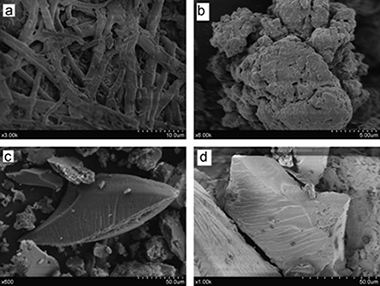
Eggshell membrane and lead acetate were successfully used as precursors for the mechanochemical synthesis of lead sulphide nanocrystals with crystallite sizes ∼8 nm. XRD, specific surface area measurements, SEM and EDX were used to characterise the synthesised material. The mechanochemical synthesis follows three-step mechanism. The “fish-like” grains with sizes around 30 μm were obtained.

Mechanochemical synthesis of ZrB2–SiC–ZrC nanocomposite powder by metallothermic reduction of zircon

Aluminium and magnesium were used in the M/ZrSiO4/B2O3/C (M = Al, Mg) system to induce a mechanically induced self-sustaining reaction (MSR). Aluminium was not able to reduce the system to the desired products, and the system became amorphous after 10 h milling. However, nanocomposite powder of ZrB2–SiC–ZrC was in situ synthesized by the magnesiothermic reduction…

Arsenic sorption by nanocrystalline magnetite: An example of environmentally promising interface with geosphere

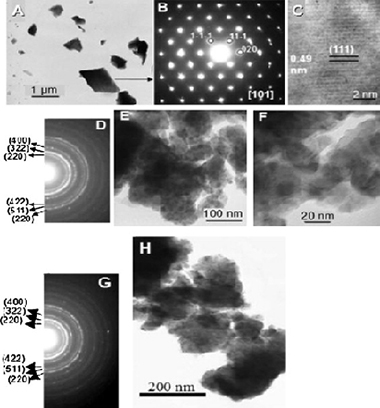
In this paper, the sorption of arsenic onto nanocrystalline magnetite mineral Fe3O4 was studied in a model system. Nanocrystalline magnetite was produced by mechanical activation in a planetary ball mill from natural microcrystalline magnetite. As a consequence of milling, the specific surface area increased from 0.1 m2/g to 11.9 m2/g and the surface site concentration…

Formation mechanism of ZrB2–Al2O3 nanocomposite powder by mechanically induced self-sustaining reaction

ZrB2–Al2O3 nanocomposite powder was produced by aluminothermic reduction in Al/ZrO2/B2O3 system. In this research, high energy ball milling was used to produce the necessary conditions to induce a mechanically induced self-sustaining reaction. The ignition time of the composite formation was found to be about 13 min. The synthesis mechanism in this system was investigated by…

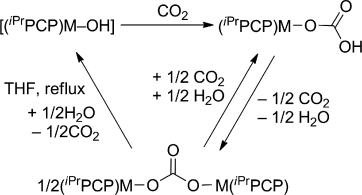
Reversible reactions of Ni and Pd hydroxo pincer complexes [( iPrPCP)M-OH] with CO2: Solid-state study of the decarboxylation of the monomeric bicarbonate complexes [(i PrPCP)M-OCOOH] (M = Ni, Pd)

Monomeric Ni and Pd hydroxides stabilized by the iPrPCP pincer ligand react with CO2 to give labile terminal bicarbonate complexes that readily lose CO2 and water to give binuclear carbonate complexes. Differential scanning calorimetry (DSC) has been used to monitor the decomposition of both bicarcabonates in the solid state. When the carbonate complexes are heated…

Evidence of nanograin cluster coalescence in spark plasma sintered α-Al2O3

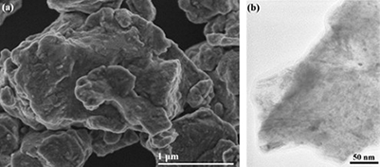
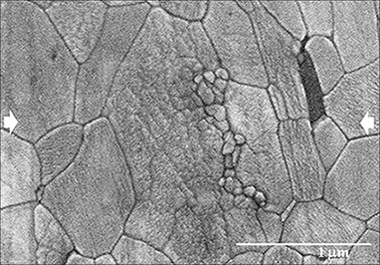
The aim of this study is to elucidate the coarsening kinetics involved during densification of fine-grained pure α-alumina by spark plasma sintering. Low temperature and short dwell time sintering conditions were used to preserve the nanocrystalline structure of the starting commercial powder (about 50 nm). Notwithstanding the above, submicron grain coarsened microstructures have been developed.…

Mechanosynthesis of nanocrystalline ZrB2-based powders by mechanically induced self-sustaining reaction method

Preparation of nanocrystalline ZrB2-based powder by aluminothermic and magnesiothermic reductions in M/ZrO2/B2O3 (M=Al or Mg) systems was investigated. In this research, high energy ball milling was employed to persuade necessary conditions for the occurrence of a mechanically induced self-sustaining reaction (MSR). The course of MSR reactions were recorded by a noticeable pressure rise in the…

Hallmarks of mechanochemistry: from nanoparticles to technology

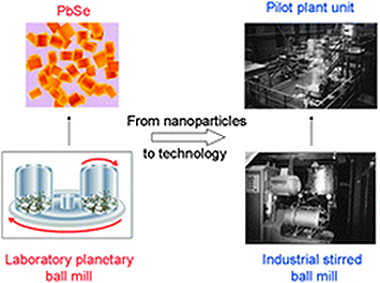
The aim of this review article on recent developments of mechanochemistry (nowadays established as a part of chemistry) is to provide a comprehensive overview of advances achieved in the field of atomistic processes, phase transformations, simple and multicomponent nanosystems and peculiarities of mechanochemical reactions. Industrial aspects with successful penetration into fields like materials engineering, heterogeneous…