Chemical and electrical properties of LSM cathodes prepared by mechanosynthesis

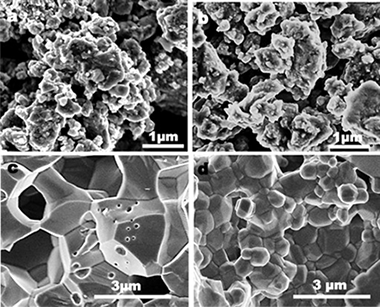
Mechanosynthesis of La1−xSrxMnO3 (x = 0, 0.25, 0.5, 0.75 and 1) was carried out at room temperature from stoichiometric mixtures of La2O3, Mn2O3 and SrO, obtaining monophasic powders with the perovskite structure. Physical properties of these materials and their chemical compatibility with the electrolyte yttria stabilized zirconia (YSZ), which depend strongly on the La/Sr ratio, were evaluated to corroborate…

Self-propagating combustion synthesis via an MSR process: An efficient and simple method to prepare (Ti, Zr, Hf)B2–Al2O3 powder nanocomposites

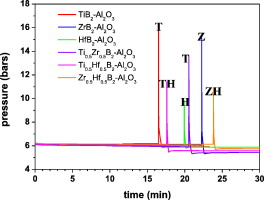
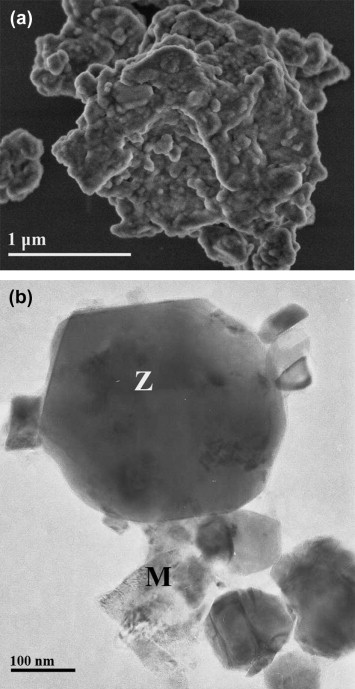
The synthesis of (Ti1 − xZrx)B2–Al2O3, (Ti1 − xHfx)B2–Al2O3 and (Zr1 − xHfx)B2–Al2O3 (x = 0, 0.5 and 1) powder nanocomposites via a mechanochemical method using TiO2, ZrO2, HfO2, HBO2 and Al as the raw materials was investigated. The formation of the nanocomposites proceeds via a mechanically-induced self-sustaining reaction (MSR) process that involves several simultaneous…

Comparison of thermal behavior of natural and hot-washed sisal fibers based on their main components: Cellulose, xylan and lignin. TG-FTIR analysis of volatile products

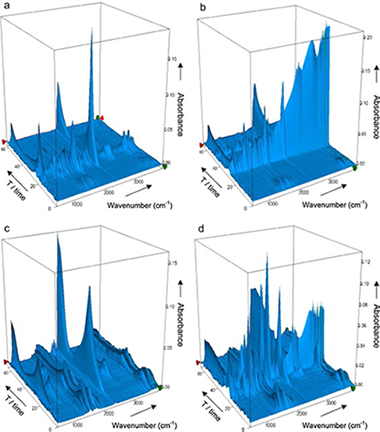
This paper presents in a comprehensive way the thermal behavior of natural and hot-washed sisal fibers, based on the fundamental components of lignocellulosic materials: cellulose, xylan and lignin. The research highlights the influence exerted on the thermal stability of sisal fibers by other constituents such as non-cellulosic polysaccharides (NCP) and mineral matter. Thermal changes were…

The effect of polymer matrices on the thermal hazard properties of RDX-based PBXs by using model-free and combined kinetic analysis

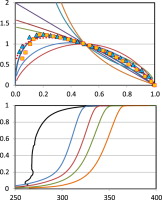
In this paper, the decomposition reaction models and thermal hazard properties of 1,3,5-trinitro-1,3,5-triazinane (RDX) and its PBXs bonded by Formex P1, Semtex 1A, C4, Viton A and Fluorel polymer matrices have been investigated based on isoconversional and combined kinetic analysis methods. The established kinetic triplets are used to predict the constant decomposition rate temperature profiles,…

An investigation on the formation mechanism of nano ZrB2 powder by a magnesiothermic reaction

Nanocrystalline zirconium diboride (ZrB2) powder was produced by mechanochemistry from the magnesiothermic reduction in the Mg/ZrO2/B2O3 system. The use of high-energy milling conditions was essential to induce a mechanically induced self-sustaining reaction (MSR) and significantly reduce the milling time required for complete conversion. Under these conditions, it was found that the ignition time for ZrB2…

Analysis on the mechanical strength of WC-Co cemented carbides under uniaxial and biaxial bending

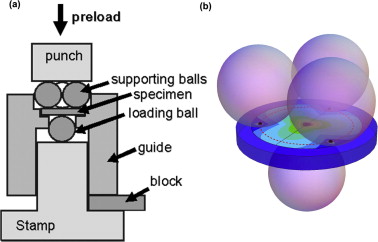
The mechanical strength of three WC-Co grades was determined and compared under uniaxial and biaxial bending. Uniaxial four-point bending was conducted on bar-shaped specimens; biaxial testing was performed on discs using the ball-on-three-balls (B3B) method. Strength results were analysed within the frame of the Weibull theory. Differences in characteristic strength between uniaxial and biaxial bending…

Enhanced general analytical equation for the kinetics of the thermal degradation of poly(lactic acid)/montmorillonite nanocomposites driven by random scission

An enhanced general analytical equation has been developed in order to evaluate the kinetic parameters of the thermal degradation of nanocomposites, composed of poly(lactic acid) (PLA) and organo-modified montmorillonite (OMMT) nanoparticles. This improvement has consisted of replacing the n-order conversion function by a modified form of the Sestak–Berggren equation f(α) = c (1 − α)nαm…

Characterization of thermally stable gamma alumina fibres biomimicking sisal

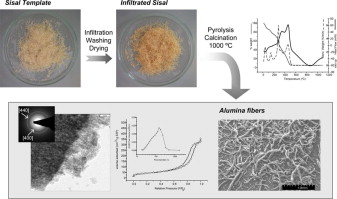
Mesoporous gamma alumina fibres of high surface area, stable up to 1000 °C, were synthesized by bioreplica technique using sisal fibres as templates. Alumina formation during pyrolysis and calcination of fibres infiltrated with aluminium chloride solution has been studied, paying special attention to the interaction between the precursor and sisal fibres, using several experimental techniques…

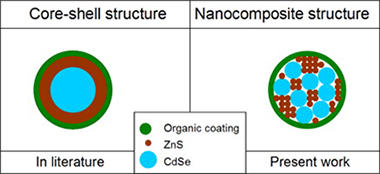
CdSe@ZnS nanocomposites prepared by a mechanochemical route: No release of Cd2+ ions and negligible in vitro cytotoxicity

CdSe@ZnS nanocomposites have been prepared by a two-step solid state mechanochemical synthesis. CdSe prepared from Cd and Se elements in the first step was mixed with zinc acetate and sodium sulphide in the second step of milling to prepare a CdSe@ZnS nanocomposite. In the third step, the obtained nanocomposite was coated with l-cysteine to prepare…