Obtention of Li3xLa2/3−xTiO3 ceramics from amorphous nanopowders by spark plasma sintering

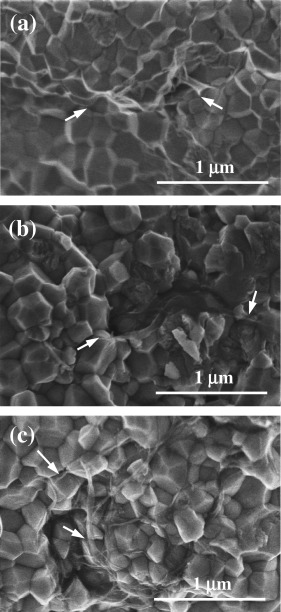
In this work, Li3xLa2/3-xTiO3 powder with nominal lithium content (x = 0.08) was synthesized by mechano synthesis method. Spark plasma sintering (SPS) was employed to prepare lithium lanthanum titanium oxide solid-state ceramic. The techniques of X-ray diffraction, high resolution scanning electron microscopy, and Raman spectroscopy were used to characterize the composition and microstructure of samples. The results showed that fine-grained ceramics with relative density of 95.5% were obtained by sintering the oxide powders…

Fabrication and characterization of CeO2 pellets for simulation of nuclear fuel

Cerium Oxide, CeO2, has been shown as a surrogate material to understand irradiated Mixed Oxide (MOX) based matrix fuel for nuclear power plants due to its similar structure, chemical and mechanical properties. In this work, CeO2 pellets with controlled porosity have been developed through conventional powder-metallurgy process. Influence of the main processing parameters (binder content,…

Synthesis and characterization of CuInS2 nanocrystalline semiconductor prepared by high-energy milling

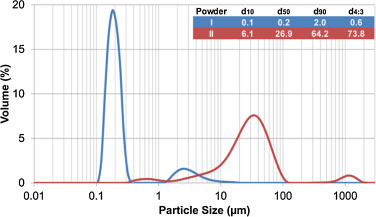
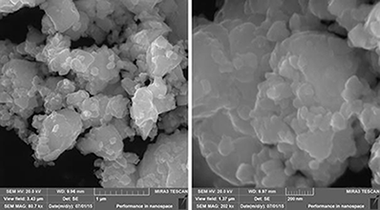
Nanocrystalline CuInS2 particles have been synthesized from copper, indium, and sulfur powders by high-energy milling in a planetary mill in an argon atmosphere. Structural characterization of the prepared nanoparticles, including phase identification, Raman spectroscopy, specific surface area measurement, and particle size analysis were performed. The optical properties were studied using UV-Vis absorption and photoluminescence (PL)…

Influence of tin additions on the precipitation processes in a Cu-Ni-Zn alloys

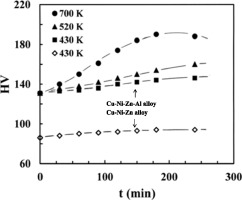
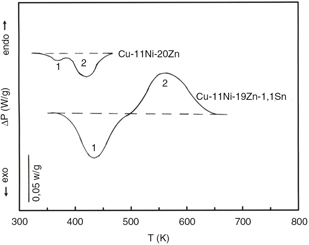
Influence of tin additions on the precipitation processes in a Cu-Ni-Zn alloys. The influence of 1.1 wt% tin additions on the precipitation hardening of Cu-11 wt% Ni-20 wt% Zn alloy was studied by Differential Scanning Calorimetry (DSC), microhardeness measurements and High Resolution Transmission Electron Microscopy (HRTEM). The calorimetric curves, in the range of temperatures analyzed,…

Kinetics of high-temperature oxidation of (Ti,Ta)(C,N)-based cermets

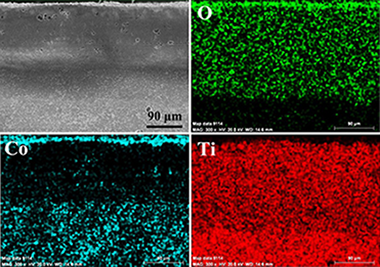
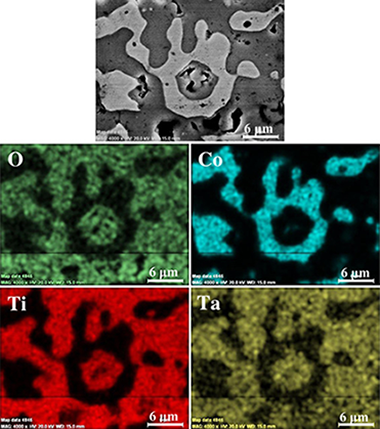
The kinetics of the high-temperature oxidation of titanium–tantalum carbonitride-based cermets with different Ti/Ta ratios was studied. Isothermal oxidation tests were conducted under static air for 48 h at temperatures between 700 °C and 1200 °C. The oxidation satisfied the parabolic kinetics, characteristic of the existence of a protective oxide layer. The apparent activation energy suggests the rate-controlling process…

The Calcium-Looping technology for CO2 capture: On the important roles of energy integration and sorbent behavior

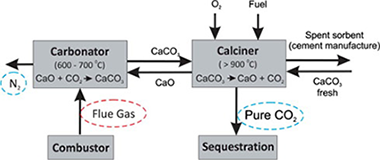
The Calcium Looping (CaL) technology, based on the multicyclic carbonation/calcination of CaO in gas-solid fluidized bed reactors at high temperature, has emerged in the last years as a potentially low cost technology for CO2 capture. In this manuscript a critical review is made on the important roles of energy integration and sorbent behavior in the…

A new model of the carbonator reactor in the calcium looping technology for post-combustion CO2 capture

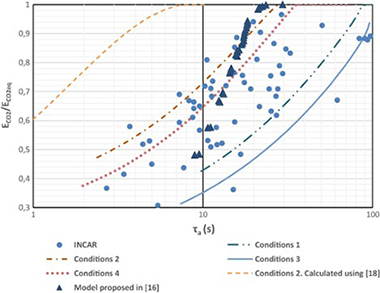
The Ca-Looping (CaL) process is considered as a promising technology for CO2 post-combustion capture in power generation plants yielding a minor penalty on plant performance as compared with other capture technologies such as conventional amine-based capture systems. This manuscript presents a new carbonator reactor model based on lab-scale multicyclic CaO conversion results, which take into account…