Synthesis and Characterization of a Nearly Single Bulk Ti2AlN MAX Phase Obtained from Ti/AlN Powder Mixture through Spark Plasma Sintering

MAX phases are an advanced class of ceramics based on ternary carbides or nitrides that combine some of the ceramic and metallic properties, which make them potential candidate materials for many engineering applications under severe conditions. The present work reports the successful synthesis of nearly single bulk Ti2AlN MAX phase (>98% purity) through solid-state reaction…

Enhancing the electrical conductivity of in-situ reduced graphene oxide-zirconia composites through the control of the processing routine

Graphene oxide (GO) was mixed with 3 mol% yttria tetragonal zirconia polycrystal (3YTZP) using two powder processing routines: a colloidal method in an aqueous solution and a combination of ultrasonication with highenergy planetary ball milling in wet conditions. Highly densified 3YTZP composites with reduced GO (rGO) were consolidated by Spark Plasma Sintering. The in-situ reduction…

A first insight into the microstructure and crack propagation in novel boron nitride nanosheet/3YTZP composites

In this work, novel 3 mol% yttria tetragonal zirconia polycristalline (3YTZP) ceramic composites with boron nitride nanosheets (BNNS) are investigated for the first time. Highly densified composites with 1 and 4 vol% BNNS were obtained by spark plasma sintering (SPS) after BNNS synthesis using a solution exfoliation method and BNNS dispersion into the ceramic powder…

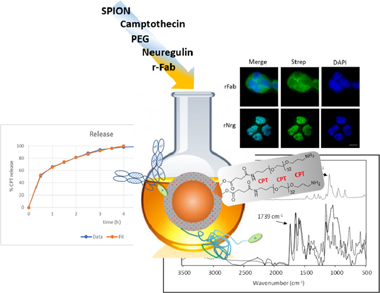
EGFR-targeting antitumor therapy: Neuregulins or antibodies?

Malignancies such as lung, breast and pancreatic carcinomas are associated with increased expression of the epidermal growth factor receptor, EGFR, and its role in the pathogenesis and progression of tumors has made this receptor a prime target in the development of antitumor therapies. In therapies targeting EGFR, the development of resistance owing to mutations and…

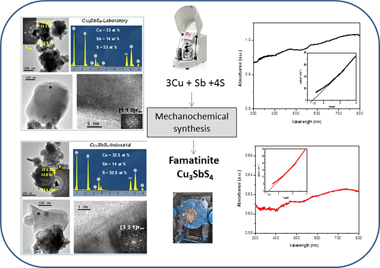
A Novel, Simple and Highly Efficient Route to Obtain PrBaMn2O5+δ Double Perovskite: Mechanochemical Synthesis

In this work, a mechanochemical route was proposed for the synthesis of the PrBaMn2O5+δ (PMBO) double layered perovskite phase. The mechanochemical reaction between Pr6O11, BaO2, and MnO powders with cationic stoichiometric ratios of 1/1/2 for Pr/Ba/Mn was performed using high-energy milling conditions in air. After 150 min of milling, a new phase with perovskite structure and…

Influence of Successive Chemical and Thermochemical Treatments on Surface Features of Ti6Al4V Samples Manufactured by SLM

Ti6Al4V samples, obtained by selective laser melting (SLM), were subjected to successive treatments: acid etching, chemical oxidation in hydrogen peroxide solution and thermochemical processing. The effect of temperature and time of acid etching on the surface roughness, morphology, topography and chemical and phase composition after the thermochemical treatment was studied. The surfaces were characterized by…

Critical Influence of the Processing Route on the Mechanical Properties of Zirconia Composites with Graphene Nanoplatelets

Graphene-based nanostructures, used as potential reinforcement in ceramic composites, have a great tendency to agglomerate. This requires the use of homogenization techniques during the powder processing, posing the need to evaluate how these techniques affect the microstructure and the mechanical properties of the resulting composites. The influence of the processing route on the properties of…

Control of experimental conditions in reaction flash-sintering of complex stoichiometry ceramics

The inherent potential of reaction flash-sintering for the preparation of complex oxides is evidenced by the one-step synthesis and densification of a ceramic of complex stoichiometry. The system Bi0.93La0.07FeO3, a multi-ferroic ceramic with promising technological applications, has been chosen. This system presents three different metals in its composition and it is extremely challenging to prepare…

Graphene-coated Ti-Nb-Ta-Mn foams: A promising approach towards a suitable biomaterial for bone replacement

The design of bone implants with proper biological and mechanical properties remains a challenge in medical implantology. The use of bioactive coatings has been shown to improve the biocompatibility of the implant surface. In this study, a new approach including porous scaffolds, beta-Ti alloys and nanocoatings to design new bone implants is presented. Porous Ti-Nb-Ta-xMn…