Highly active and selective ZIF-derived cobalt catalyst for methanol conversion to dimethyl carbonate

The oxidative carbonylation of methanol to synthesize dimethyl carbonate (DMC) has been extensively studied over Cu-based catalysts, but the activity and selectivity are not high. The Co catalysts exhibit high DMC selectivity, but the difficulty in recycling homogeneous Co catalyst and the low conversion of heterogeneous Co catalyst limit the application of Co catalysts. Here,…

Construction of cellulose nanofiber-Ti3C2Tx MXene/silver nanowire nanocomposite papers with gradient structure for efficient electromagnetic interference shielding

With the widespread application of communication equipment with electromagnetic signal transmission to cause electromagnetic radiation pollution, there is an urgent need for high-performance electromagnetic shielding materials. Here, an ultrathin, flexible, alternating multilayered, and conductive gradient-structured cellulose nanofiber-MXene/silver nanowire (CNF-MXene/AgNW) nanocomposite paper with high mechanical strength, strong electromagnetic interference (EMI) shielding, and outstanding thermal management was…

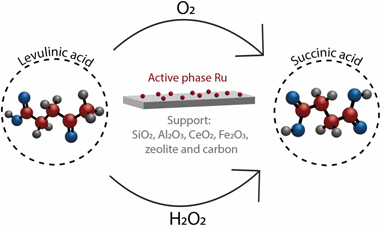
Levulinic to succinic acid transformation over Ru based catalysts

In this work ruthenium based catalysts are tested as catalytic systems for the selective oxidation of levulinic to succinic acid. Very different in nature supports have been chosen in order to elucidate the effect of their textural and acidic properties on the final catalytic activity. The influence of Ru particle size is also discussed and proposed as one of the key factors. Medium…

Reforming of biomass-derived producer gas using toluene as model tar: Deactivation and regeneration studies in Ni and K-Ni catalysts

Within the syngas production from biomass gasification, tar removal constitutes a chief issue to overcome for advanced catalytic systems. This work investigates the performance of Ni and Ni-K catalysts for reforming of derived-biomass producer gas using toluene as model tar. At 750 degrees C and 60Lg(-1)h(-1), the stability test (70 h) revealed stable performances (CO2, CH4 and C7H8 conversions of 60, 95 and 100%, correspondingly) uniquely for the Ni-K catalyst. Although the efficient protection towards coking…

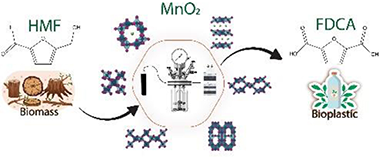
Highly Effective Non-Noble MnO2 Catalysts for 5-Hydroxymethylfurfural Oxidation to 2,5-Furandicarboxylic Acid

Noble metal-free catalyst or catalytic oxidation of 5-hydroxymethylfurfural into 2,5-furandicarboxylic acid are proposed in this study as a proposal to solve one of the great disadvantages of this reaction of using preferably noble metal-based catalysts. The catalytic activity of six MnO2 crystal structures is studied as alternative. The obtained results showed a strong connection between…

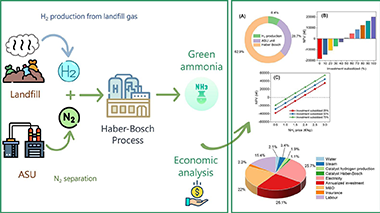
A profitability study for catalytic ammonia production from renewable landfill biogas: Charting a route for the next generation of green ammonia

This study introduces a novel techno-economic approach to renewable ammonia production using landfill biogas. The proposed process involves bio-hydrogen generation from landfill biogas, nitrogen production via air separation, and the Haber-Bosch process. Building on our prior research, which demonstrated the economic competitiveness of renewable hydrogen production from landfill gas, we extend our investigation to analyze the feasibility of producing…

Renewable Carbonaceous Materials from Biomass in Catalytic Processes: A Review

This review paper delves into the diverse ways in which carbonaceous resources, sourced from renewable and sustainable origins, can be used in catalytic processes. Renewable carbonaceous materials that come from biomass-derived and waste feedstocks are key to developing more sustainable processes by replacing traditional carbon-based materials. By examining the potential of these renewable carbonaceous materials,…

Optimizing biogas methanation over nickel supported on ceria-alumina catalyst: Towards CO2-rich biomass utilization for a negative emissions society

Biogas methanation emerges as a prominent technology for converting biogas into biomethane in a single step. Furthermore, this technology can be implemented at biogas plant locations, supporting local economies and reducing dependence on large energy producers. However, there is a lack of comprehensive studies on biogas methanation, particularly regarding the technical optimization of operational parameters and the profitability analysis of the overall process. To address this gap, our study represents a seminal work on the technical optimization of biogas methanation obtaining…

Synthetic natural gas production using CO2-rich waste stream from hydrothermal carbonization of biomass: Effect of impurities on the catalytic activity

The utilization of biomass and bio-waste, particularly through hydrothermal processes, has shown promise as a technology for converting these materials into valuable products. While most research has traditionally focused on the solid and liquid byproducts of these hydrothermal treatments, the gaseous phase has often been over-looked. This study specifically investigates the conversion of off-gases produced during hydrothermal carbonation (HTC) into synthetic natural gas, offering a readily marketable product with economic potential. Although the methanation of conventional flue gases has been extensively studied, dealing…

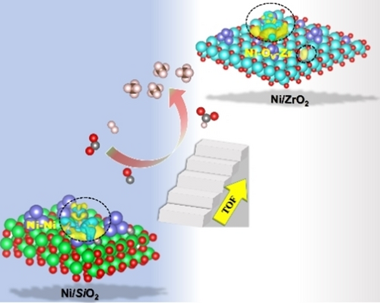
Boosting Low-Temperature CO2 Hydrogenation over Ni-based Catalysts by Tuning Strong Metal-Support Interactions

Rational design of low-cost and efficient transition-metal catalysts for low-temperature CO2 activation is significant and poses great challenges. Herein, a strategy via regulating the local electron density of active sites is developed to boost CO2 methanation that normally requires >350 °C for commercial Ni catalysts. An optimal Ni/ZrO2 catalyst affords an excellent low-temperature performance hitherto, with…