V2O5/TiO2 Catalyst for Catalytic Glucose Oxidation to Formic Acid in Batch Reactor: Vanadium Species Nature and Reaction Conditions Optimization

  This study focused on the development of vanadium-based catalysts for formic acid production from glucose. The influence of different vanadium precursors on the catalytic activity of titania supported catalysts was contemplated and compared to the performance of commercial and synthesized unsupported V2O5. The obtained results reveal a successful deposition of multiple vanadium species on…

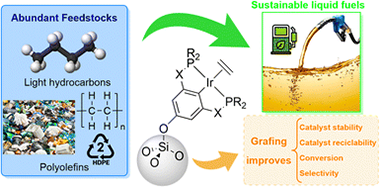
New insights for valorization of polyolefins/light alkanes: catalytic dehydrogenation of n-alkanes by immobilized pincer-iridium complexes

This scientific review delves into the innovative realm of polyolefins/light alkanes valorization through their catalytic dehydrogenation employing pincer-ligated iridium organometallic complexes. These widely studied catalysts exhibit outstanding properties, although the intrinsic characteristics of homogeneous catalysis (such as challenging product–catalyst separation, poor applicability to continuous-flow processes and low recyclability) limit their activity and industrial application, as…

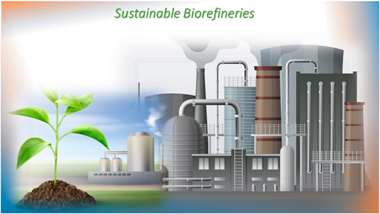
Embracing the sustainable horizons through bioenergy innovations: a path to a sustainable energy future

The urgent need for mitigating climate change necessitates a transformative shift in energy production and consumption paradigms. Amidst this challenge, bioenergy emerges as a pivotal contributor to the global energy transition, offering a diverse array of solid, liquid, and gaseous fuels derived from biomass. This mini review delves into the unique potential of bioenergy innovations,…

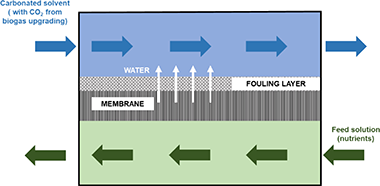
A novel membrane-based process to concentrate nutrients from sidestreams of an Urban Wastewater Treatment Plant through captured carbon dioxide from biogas

Among the challenges that wastewater treatment plants face in the path towards sustainability, reducing CO 2 emissions and decrease the amount of waste highlight. Within these wastes, those that can cause eutrophication, such as nutrients (nitrogen and phosphorous) are of great concern. Herein we study a novel process to concentrate nutrients via membrane technology. In…

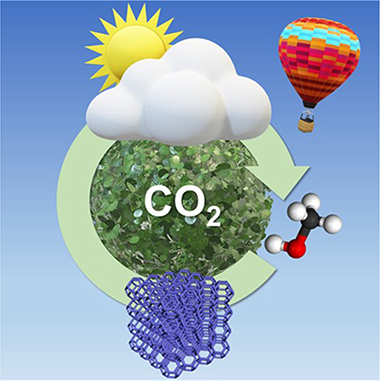
Biomass gasification, catalytic technologies and energy integration for production of circular methanol: New horizons for industry decarbonisation

The Intergovernmental Panel on Climate Change (IPCC) recognises the pivotal role of renewable energies in the future energy system and the achievement of the zero-emission target. The implementation of renewables should provide major opportunities and enable a more secure and decentralised energy supply system. Renewable fuels provide long-term solutions for the transport sector, particularly for…

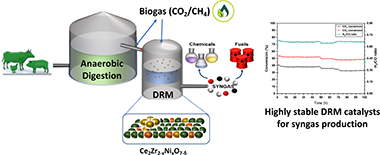
Nickel-based cerium zirconate inorganic complex structures for CO2 valorisation via dry reforming of methane

The increasing anthropogenic emissions of greenhouse gases (GHG) is encouraging extensive research in CO2 utilisation. Dry reforming of methane (DRM) depicts a viable strategy to convert both CO2 and CH4 into syngas, a worthwhile chemical intermediate. Among the different active phases for DRM, the use of nickel as catalyst is economically favourable, but typically deactivates due to sintering and…

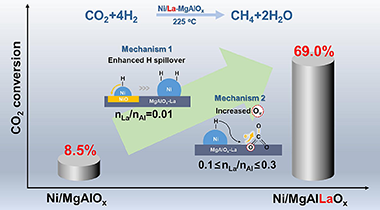
Enhanced low-temperature CO2 methanation over La-promoted NiMgAl LDH derived catalyst: Fine-tuning La loading for an optimal performance

LDH-derived Ni-based catalysts are gathering momentum due to their excellent thermal stability but their lowtemperature CO2 methanation is limited. In this study, various concentrations of La were introduced into the LDH-derived Ni-based catalysts for CO2 methanation, and the underlying mechanisms were investigated. The optimal Ni/La-0.2-MgAlOx catalyst presented a CO(2)conversion level of 69.0 % at 225…

Hydrochar and synthetic natural gas co-production for a full circular economy implementation via hydrothermal carbonization and methanation: An economic approach

Herein we study the economic performance of hydrochar and synthetic natural gas co-production from olive tree pruning. The process entails a combination of hydrothermal carbonization and methanation. In a previous work, we evidenced that standalone hydrochar production via HTC results unprofitable. Hence, we propose a step forward on the process design by implementing a methanation, adding value to the gas…

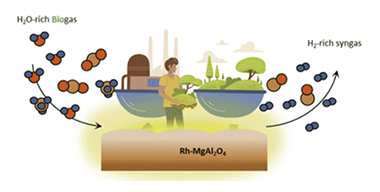
Monitoring the influence of steam on highly-active rhodium catalyst during the combined reforming of biogas by transient and steady-state operando spectroscopic studies

The impact derived from incorporating water into CH4/CO2 biogas stream for the generation of syngas was investigated over the Rh/MgAl2O4 catalyst using operando steady-state and transient DRIFT spectroscopy coupled with MS. The incorporation of steam resulted in improved CH4 conversion rates and attained syngas streams with higher H-2/CO ratios. It was demonstrated that in the presence of steam, the generation of CHxO species through the reaction of CO* with active *OH species is favored at the metal support surface. Besides, the enhanced resistance delivered by water molecules towards deactivating the coking phenomena was associated with easier…

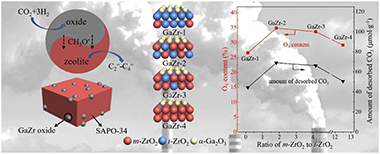
Effects of ZrO2 crystalline phase on oxygen vacancy of GaZr oxides and their properties for CO2 hydrogenation to light olefins

A bifunctional catalyst, comprising GaZr oxide and SAPO-34 zeolite, manifests enhanced catalytic activity in CO2 hydrogenation to light olefins; nonetheless, the comprehensive analysis of the pivotal role played by the underlying structure of ZrO2 in Ga-Zr oxide has not been investigated. Herein, different crystalline structures of ZrO2 were prepared by the co-precipitation method and adopted as a support…