A Circular Economy Perspective: Recycling Wastes through the CO2 Capture Process in Gypsum Products. Fire Resistance, Mechanical Properties, and Life Cycle Analysis

In recent years, the implementation of CO2 capture systems has increased. To reduce the costs and the footprint of the processes, different industrial wastes are successfully proposed for CO2 capture, such as gypsum from desulfurization units. This gypsum undergoes an aqueous carbonation process for CO2 capture, producing an added-value solid material that can be valorized.…

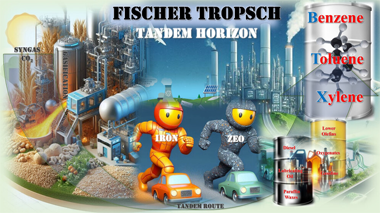
Redefining the Symphony of Light Aromatic Synthesis Beyond Fossil Fuels: A Journey Navigating through a Fe-Based/HZSM-5 Tandem Route for Syngas Conversion

The escalating concerns about traditional reliance on fossil fuels and environmental issues associated with their exploitation have spurred efforts to explore eco-friendly alternative processes. Since then, in an era where the imperative for renewable practices is paramount, the aromatic synthesis industry has embarked on a journey to diversify its feedstock portfolio, offering a transformative pathway…

Navigating the Legislative Interventions, Challenges, and Opportunities in Revolutionizing Textile Upcycling/Recycling Processes for a Circular Economy

Embracing a circular economy in the textile industry represents a crucial step toward sustainability, where fashion and textile sectors contribute significantly to CO2 emissions. However, transitioning from a linear “take-make-waste” model to circularity, poses multifaceted challenges, that highlight the staggering volume of annual textile waste surpassing industry predictions, thus emphasizing the urgent need for comprehensive strategies.…

Oxygen vacancy-dependent low-temperature performance of Ni/CeO2 in CO2 methanation

The transformative power of CO2 methanation can efficiently transform greenhouse gases into high-value products, aligning with the carbon neutrality goals. However, achieving this target at low temperature requires cumbersome efforts in designing catalysts that possess high reactivity and selectivity. Focusing on understanding the pivotal role of alkaline (such as Ca) sites in catalyzing these reactions…

Reactive Surface Explored by NAP-XPS: Why Ionic Conductors Are Promoters for Water Gas Shift Reaction

Near-ambient pressure X-ray photoelectron spectroscopy (NAP-XPS) experiments have been carried out in N-2 and N-2-H2O atmospheres on a Pt-based catalyst physically mixed with an Eu-doped ZrO2 ionic conductor as a function of temperature under realistic conditions of the water gas shift (WGS) reaction. This work aims to demonstrate the significant effect of having active H2O…

FGD-Gypsum Waste to Capture CO2 and to Recycle in Building Materials: Optimal Reaction Yield and Preliminary Mechanical Properties

The use of waste to capture CO2 has been on the rise, to reduce costs and to improve the environmental footprint. Here, a flue gas desulfurization (FGD) gypsum waste is proposed, which allows us to obtain a CaCO3-based solid, which should be recycled. The CO2 capture stage has primarily been carried out via the direct carbonation method…

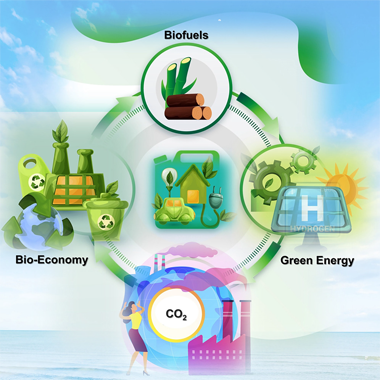
Integrating catalytic tandem reactions for the next of biofuels: A perspective

In this piece, we explore the transformative potential of sustainable biofuel production as a solution to the energy crisis and a pivotal element in realizing the environmental and societal ambitions of Society 5.0. Through a critical examination of «bottom-up»and «topdown»strategies for converting bio-feedstocks sourced from anthropogenic activities into renewable fuels, the work underscores the need…

An efficient pressure sensor based on environmental-friendly CNTs-graphene-PDMS film

Given the rapid advancements in artificial intelligence, there is an escalating demand for wearable sensors. An efficient graphene-based material synthesized from the mesophase pitch of waste slurry oil was integrated into a cost-effective piezoresistive pressure sensor consisting of a conductive film made of carbon nanotubes (CNTs), graphene, and Polydimethylsiloxane (PDMS). A simple fabrication approach has…

Finely Tunable Carbon Nanofiber Catalysts for the Efficient Production of HMF in Biphasic MIBK/H2O Systems

This work proposes catalytic systems for fructose dehydration to 5-hydroxymethylfurfural using a series of functionalized carbon nanofibers. The catalysts were synthesized via finely selected covalent grafting in order to include a variety of functionalities like pure Bronsted acid, tandem Br & oslash;nsted/Lewis acid, and tandem Lewis acid/Lewis base catalysts. After the characterization and evaluation of…