Bio-aromatics: Revolutionizing the integrated biomass and plastic waste valorization for high-value aromatic hydrocarbons via bifunctional catalytic pathways of bio-syngas conversion

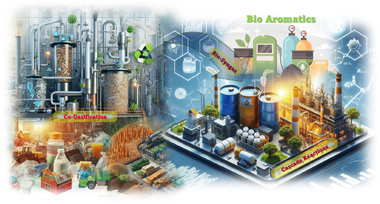
Aromatic hydrocarbons play a pivotal role in various industrial applications, serving as essential building blocks to produce polymers, resins, and specialty chemicals. Traditionally, their synthesis has been reliant on fossil fuels, raising concerns about environmental sustainability and resource depletion. However, recent advancements in the field have paved the way for a paradigm shift, with a…

Design of catalysts for selective CO2 hydrogenation

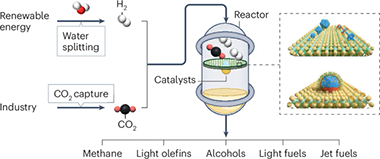
CO2 hydrogenation with green hydrogen is a practical approach for the reduction of CO2 emissions and the generation of high-value-added chemicals. Generally, product selectivity is affected by the associated reaction mechanisms, internal catalyst identity and structure, and external reaction conditions. Here we examine typical CO2 hydrogenation reaction pathways, which can provide insight useful for the atomic-level design of…

Unlocking the anaerobic conversion of crop residues: Biological pretreatments and the role of sulfide pathway in lignin degradation

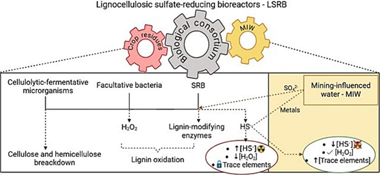
Research on the reutilization of crop residues has gained significant attention as a strategy for generating energy and high-value chemicals from renewable sources, while simultaneously reducing feedstock costs and mitigating environmental pollution. Crop residues have been effectively applied in lignocellulosic sulfate-reducing bioreactors (LSRBs) for the treatment of mining-influenced water. A comprehensive evaluation of the state-of-the-art…

Exploring the impact of nanoshaped ceria in the methanol decomposition reaction pathway for clean energy production

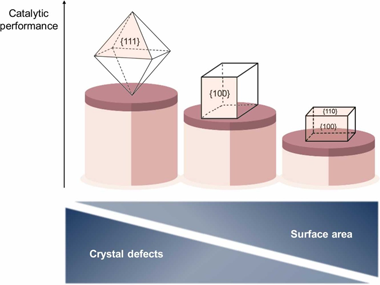
The effect of facet exposure in ceria nanostructures on the catalytic properties of Pd/CeO2 during methanol decomposition was investigated. The results showed the structure sensitive nature of this reaction, with the catalytic activity depending on the facet exposed in the ceria nanostructures. Operando DRIFTS-MS and DFT calculations demonstrated that methanol decomposition proceeds mainly via two…

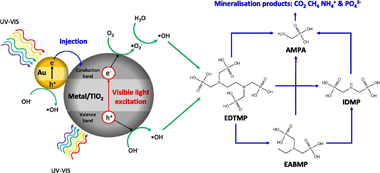
Improving the photocatalytic degradation of EDTMP: Effect of doped NPs (Na, Y, and K) into the lattice of modified Au/TiO2 nano-catalysts

This study presents the photocatalytic degradation of the aminophosphonate ethylenediaminetetra(methylenephosphonic acid) (EDTMP) with a range of different doped nanoparticles (NP). The photocatalysts were based on TiO2 benchmark P25 and gold (Au) doped either with sodium (Na), potassium (K) or yttrium (Y). The synthesized photocatalysts were characterized via TEM, XRF, XRD, UV-DRS (band gap estimation) and…

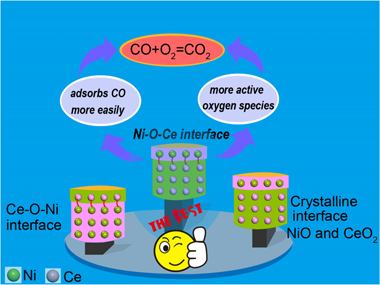
Direct observation of interface-dependent activity in NiO/CeO2 for effective low-temperature CO oxidation

In contemporary catalytic interface exploration, experimental studies often take a backseat to theoretical simulations, hindering the development of pristine catalytic interfaces. This research leverages monolayer dispersion theory to design an efficient CO oxidation catalyst through precise manipulation of non-precious metal NiO-CeO2 interfaces. Employing the pioneering XRD extrapolation method, we fabricated monolayer dispersed Ni-O-Ce and Ce-O-Ni…

Exploring the synergistic effect of NaOH/NaClO absorbent in a novel wet FGD scrubber to control SOx/NOx emissions

Escalating SOx and NOx emissions from industrial plants necessitates customized scrubbing solutions to improve removal efficiency and tackle cost limitations in existing wet FGD units. This work investigates the real-time intensified removal pathways via an innovative two-stage countercurrent spray tower configuration strategically integrating NaOH (Ma) and NaOH/NaClO (Ma/Mb) to remove SOx and NOx emissions simultaneously…

CO2 Conversion via Low-Temperature RWGS Enabled by Multicomponent Catalysts: Could Transition Metals Outperform Pt?

In the context of CO2 valorisation, the reverse water-gas shift reaction (RWGS) is gathering momentum since it represents a direct route for CO2 reduction to CO. The endothermic nature of the reaction posses a challenge when it comes to process energy demand making necessary the design of effective low-temperature RWGS catalysts. Herein, multicomponent Cs-promoted Cu,…

Carbonylation Reactions Using Single-Atom Catalysts

The development of highly efficient and selective catalysts for carbonylation reactions represents a significant challenge in catalysis. Single-atom catalysts (SACs) have postulated as promising candidates able to combine the strengths of both homogeneous and heterogeneous catalysts. In this paper, we review recent advances in tailoring solid supports for SACs to enhance their catalytic performance in…

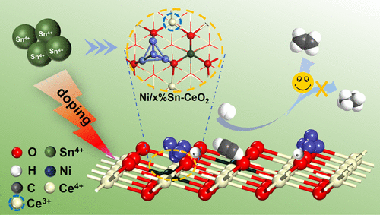
Investigation of Sn Promoter on Ni/CeO2 Catalysts for Enhanced Acetylene Semihydrogenation to Ethylene

Ethylene, as an important chemical raw material, could be produced through the coal-based acetylene hydrogenation route. Nickel-based catalysts demonstrate significant activity in the semihydrogenation reaction of acetylene, but they encounter challenges related to catalyst deactivation and overhydrogenation. Herein, the effect of Sn promoter on Ni/CeO2 catalysts has been comprehensively explored for acetylene semihydrogenation. The optimized…