


High-stable mesoporous Ni-Ce/clay catalysts for syngas production

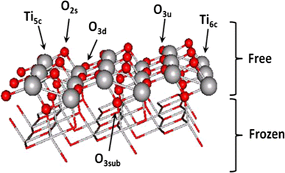
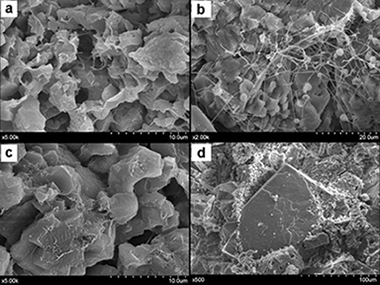
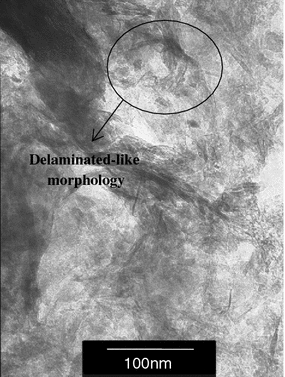
A mesoporous-type catalytic support was synthesized through the modification of a smectite with polyvinyl alcohol (PVA) and microwaves. Texture and micro-morphology of the support was determined. Several techniques were employed in order to describe the chemical environment of active species on the surface. Ni0 particle sizes were dependent on the structural site of reducible species.…
Fischer-Tropsch synthesis in microchannels

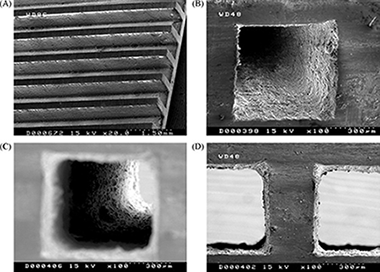
Different metallic supports (aluminum foams of 40ppi, honeycomb monolith and micromonolith of 350 and 1180cpsi, respectively) have been loaded with a 20%Co-0.5%Re/γ-Al2O3 catalyst by the washcoating method. Layers of different thicknesses have been deposited onto the metallic supports. The catalytic coatings were characterized measuring their textural properties, adhesion and morphology. These structured catalysts have been…

Creep behavior of TiCxN1-x-CoTi cermets synthesized by mechanically induced self-sustaining reaction

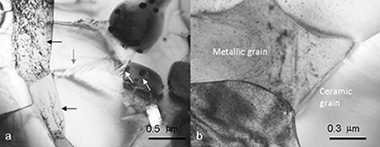
The plastic flow of TiCxN1-x-CoTi cermets has been investigated by uniaxial compression tests carried out in argon atmosphere at temperatures between 1100 and 1200°C. Two different cermets, with 5wt.% W or WC content as sintering additives, have been explored to assess the influence of the sintering additives on creep. The microstructural observations of deformed samples…

Aluminum anodization in oxalic acid: Controlling the Texture of Al 2O3/Al monoliths for catalytic aplications

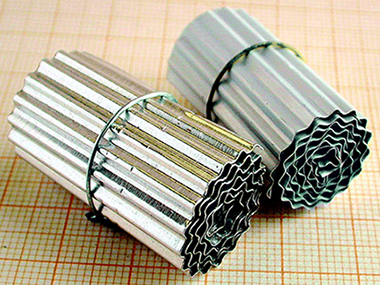
The anodization and postanodization processes of aluminum in order to prepare monoliths for catalytic applications have been studied in this work using oxalic acid as electrolyte. The effect of anodization variables (anodization time, current density, temperature, and electrolyte concentration) and postanodization processes on the surface morphology and textural properties of AAO (anodic aluminum oxide) films…

Thermal analysis of monument patina containing hydrated calcium oxalates

This work describes the thermal transformation of patina samples formed on the surface of dolomitic rocks used to build the Romanesque Torme’s Church (Burgos, Spain). Analyses were performed using a combination of high-temperature XRD, simultaneous TG/DTA and gas mass spectrometry. The XRD analysis revealed the presence of hydrated calcium oxalates. The following three steps were…

Forgery detection on an Arabic illuminated manuscript by micro-Raman and X-ray fluorescence spectroscopy

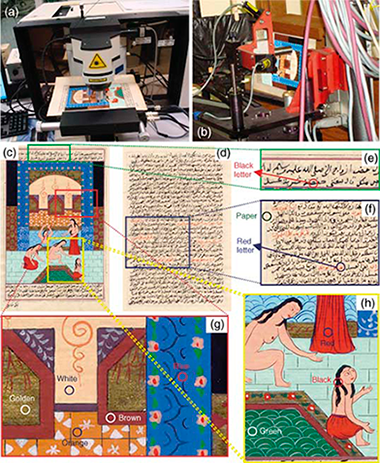
An Arabic manuscript, supposed to be from the 14th century, was investigated and its components (pigments and dyestuffs) characterised using micro-Raman and X-ray fluorescence (XRF) spectroscopy, the latter employing a portable XRF/X-ray diffraction (XRD) system. The presence of anatase, rutile, calcite, barite, zinc oxide, carbon black, vermilion, hematite, goethite, β-naphthol, copper phthalocyanine, pigmosol green and…

Thermal analysis of monument patina containing hydrated calcium oxalates

This work describes the thermal transformation of patina samples formed on the surface of dolomitic rocks used to build the Romanesque Torme’s Church (Burgos, Spain). Analyses were performed using a combination of high-temperature XRD, simultaneous TG/DTA and gas mass spectrometry. The XRD analysis revealed the presence of hydrated calcium oxalates. The following three steps were…