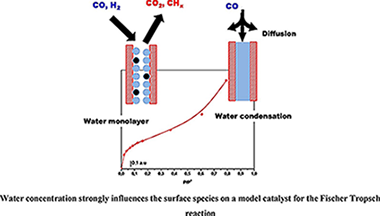
CO/H-2 adsorption on a Ru/Al2O3 model catalyst for Fischer Trospch: Effect of water concentration on the surface species

Water presence and concentration strongly influence CO conversion and CS+ selectivity in the Fischer Tropsch reaction. In this work, the influence of the water concentration was investigated using a model Ru/Al2O3 (5 wt. %) catalyst. The surface species formed after CO and H-2 adsorption in dry and wet (different water concentrations) conditions were analyzed by…

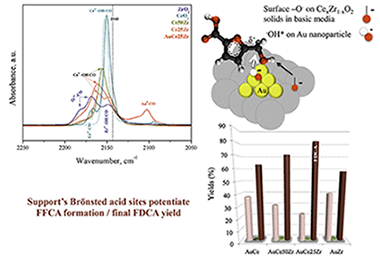
Understanding the Role of the Acid Sites in 5-Hydroxymethylfurfural Oxidation to 2,5-Furandicarboxylic Acid Reaction over Gold Catalysts: Surface Investigation on CexZr1-xO2 Compounds

A series of CexZr1-xO2 supports with different Ce/Zr molar ratios were utilized for the preparation of gold catalyst used in the selective oxidation of 5-hydroxymethyl-2-furfural to 2,5-furandicarboxylic acid. The used method of gold deposition allows the preparation of gold particles with homogeneous size and shape distribution, a formulation very useful for studies dedicated to revealing…

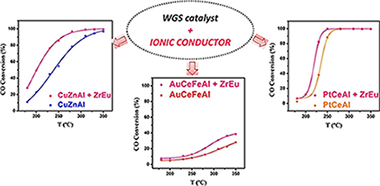
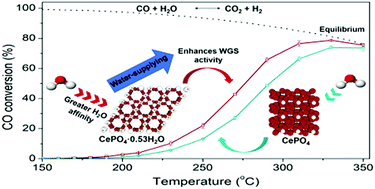
New concept for old reaction: Novel WGS catalyst design

The viability of water gas shift catalytic system for mobile application passes through obligatory reactor volume reduction, achieved normally by using less charge of more efficient catalyst. Completely new concept for catalyst design is proposed: a catalytic system including classically reported WGS catalysts of different nature or active phase (Cu, Pt or Au) mechanically mixed…

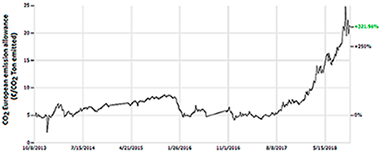
Policies and Motivations for the CO2 Valorization through the Sabatier Reaction Using Structured Catalysts. A Review of the Most Recent Advances

The current scenario where the effects of global warming are more and more evident, has motivated different initiatives for facing this, such as the creation of global policies with a clear environmental guideline. Within these policies, the control of Greenhouse Gase (GHG) emissions has been defined as mandatory, but for carrying out this, a smart…

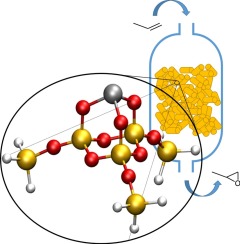
Analysis of the variables that modify the robustness of Ti-SiO2 catalysts for alkene epoxidation: Role of silylation, deactivation and potential solutions

Catalytic epoxidation of alkenes plays an essential role in the transformation and synthesis of many organic chemicals. Ti atoms grafted on mesoporous silica, silylated on the surface, is considered the most active and selective catalyst for these reactions. However, the durability and robustness of the active centers remain as the main drawback in industry. In…

Selective CO methanation with structured RuO2/Al2O3 catalysts

Active and selective structured RuO2/Al2O3 catalysts for CO methanation using a flow simulating CO2-rich reformate gases from WGS and PROX units (H-2 excess, CO2 presence and 300 ppm CO concentration) were prepared. Both, the RuO2/Al2O3 powder and the slurry prepared from it for its structuration by washcoating of the metallic micromonolithic structure, were also active…

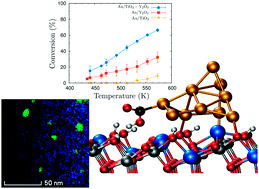
Improving the activity of gold nanoparticles for the water-gas shift reaction using TiO2-Y2O3: an example of catalyst design

In the last ten years, there has been an acceleration in the pace at which new catalysts for the water-gas shift reaction are designed and synthesized. Pt-based catalysts remain the best solution when only activity is considered. However, cost, operation temperature, and deactivation phenomena are important variables when these catalysts are scaled in industry. Here,…