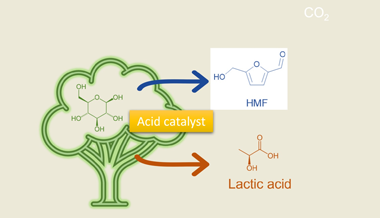
Recent Advances in the Bronsted/Lewis Acid Catalyzed Conversion of Glucose to HMF and Lactic Acid: Pathways toward Bio-Based Plastics

One of the most trending topics in catalysis recently is the use of renewable sources and/or non-waste technologies to generate products with high added value. That is why, the present review resumes the advances in catalyst design for biomass chemical valorization. The variety of involved reactions and functionality of obtained molecules requires the use of…

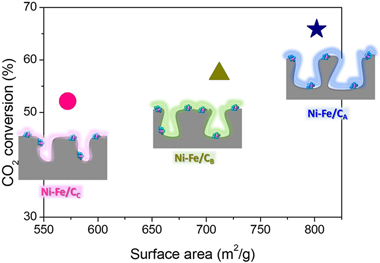
Assessing the impact of textural properties in Ni-Fe catalysts for CO2 methanation performance

In heterogeneous catalysis, the benefits of employing adequate textural properties on the catalytic performances are usually stated. Nevertheless, the quantification of the extent of improvement is not an easy task since variations on the catalysts’ specific areas and pore structures might involve modifications on a number of other surface catalytic features. This study establishes the impact of the…

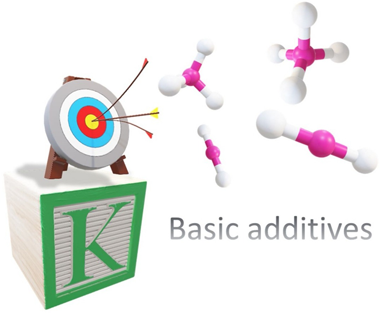
Effect of potassium loading on basic properties of Ni/MgAl2O4 catalyst for CO2 reforming of methane

Coke deposition is one of the key issues in the dry reforming of methane on Ni catalysts. In the present work, we investigate the effect of potassium addition for suppressing carbon deposition in the Dry Reforming of Methane. The results obtained demonstrated that potassium contents above 3 wt% promote carbon gasification, favouring both Reverse Water Gas Shift and Boudouard reaction.…

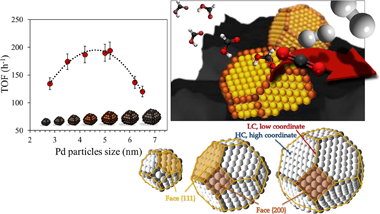
Structure-sensitivity of formic acid dehydrogenation reaction over additive-free Pd NPs supported on activated carbon

In this study the size-activity dependence of palladium based catalysts in formic acid dehydrogenation reaction was investigated and evaluated. A wide range of particle sizes was considered and the catalyst series were prepared upon variation of some synthetic parameters, precursor and solvent nature in particular. Synthesis method variations affect significantly Pd particle size and results…

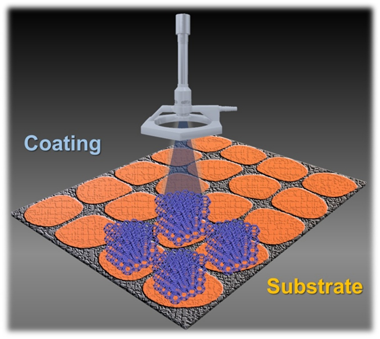
Current scenario and prospects in manufacture strategies for glass, quartz, polymers and metallic microreactors: A comprehensive review

One of the most remarkable benefits of the microreactors is the achievement of more efficient processes by enhancing the heat and mass transfer phenomena, which is the key factor for processes intensification in chemical reactions, resulting in higher conversion, selectivity and yield towards desired products. Currently, the entire scenario of microreaction approach is an emergent…

Bimetallic Ni-Ru and Ni-Re Catalysts for Dry Reforming of Methane: Understanding the Synergies of the Selected Promoters

Designing an economically viable catalyst that maintains high catalytic activity and stability is the key to unlock dry reforming of methane (DRM) as a primary strategy for biogas valorization. Ni/Al2O3 catalysts have been widely used for this purpose; however, several modifications have been reported in the last years in order to prevent coke deposition and deactivation…