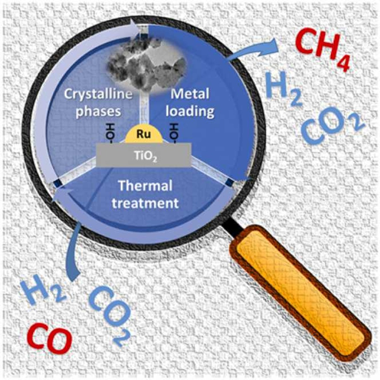
Feasibility of switchable dual function materials as a flexible technology for CO2 capture and utilisation and evidence of passive direct air capture

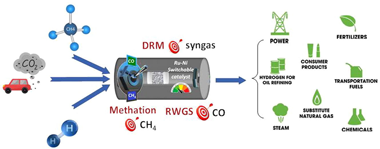
The feasibility of a Dual Function Material (DFM) with a versatile catalyst offering switchable chemical synthesis from carbon dioxide (CO2) was demonstrated for the first time, showing evidence of the ability of these DFMs to passively capture CO2 directly from the air as well. These DFMs open up possibilities in flexible chemical production from dilute…

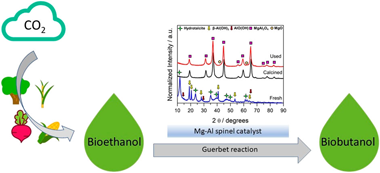
Insights on Guerbet Reaction: Production of Biobutanol From Bioethanol Over a Mg-Al Spinel Catalyst

The production of biobutanol from bioethanol by the Guerbet reaction is an alternative pathway to renewable sources. The commercial viability of this green route requires improvements in the process development. This study experimentally examines the influence of operating conditions on the performance of a Mg-Al spinel catalyst prepared from hydrotalcite precursors. This catalyst demonstrates an…

Catalytic reforming of model biomass-derived producer gas

This work includes a complete study of the reaction of reforming a simulated producer gas stream comparing a Ni-based catalyst with another one promoted with potassium to enhance the resistance to coke formation. Although coke deposition is unavoidable in the presence of tars in the stream, the analysis of different reaction parameters revealed that operating…

Design of Full-Temperature-Range RWGS Catalysts: Impact of Alkali Promoters on Ni/CeO2

Reverse water gas shift (RWGS) competes with methanation as a direct pathway in the CO2 recycling route, with methanation being a dominant process in the low-temperature window and RWGS at higher temperatures. This work showcases the design of multi-component catalysts for a full-temperature-range RWGS behavior by suppressing the methanation reaction at low temperatures. The addition of alkali promoters (Na, K, and Cs) to the reference Ni/CeO2 catalyst allows identifying a clear…

Electrocatalytic CO2 conversion to C-2 products: Catalysts design, market perspectives and techno-economic aspects

The energy crisis caused by the incessant growth in global energy demand joint to its associated greenhouse emissions motivates the urgent need to control and mitigate atmospheric CO2 levels. Leveraging CO2 as carbon pool to produce value-added products represents a cornerstone of the circular economy. Among the CO2 utilization strategies, electrochemical reduction of CO2 conversion…

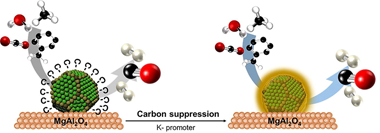
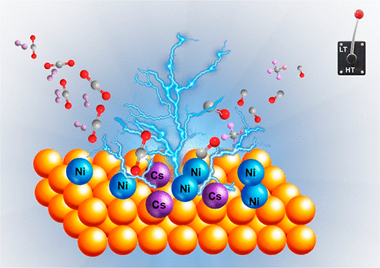
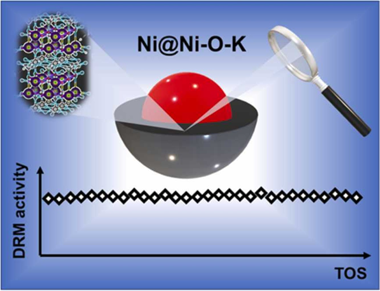
Evidence of new Ni-O-K catalytic sites with superior stability for methane dry reforming

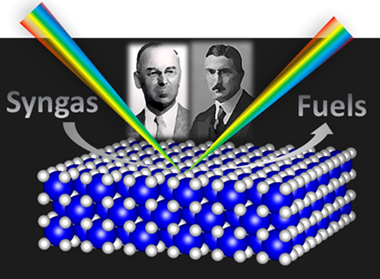
Liquid fuels produced via Fischer-Tropsch synthesis from biomass-derived syngas constitute an attractive and sustainable energy vector for the transportation sector. This study focuses on the role of potassium as a promoter in Ni-based catalysts for reducing coke deposition during catalytic dry reforming. The study provides a new structural link between catalytic performance and physicochemical properties.…

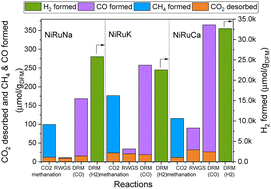
Versatile Ni-Ru catalysts for gas phase CO2 conversion: Bringing closer dry reforming, reverse water gas shift and methanation to enable end-products flexibility

Advanced catalytic materials able to catalyse more than one reaction efficiently are needed within the CO2 utilisation schemes to benefit from end-products flexibility. In this study, the combination of Ni and Ru (15 and 1 wt%, respectively) was tested in three reactions, i.e. dry reforming of methane (DRM), reverse water-gas shift (RWGS) and CO2 methanation.…

3D-printed structured catalysts for CO2 methanation reaction: Advancing of gyroid-based geometries

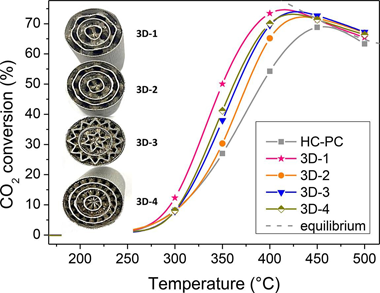
This work investigates the CO2 methanation rate of structured catalysts by tuning the geometr y of 3D-printed metal Fluid Guiding Elements (FGEs) structures based on periodically variable pseudo-gyroid geometries. The enhanced performance showed by the structured catalytic systems is mostly associated with the capability of the FGEs substrate geometries for efficient heat usages. Thus, variations…

Understanding the promotional effect of Pt/CeO2 in cobalt-catalyzed Fischer-Tropsch synthesis using operando infrared spectroscopy at moderated pressures

Fischer-Tropsch (FTS) reaction is a well-known catalytic process for the conversion of synthesis gas into liquid fuels. The addition of a water gas shift (WGS) catalyst to the FTS one has been postulate to notably increase the efficiency of the process. In order to investigate this issue, we conducted the FTS reaction over a Co-Re/Al2O3…