Flexible NiRu Systems for CO2 Methanation: From Efficient Catalysts to Advanced Dual-Function Materials

CO2 emissions in the atmosphere have been increasing rapidly in recent years, causing global warming. CO2 methanation reaction is deemed to be a way to combat these emissions by converting CO2 into synthetic natural gas, i.e., CH4. NiRu/CeAl and NiRu/CeZr both demonstrated favourable activity for CO2 methanation, with NiRu/CeAl approaching equilibrium conversion at 350 degrees…

Engineering morphologies of yttrium oxide supported nickel catalysts for hydrogen production

The catalytic performance is highly related to the catalyst structure. Herein, a series of Ni nanoparticles supported on Y2O3 with different morphologies were successfully synthesized via hydrothermal process screening different pH environments. These Ni/Y2O3 catalysts were applied to efficiently produce COx-free H-2 through ammonia decomposition. We identify a significant impact of Y2O3 supports on nickel…

Formic Acid Dehydrogenation over Ru- and Pd-Based Catalysts: Gas- vs. Liquid-Phase Reactions

Formic acid has recently been revealed to be an excellent hydrogen carrier, and interest in the development of efficient and selective catalysts towards its dehydrogenation has grown. This reaction has been widely explored using homogeneous catalysts; however, from a practical and scalable point of view, heterogeneous catalysts are usually preferred in industry. In this work,…

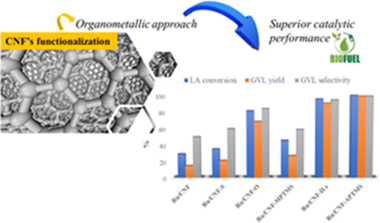
Selective hydrodeoxygenation of levulinic acid to gamma-valerolactone over Ru supported on functionalized carbon nanofibers

In this work, carbon nanofibers (CNFs) have been successfully functionalized by using different approaches and finally used for the preparation of Ru based catalysts. The organometallic approach has been demonstrated to be suitable for CNF functionalization, leading to well-defined Ru NPs (by adding organosilane, amino or mercapto functionalities, among others) in comparison with mineral acid treatments conventionally…

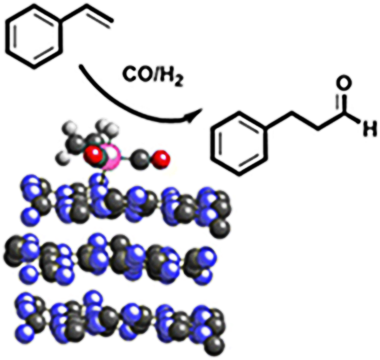
Highly dispersed Rh single atoms over graphitic carbon nitride as a robust catalyst for the hydroformylation reaction

Rhodium-catalysed hydroformylation, effective tool in bulk and fine-chemical synthesis, predominantly uses soluble metal complexes. For that reason, the metal leaching and the catalyst recycling are still the major drawbacks of this process. Single-atom catalysts have emerged as a powerful tool to combine the advantages of both homogeneous and heterogeneous catalysts. Since using an appropriate support…

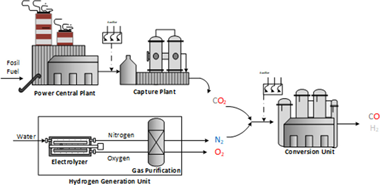
Is the RWGS a viable route for CO2 conversion to added value products? A techno-economic study to understand the optimal RWGS conditions

Understanding the viability of the RWGS from a thermodynamic and techno-economic angle opens new horizons within CO2 conversion technologies. Unfortunately, profitability studies of this technology are scarce in literature and mainly focused on overall conversion and selectivity trends with tangential remarks on energy demands and pro-cess costs. To address this research gap, herein we present…

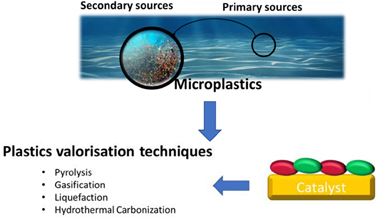
Materials challenges and opportunities to address growing micro/ nanoplastics pollution: a review of thermochemical upcycling

Micro/nanoplastics have sparked attention in recent years due to their widespread presence in the environment. Currently, several waste valorization approaches are under development in order to upcycle micro/nanoplastics. Thermal conversion technologies such as pyrolysis, gasification, liquefaction, or hydrothermal carbonization can yield high-value solid products, oil, and gases from plastics waste. The common thermal conversion technologies…

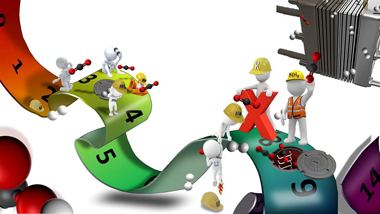
Development of Power-to-X Catalytic Processes for CO2 Valorisation: From the Molecular Level to the Reactor Architecture

Nowadays, global climate change is likely the most compelling problem mankind is facing. In this scenario, decarbonisation of the chemical industry is one of the global challenges that the scientific community needs to address in the immediate future. Catalysis and catalytic processes are called to play a decisive role in the transition to a more…

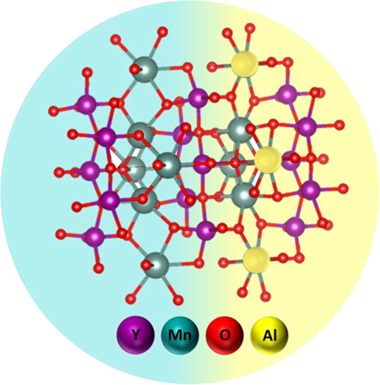
CO2 methanation on Ni/YMn1-xAlxO3 perovskite catalysts

Seeking for advanced catalytic systems for the CO2 methanation reaction, the use of Ni supported catalysts over redox materials is often proposed. Profiting the superior redox properties described for layered perovskite systems, this work has investigated a series Ni supported YMn1-xAlxO3 (x = 0, 0.2, 0.5, 0.8, 1) perovskite catalysts. The obtained results evidenced the…