


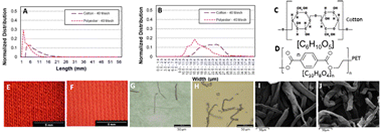
Charting a path to catalytic upcycling of plastic micro/nano fiber pollution from textiles to produce carbon nanomaterials and turquoise hydrogen

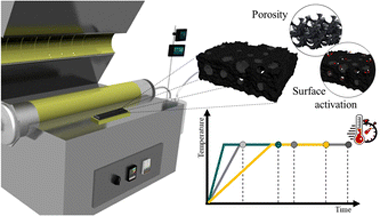
Washing synthetic textile fibers releases micro/nano plastics, endangering the environment. As new filters and associated regulations are developed to prevent fiber release from washing machines, there emerges a need to manage the collected waste, for which the only current options are combustion or landfill. Herein we show for the first time the application of a…
Hydrogen production by catalytic aqueous-phase reforming of waste biomass: a review

The rising adverse effects of climate change call for a rapid shift to low-carbon energy and reducing our dependence on fossil fuels. For that, biorefineries appear as promising alternatives to produce energy, chemicals, and fuels using biomass and waste as raw materials. Here, we review catalytic aqueous-phase reforming to convert biomass and organic waste carbohydrates into renewable hydrogen, with focus on reforming basics; catalyst design; reforming of model compounds, wastewater and biomass; economics and life cycle assessment. We found…

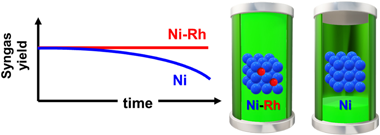
H2-rich syngas production from biogas reforming: Overcoming coking and sintering using bimetallic Ni-based catalysts

Dry reforming of methane is a very appealing catalytic route biogas (mainly composed by greenhouse gases: carbon dioxide and methane) conversion into added value syngas, which could be further upgraded to produce liquid fuels and added value chemicals. However, the major culprits of this reaction are coking and active phase sintering that result in catalysts deactivation. Herein we have developed a highly stable…

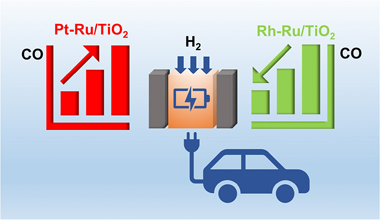
Effect of noble metal addition over active Ru/TiO2 catalyst for CO selective methanation from H2 rich- streams

Selective CO methanation from H2-rich stream has been regarded as a promising route for deep removal of low CO concentration and catalytic hydrogen purification processes. This work is focused on the development of more efficient catalysts applied in practical conditions. For this purpose, we prepared a series of catalysts based on Ru supported over titania and promoted with small…

Hydrothermal carbonization vs. anaerobic digestion to valorize fruit and vegetable waste: A comparative technical and energy assessment

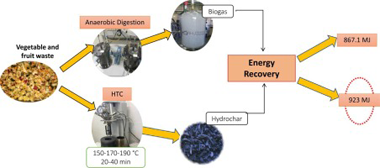
Herein, the valorization of vegetable and fruit waste was assessed via hydrothermal carbonization (HTC) and anaerobic digestion (AD) in terms of product characterization and energy requirements. HTC was conducted at reaction temperatures between 150 & DEG;C and 190 & DEG;C, and residence times between 20 min and 40 min. The increase in the process severity…

Are Ni/ and Ni5Fe1/biochar catalysts suitable for synthetic natural gas production? A comparison with g-Al2O3 supported catalysts

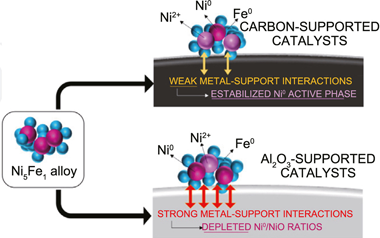
Among challenges implicit in the transition to the post-fossil fuel energetic model, the finite amount of resources available for the technological implementation of CO2 revalorizing processes arises as a central issue. The development of fully renewable catalytic systems with easier metal recovery strategies would promote the viability and sustainability of synthetic natural gas production circular…

Review and Perspectives of CO2 Absorption by Water- and Amine-Based Nanofluids

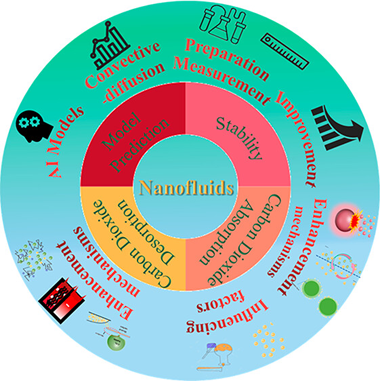
The emission of greenhouse gases, especially CO2, hasbecome a major cause of environmental degradation, and carbon capture,utilization, and storage (CCUS) is a proposed solution to mitigateits impact. Nanofluids, a relatively new method for CO2 absorption, have gained attention in recent years. This review focuseson conventional methods for preparing nanofluids along with techniquesto improve their stability and enhance the CO2 absorptionand desorption mechanisms. Additionally, the influences of factors,i.e., nanoparticle and base solution…

Toluene combustion on MnOx, CeO2, and Mn-Ce-O solids prepared via citrate complexation, and citrate and urea combustion methods

MnOx, CeO2, and MnCe-O (Mn/Ce = 1) solids have been prepared via the citrate complexation and combustion method using citrate and urea precursors. The solids have been characterized by XRD, SEM-EDX, N-2-adsorption-desorption, UV-Vis spectroscopy, TPR, O-2-TPD, and XPS techniques. The catalytic reactivity of the manganese oxides was not affected by the preparation protocol. In the…