Coal Chemistry Industry: From Production of Liquid Fuels to Fine Chemicals to Carbon Materials

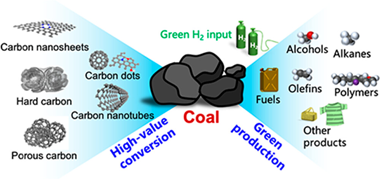
Coal resources are one of the key energy sources and essential for modern economic development. Despite the traditional coal industries having made considerable contributions to chemical production and energy storage, the accompanying environmental pollution and high energy consumption have also arisen that cause significant influence of the ecological balance. Hence, there is an urgent need…

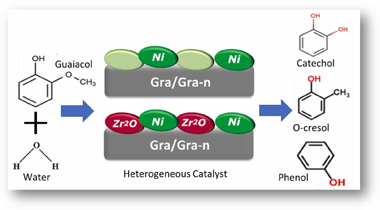
Multicomponent graphene based catalysts for guaiacol upgrading in hydrothermal conditions: Exploring «H2-free» alternatives for bio-compounds hydrodeoxygenation

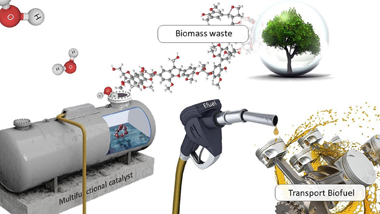
  Catalytic hydrodeoxygenation (HDO) is a critical technique for upgrading biomass derivatives to deoxygenated fuels or other high-value compounds. Phenol, guaiacol, anisole, p-cresol, m-cresol and vanillin are all monomeric phenolics produced from lignin. Guaiacol is often utilised as a model lignin compound to deduce mechanistic information about the bio-oil upgrading process. Typically, a source of H2 is supplied as reactant for the HDO reaction. However, the H2…

Experimental optimization of Ni/P atomic ratio for nickel phosphide catalysts in reverse water-gas shift

Nickel phosphide catalysts show a high level of selectivity for the reverse water-gas shift (RWGS) reaction, inhibiting the competing methanation reaction. This work investigates the extent to which suppression of methanation can be controlled by phosphidation and tests the stability of phosphide phases over 24-hour time on stream. Herein the synthesis of different phosphide crystal structures by varying Ni/P atomic…

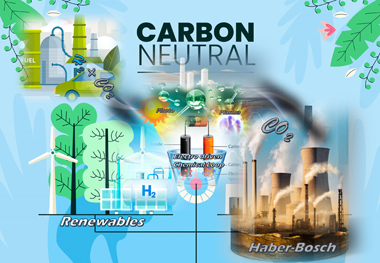
Enroute to the Carbon-Neutrality Goals via the Targeted Development of Ammonia as a Potential Nitrogen-Based Energy Carrier

The reliance of a future carbon-free horizon is strongly aligned with the long-term energy storage avenues which are completely derived from renewable energy resources. Ammonia with its high energy content and density can perform as a decent candidate for buffering the short-term storage options. However, the current NH3 production majorly feeding the current huge desire for…

Low-temperature reverse water gas-shift reaction over highly efficient Cu-hydrotalcites: Mechanistic insights on the role of malachite phase

Carbon dioxide (CO2) transformation into valuable fuels and chemicals is in most cases a challenge far from readiness nowadays. One possible route for its conversion is the reverse water gas shift reaction (rWGS), crucial for syngas generation and required for the chemical conversion of CO2 to fuels and platform chemicals. In this paper, well organized Cu/Zn/Al structures were proposed as efficient catalysts for rWGS reaction at low tem-peratures. The results of in situ…

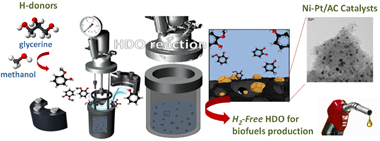
Guaiacol hydrotreatment in an integrated APR-HDO process: Exploring the promoting effect of platinum on Ni-Pt catalysts and assessing methanol and glycerol as hydrogen sources

This study presents an integrated approach combining aqueous phase reforming (APR) and hydrodeoxygenation (HDO) for the hydrotreatment of guaiacol, a model compound representing lignin-derived phenols in pyrolysis bio-oils. The APR process enables in-situ H2 generation, eliminating the need for an external hydrogen source. We examine the interplay between metal species, the Pt-promoting effect on Ni-Pt catalyst supported on activated carbon (AC), and the choice of hydrogen source (methanol or glycerol). Amongst the monometallic catalysts, a 1% Pt/AC catalyst notably achieved over 96% guaiacol conversion at 300 degrees C with either hydrogen source. Interestingly, when 0.5-1% of the Ni loading is replaced with…

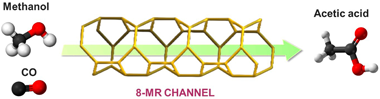
Impact of topology framework of microporous solids on methanol carbonylation: An operando DRIFTS-MS study

Methanol carbonylation was evaluated over heterogeneous catalysts based on Cu-exchanged zeolitic materials with different topology: Cu@MOR, Cu@FER, and Cu@ZSM-5. Despite the similar Si/Al ratios, it is crucial to acknowledge that the acid strength is influenced by the framework topology, as supported by the NH3-TPD results. This, along with other characterization techniques allowed us to estimate…

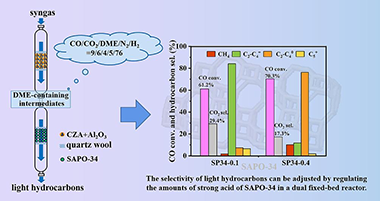
Catalytic conversion of syngas to light hydrocarbons via simulated intermediates CO/CO2/DME/N2/H2 over the regulated acidity of SAPO-34

  Direct conversion of syngas to light hydrocarbons has been intensively studied in recent years; however, the high selectivity of light hydrocarbons is still a challenging task to achieve a high CO conversion. Here, a bifunctional catalyst consisting of a methanol synthesis catalyst (CZA) and a methanol to dimethyl ether (DME) catalyst (Al2O3) was employed…

Water-assisted HDO of biomass model compounds enabled by Ru-based catalysts

Biofuels upgrading gathering momentum in view of the gradual depletion of fossil fuels and the pursuit of renewable energy sources to mitigate global warming. Hydrodeoxygenation (HDO) is a key reaction in the upgrading of bio-oil to produce hydrocarbon fuels or high-value chemicals. Oxygen removal in bio-oil increases its calorific value, improve thermal and chemical stability, reduce corrosiveness, etc., making the upgraded biooil suitable…

Process design and utilisation strategy for CO2 capture in flue gases. Technical assessment and preliminary economic approach for steel mills

The steel industry is the most relevant sector in emerging economies due to its application in numerous fields. However, steel manufacturing involves large energy investment and produces significant greenhouse gas emissions. The current world economic and environmental scenario therefore necessitates that improvements in the footprint of the steel industry be made without affecting its viability.…