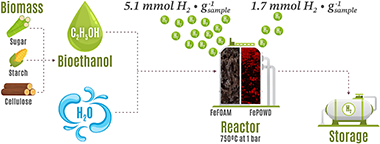
Green hydrogen production using doped Fe2O3 foams

  Hydrogen is the ideal energy vector to reduce our fossil-fuels dependency and diminish the climate change consequence. However, current production is still methane based. It is possible to produce hydrogen using bioethanol from the alcoholic fermentation of organic waste by chemical looping processes, but unfortunately current redox systems generate hydrogen with significant traces of CO. In the case of proton exchange membrane…

Towards efficient strain engineering of 2D materials: A four-points bending approach for compressive strain

Strain engineering, as a powerful strategy to tune the optical and electrical properties of two-dimensional (2D) materials by deforming their crystal lattice, has attracted significant interest in recent years. 2D materials can sustain ultra-high strains, even up to 10%, due to the lack of dangling bonds on their surface, making them ideal brittle solids. This…

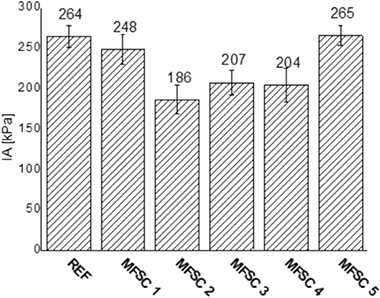
Spherosilicate-modified epoxy coatings with enhanced icephobic properties for wind turbines applications

Industries around the world use active methods, which include thermal, mechanical and chemical approaches, to reduce icing on aerodynamic surfaces such as wind turbines and aircraft. However, they are often inefficient, costly, and pollute the environment. For years, new coatings with anti-icing properties (so-called icephobic coatings) have been developed to either replace or work in…

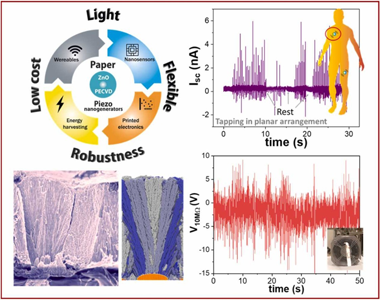
Paper-based ZnO self-powered sensors and nanogenerators by plasma technology

Nanogenerators and self-powered nanosensors have shown the potential to power low-consumption electronics and human-machine interfaces, but their practical implementation requires reliable, environmentally friendly and scalable processes for manufacturing and processing. Furthermore, the emerging flexible and wearable electronics technology demands direct fabrication onto innovative substrates such as paper and plastics typically incompatible with high process temperatures.…

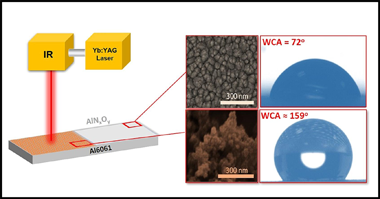
Exalted dual-scale surface roughening in laser ablated aluminum capped with a transparent thin film: Wetting and anti-icing behavior

Near infrared laser ablation of metals, specifically aluminum, has been systematically applied to generate surface roughness. Very high laser fluences may even lead to a so called «explosive» ablation regime where roughness becomes dramatically enhanced. In the present work we have developed an alternative methodology that, uti-lizing milder laser irradiation conditions (i.e. laser fluences from…

Effect of the effective refractive index on the radiative decay rate in nanoparticle thin films

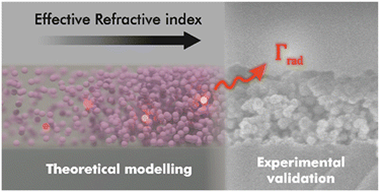
In this work, we theoretically and experimentally study the influence of the optical environment on the radiative decay rate of rare-earth transitions in luminescent nanoparticles forming a thin film. We use electric dipole sources in finite-difference time-domain simulations to analyze the effect of modifying the effective refractive index of transparent layers made of phosphor nanocrystals…

Ti6Al4V coatings on titanium samples by sputtering techniques: Microstructural and mechanical characterization

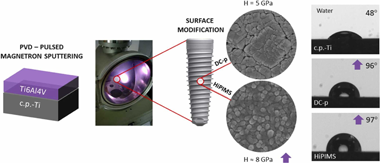
Although titanium is widely used as biomaterial, the control of the interface properties between its surface and the surrounding physiological environment (like bone, other tissues or biofluids) results crucial to achieve a successful osseointegration and good biomechanical and functional performance. In this work, commercially pure titanium (Grade IV) discs obtained by conventional powder metallurgy were…

Setting a comprehensive strategy to face the runback icing phenomena

The development of anti-icing robust surfaces is a hot topic nowadays and particularly crucial in the aeronautics or wind energy sectors as ice accretion can compromise safety and power generation efficiency. However, the current performance of most anti-icing strategies has been proven insufficient for such demanding applications, particularly in large unprotected zones, which located downstream…

Dielectric multilayers for broadband optical rotation enhancement

We design a simple dielectric multilayer capable of sustaining broadband superchiral surface waves. We show that the platform can produce large optical chirality enhancements in a wavelength range of hundreds of nanometers. We finally demonstrate that these properties result in the enhancement of the optical rotation signal well above two orders of magnitude, thus extending surface-enhanced chiral spectroscopies beyond the traditionally addressed circular dichroism signals.

Structure and Void Connectivity in Nanocolumnar Thin Films Grown by Magnetron Sputtering at Oblique Angles

The morphology and void connectivity of thin films grown by a magnetron sputtering deposition technique at oblique geometries were studied in this paper. A well-tested thin film growth model was employed to assess the features of these layers along with experimental data taken from the literature. A strong variation in the film morphology and pore topology was found as a function of the growth conditions, which have been linked to the different collisional transport of…