Structure of Glancing Incidence Deposited TiO2 Thin Films as Revealed by Grazing Incidence Small-Angle X-ray Scattering

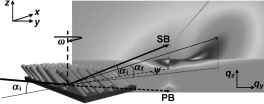
For the first time, grazing incidence small-angle X-ray scattering (GISAXS) analysis is used to characterize the Morphology of TiO2 thin films grown by glancing angle physical vapor deposition (GLAD). According to cross-section scanning electron microscopy (SEM) images, the films consist of near isotilted TiO2 columns of different length and width depending on film thickness. The…

Preparation and structural properties of YBCO films grown on GaN/c-sapphire hexagonal substrate

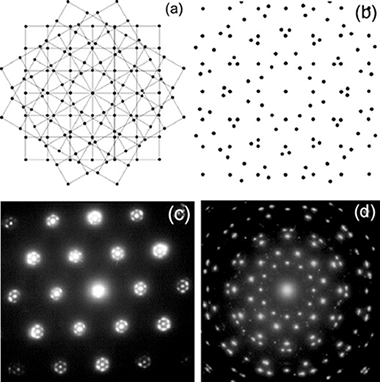
Epitaxial YBCO thin films have been grown on hexagonal GaN/c-sapphire substrates using DC magnetron sputtering and pulsed laser deposition. An MgO buffer layer has been inserted between the substrate and the YBCO film as a diffusion barrier. X-ray diffraction analysis indicates a c-axis oriented growth of the YBCO films. Φ-scan shows surprisingly twelve maxima. Transmission…

Effect of surface roughness and sterilization on bacterial adherence to ultra-high molecular weight polyethylene

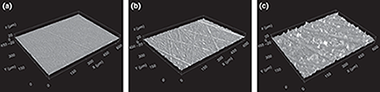
Sterilization with ethylene oxide (EO) and gas plasma (GP) are well-known methods applied to ultra-high molecular weight polyethylene (UHMWPE) surfaces in the belief that they prevent major material changes caused by gamma irradiation. However, the influence of these surface sterilization methods on bacterial adherence to UHMWPE is unknown. UHMWPE samples with various degrees of roughness…

Improved wear performance of ultra high molecular weight polyethylene coated with hydrogenated diamond like carbon

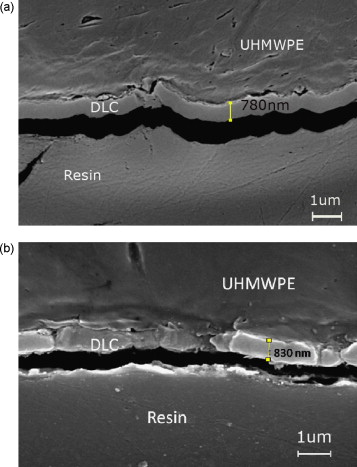
Hydrogenated diamond like carbon (DLCH) thin films were deposited on medical grade ultra high molecular weight polyethylene (UHMWPE) by radio frequency plasma enhanced chemical vapor deposition. The DLCH coating thicknesses ranged from 250 to 700 nm The substrates were disks made of UHMWPEs typically used for soft components in artificial Joints, namely virgin GUR 1050…

Study of the morphology of NiO nanostructures grown on highly ordered pyrolytic graphite, by the Tougaard method and atomic force microscopy: a comparative study

We studied the morphology of the deposits of NiO grown on highly ordered pyrolytic graphite (HOPG), by means of inelastic peak shape analysis and atomic force microscopy. The results obtained by both techniques show an excellent agreement. The results indicate that NiO grows on HOPG by following the Stransky-Krastanov type of growth.

Non-destructive depth compositional profiles by XPS peak-shape analysis

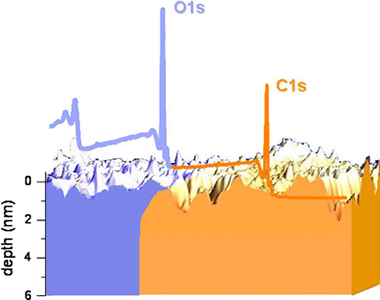
The measured peak shape and intensity of the photoemitted signal in X-ray photoelectron spectroscopy (XPS) experiments (elastic and inelastic parts included) are strongly correlated, through electron-transport theory, with the depth distribution of photoelectron emitters within the analyzed surface. This is the basis of so-called XPS peak-shape analysis (also known as the Tougaard method) for non-destructive…

Surface Functionalization, Oxygen Depth Profiles, and Wetting Behavior of PET Treated with Different Nitrogen Plasmas

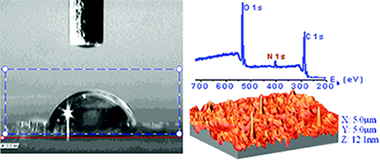
Polyethylene terephthalate (PET) plates have been exposed to different nitrogen containing plasmas with the purpose of incorporating nitrogen functional groups on its surface. Results with a dielectric barrier discharge (DBD) at atmospheric pressure and a microwave discharge (MW) at reduced pressure and those using an atom source working under ultrahigh vacuum conditions have been compared…

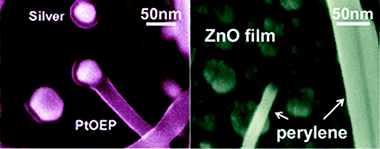
One-Step Dry Method for the Synthesis of Supported Single-Crystalline Organic Nanowires Formed by pi-Conjugated Molecules

We present for the first time a general vacuum process for the growth of supported organic nanowires formed by pi-conjugated molecules, including metalloporphyrins, metallophthalocyanines, and perylenes. This methodology consists on a one-step physical vapor deposition of the pi-conjugated molecules. The synthesis is carried out at controlled temperature on substrates with tailor morphology which allows the…