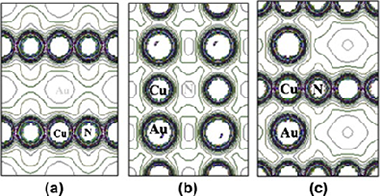
Structure determination and electronic structure of Cu3Au0.5N

This study investigated the formation of a Cu3Au-nitride alloy using both experimental and computational methods. The alloy was produced as thin film by sputtering a Cu3Au target in a nitrogen atmosphere. The films were characterized for structure and composition by spectroscopic and diffraction techniques. The structure was established by Rietveld and ab inito methods. The…

Osteoconductive Potential of Barrier NanoSiO(2) PLGA Membranes Functionalized by Plasma Enhanced Chemical Vapour Deposition

The possibility of tailoring membrane surfaces with osteoconductive potential, in particular in biodegradable devices, to create modified biomaterials that stimulate osteoblast response should make them more suitable for clinical use, hopefully enhancing bone regeneration. Bioactive inorganic materials, such as silica, have been suggested to improve the bioactivity of synthetic biopolymers. An in vitro study on…

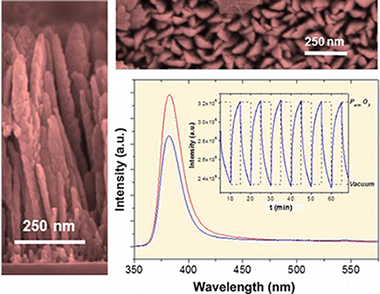
Oxygen Optical Sensing in Gas and Liquids with Nanostructured ZnO Thin Films Based on Exciton Emission Detection

Transparent nanocolumnar porous ZnO thin films have been prepared by plasma-enhanced chemical vapor deposition. By controlling the H-2/O-2 ratio in the plasma gas, the deposition conditions were optimized to obtain an intense exciton emission at around 381 nm and virtually no luminescence in the visible region associated with electronic states in the gap. The intensity…

Mechanisms of Electron Transport and Recombination in ZnO Nanostructures for Dye-Sensitized Solar Cells

ZnO is an attractive material for applications in dye-sensitized solar cells and related devices. This material has excellent electron-transport properties in the bulk but its electron diffusion coefficient is much smaller in mesoporous films. In this work the electron-transport properties of two different kinds of dye-sensitized ZnO nanostructures are investigated by small-perturbation electrochemical techniques. For…

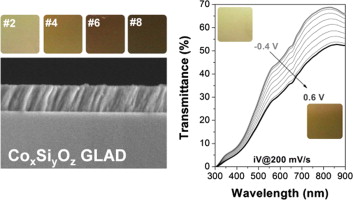
Tuning the transmittance and the electrochromic behavior of CoxSiyOz thin films prepared by magnetron sputtering at glancing angle

This work reports the synthesis and the characterization of amorphous CoxSiyOz thin films prepared by magnetron sputtering from a single cathode. Porous layers with outstanding electrochromic properties are obtained at room temperature in one step by performing the deposition at a glancing angle configuration. The electrochromic behavior of these layers in a basic aqueous medium…

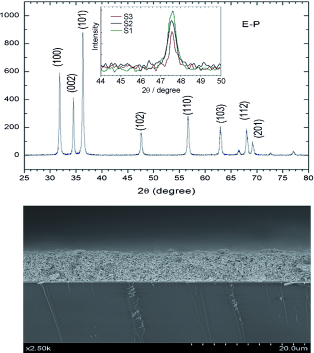
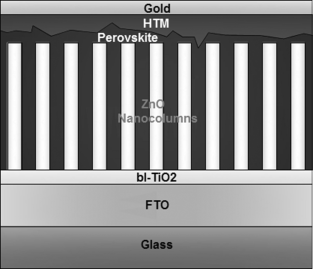
Perovskite Solar Cells Based on Nanocolumnar PlasmaDeposited ZnO Thin Films

ZnO thin films having a nanocolumnar microstructure are grown by plasma-enhanced chemical vapor deposition at 423 K on pre-treated fluorine-doped tin oxide (FTO) substrates. The films consist of c-axis-oriented wurtzite ZnO nanocolumns with well-defined microstructure and crystallinity. By sensitizing CH3NH3PbI3 on these photoanodes a power conversion of 4.8 % is obtained for solid-state solar cells. Poly(triarylamine)…

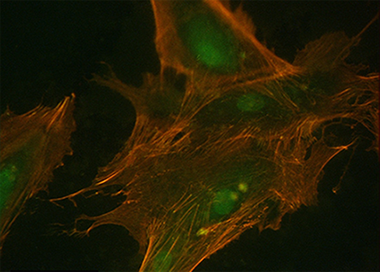
Osteoblasts Interaction with PLGA Membranes Functionalized with Titanium Film Nanolayer by PECVD. In vitro Assessment of Surface Influence on Cell Adhesion during Initial Cell to Material Interaction

New biomaterials for Guided Bone Regeneration (GBR), both resorbable and non-resorbable, are being developed to stimulate bone tissue formation. Thus, the in vitro study of cell behavior towards material surface properties turns a prerequisite to assess both biocompatibility and bioactivity of any material intended to be used for clinical purposes. For this purpose, we have…

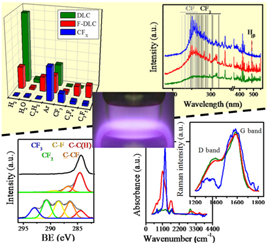
c- C4F8 Plasmas for the Deposition of Fluorinated Carbon Films

Highly fluorinated polymeric (CFX), fluorine containing diamond-like carbon (F-DLC) and, for comparison, diamond-like carbon (DLC) films have been plasma deposited in a RF parallel plate reactor by using c-C4F8 as fluorine precursor and different mixtures of argon, C2H2, and H2. Plasmas have been characterized by optical emission spectroscopy, mass spectrometry, and Langmuir probe measurements. Differences…