Antibacterial response of titanium oxide coatings doped by nitrogen plasma immersion ion implantation

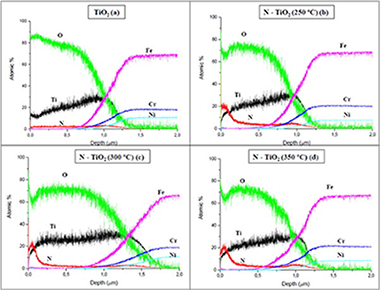
Plasma immersion ion implantation technology has been utilized to enhance the photocatalytic activity of the anatase phase of TiO2 thin films deposited by cathodic arc evaporation PVD. The main objective of this study is to shift the light absorbance of the titania in order to obtain antibacterial activity under visible light irradiation. TiO2 thin films, deposited on…

Multicolored Emission and Lasing in DCM-Adamantane Plasma Nanocomposite Optical Films

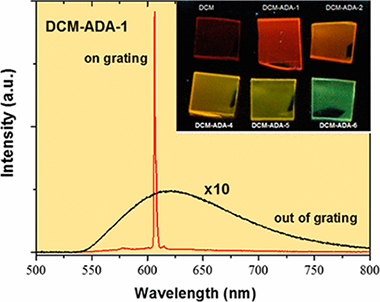
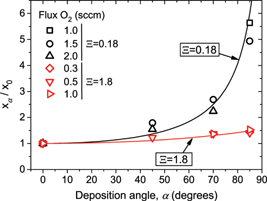
We present a low-temperature versatile protocol for the fabrication of plasma nanocomposite thin films to act as tunable emitters and optical gain media. The films are obtained by the remote plasma-assisted deposition of a 4-(dicyano-methylene)-2-methy1-6-(4-dimethylamino-styry1)-4Hpyran (DCM) laser dye alongside adamantane. The experimental parameters that determine the concentration of the dye in the films and their…

Cholesterol biosensing with a polydopamine-modified nanostructured platinum electrode prepared by oblique angle physical vacuum deposition

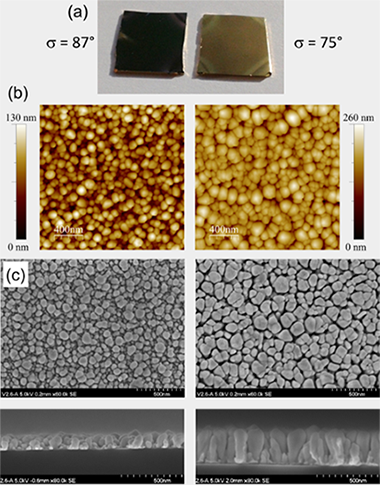
This paper reports a novel cholesterol biosensor based on nanostructured platinum (Pt) thin films prepared by Magnetron Sputtering (MS) in an oblique angle (OAD) configuration. Pt thin films were deposited onto a gold screen-printed electrode and characterized using Rutherford Back Scattering (RBS), Scanning Electron Microscopy (SEM), X-ray Diffraction (XRD), Cyclic Voltammetry (CV), X-ray Photo-electron Spectroscopy…

High vacuum synthesis and ambient stability of bottom-up graphene nanoribbons

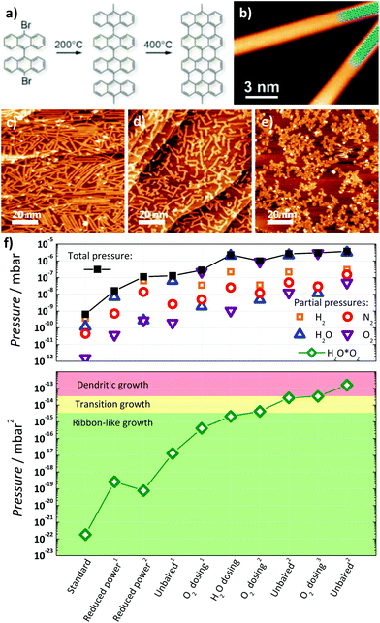
Carbon-based nanomaterials such as graphene are at a crucial point in application development, and their promising potential, which has been demonstrated at the laboratory scale, must be translated to an industrial setting for commercialization. Graphene nanoribbons in particular overcome one limitation of graphene in some electronic applications because they exhibit a sizeable bandgap. However, synthesis…

Preparation and Optimization of Fluorescent Thin Films of Rosamine-SiO2/TiO2 Composites for NO2 Sensing

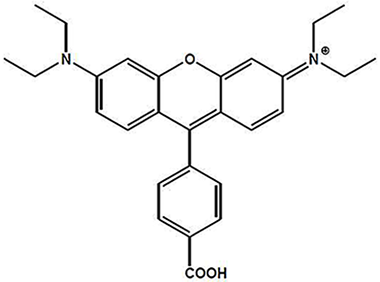
The incorporation of a prototypical rosamine fluorescent dye from organic solutions into transparent and microstructured columnar TiO2 and SiO2 (MO2) thin films, prepared by evaporation at glancing angles (GAPVD), was evaluated. The aggregation of the adsorbed molecules, the infiltration efficiency and the adsorption kinetics were studied by means of UV-Vis absorption and fluorescence spectroscopies. Specifically,…

Optical Gas Sensing of Ammonia and Amines Based on Protonated Porphyrin/TiO2 Composite Thin Films

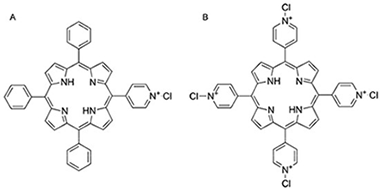
Open porous and transparent microcolumnar structures of TiO2 prepared by physical vapour deposition in glancing angle configuration (GLAD-PVD) have been used as host matrices for two different fluorescent cationic porphyrins, 5-(N-methyl 4-pyridyl)-10,15,20-triphenyl porphine chloride (MMPyP) and meso-tetra (N-methyl 4-pyridyl) porphine tetrachloride (TMPyP). The porphyrins have been anchored by electrostatic interactions to the microcolumns by self-assembly…

Non-Enzymatic Glucose Sensors Based on Nickel Nanoporous Thin Films Prepared by Physical Vapor Deposition at Oblique Angles for Beverage Industry Applications

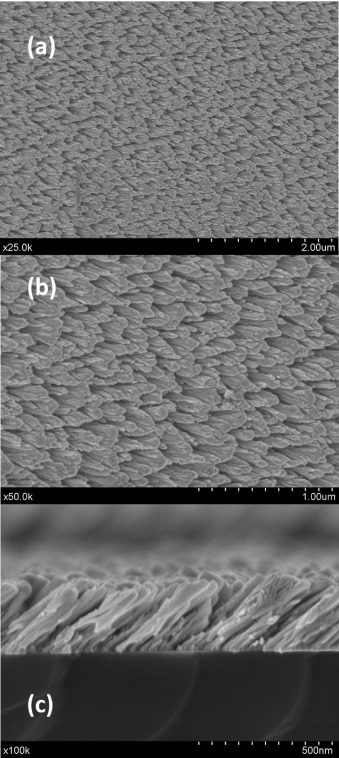
Nickel nanoporous thin films deposited on Indium tin oxide conductive plates have been prepared by physical vapor deposition in an oblique angle configuration. The scanning electron microscopy characterization of these films revealed a microstructure formed by tilted nanocolumns of ca. 40-60 nm of diameter inclined by ca. 26 degrees with respect to the normal. These…