Self-Assembly of the Nonplanar Fe(III) Phthalocyanine Small-Molecule: Unraveling the Impact on the Magnetic Properties of Organic Nanowires

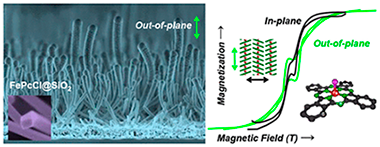
In this article we show for the first time the formation of magnetic supported organic nanowires (ONWs) driven by self-assembly of a nonplanar Fe(III) phthalocyanine chloride (FePcCl) molecule. The ONWs grow by a crystallization mechanism on roughness-tailored substrates. The growth methodology consists of a vapor deposition under low vacuum and mild temperature conditions. The structure,…

Microstructural engineering and use of efficient poison resistant Au-doped Ni-GDC ultrathin anodes in methane-fed solid oxide fuel cells

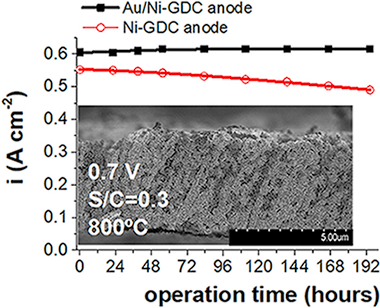
Ultrathin porous solid oxide fuel cell (SOFC) anodes consisting of nickel-gadolinia-dopedceria (Ni-GDC) cermets with a unique porous micro-columnar architecture with intimate contact between the GDC and the Ni phases were made by magnetron sputtering at an oblique deposition angle and characterised in detail by a variety of methods prior to use in hydrogen or methane-fuelled…

Nickel/Copper Bilayer-modified Screen Printed Electrode for Glucose Determination in Flow Injection Analysis

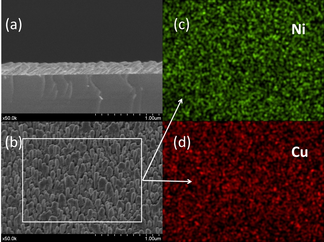
This work reports about the performance of a Ni/Cu-modified screen printed electrodes (SPE/Ni/Cu), prepared by physical vapor deposition (PVD) in an oblique angle configuration (OAD), for non-enzymatic glucose sensing applications. SPE/Ni/Cu electrodes showed an excellent reversibility and a catalytic behavior for detection of glucose that were controlled by the diffusion of reactants up to the…

Silver and gold nanoparticles in nanometric confined templates: synthesis and alloying within the anisotropic pores of oblique angle deposited films

In this work we have developed an infiltration methodology to incorporate metal nanoparticles (NPs) of controlled size and shape into the open voids available in oblique angle deposited thin films. These NPs exhibited well-defined surface plasmon resonances (SPRs). The nanometric confined space provided by their porous microstructure has been used as a template for the…

In Vitro and in Vivo Study of Poly(Lactic-co-Glycolic) (PLGA) Membranes Treated with Oxygen Plasma and Coated with Nanostructured Hydroxyapatite Ultrathin Films for Guided Bone Regeneration Processes

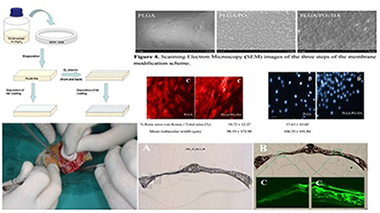
The novelty of this study is the addition of an ultrathin layer of nanostructured hydroxyapatite (HA) on oxygen plasmamodified poly(lactic-co-glycolic) (PLGA) membranes (PO2) in order to evaluate the efficiency of this novel material in bone regeneration. Methods: Two groups of regenerative membranes were prepared: PLGA (control) and PLGA/PO2/HA (experimental). These membranes were subjected to cell…

Enhanced green fluorescent protein in optofluidic Fabry-Perot microcavity to detect laser induced temperature changes in a bacterial culture

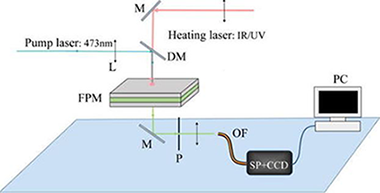
Thermal therapy using laser sources can be used in combination with other cancer therapies to eliminate tumors. However, high precision temperature control is required to avoid damage in healthy surrounding tissues. Therefore, in order to detect laser induced temperature changes, we have used the fluorescence signal of the enhanced Green Fluorescent Protein (eGFP) over-expressed in…

High performance novel gadolinium doped ceria/yttria stabilized zirconia/nickel layered and hybrid thin film anodes for application in solid oxide fuel cells

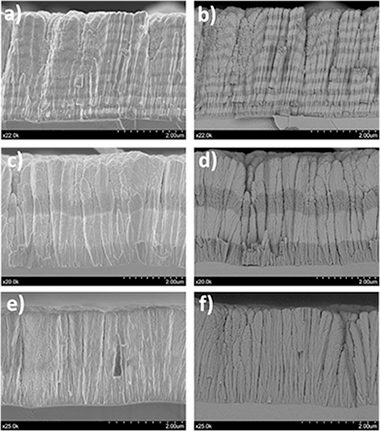
Magnetron sputtering under oblique angle deposition was used to produce Ni-containing ultra thin film anodes comprising alternating layers of,gadolinium doped ceria (GDC) and yttria stabilized zirconia (YSZ) of either 200 nm or 1000 nm thickness. The evolution of film structure from initial deposition, through calcination and final reduction was examined by XRD, SEM, TEM and…