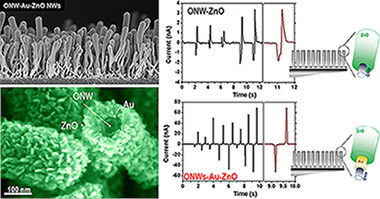
3D core-multishell piezoelectric nanogenerators

The thin film configuration presents obvious practical advantages over the 1D implementation in energy harvesting systems such as easily manufacturing and processing, and long-lasting and stable devices. However, ZnO-based piezoelectric nanogenerators (PENGs) generally rely on the exploitation of single-crystalline nanowires because of their self-orientation in the c-axis direction and ability to accommodate long deformations resulting in high piezoelectric performance. Herein, we show an innovative approach…

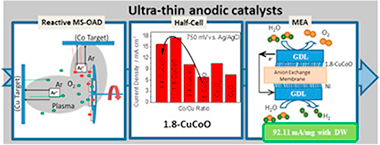
CuxCo3-xO4 ultra-thin film as efficient anodic catalysts for anion exchange membrane water electrolysers

CuxCo3-xO4 ultra-thin films, deposited by magnetron sputtering at oblique angles have been used as anodic catalysts in anion exchange membrane water electrolysers. It has been demonstrated that the used deposition procedure provides porous and amorphous samples with a strict control of the total catalyst load and Co/Cu ratio. Electrocatalytic tests showed a maximum performance for…

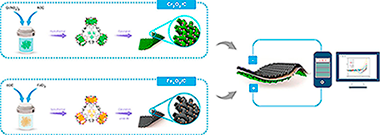
Controlled thermolysis of MIL-101(Fe, Cr) for synthesis of FexOy/porous carbon as negative electrode and Cr2O3/porous carbon as positive electrode of supercapacitor

In the present study, two kinds of metal oxide/carbon nanocomposite were prepared through calcination of MIL-101(Fe, Cr). The morphological and structural properties of the specimens were investigated using X-ray diffraction, Fourier-transform infrared spectroscopy, Brunauer, Emmett, and Teller analysis, energy dispersive Xray spectroscopy, X-ray photoelectron spectroscopy and scanning electron microscopy. The electrode materials were also electrochemically…

CuxCo3-xO4 ultra-thin film as efficient anodic catalysts for anion exchange membrane water electrolysers

CuxCo3-xO4 ultra-thin films, deposited by magnetron sputtering at oblique angles have been used as anodic catalysts in anion exchange membrane water electrolysers. It has been demonstrated that the used deposition procedure provides porous and amorphous samples with a strict control of the total catalyst load and Co/Cu ratio. Electrocatalytic tests showed a maximum performance for…

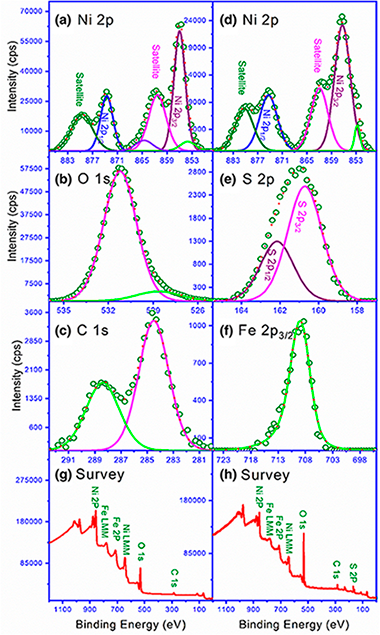
Comparative studies on electrochemical energy storage of NiFe-S nanoflake and NiFe-OH towards aqueous supercapacitor

In this study, electrochemical energy storage performances of an efficient Ni-Fe sulfide and hydroxide supported on porous nickel foam are compared. X-ray diffraction (XRD), X-rayphotoelectron spectroscopy (XPS) and energy-dispersive X-ray spectrometer (EDS) results confirmed the formation of Ni-Fe-S and Ni-Fe-OH electrodes. In addition, Brunauer-Emmett Teller (BET) was used to determine the specific surface area of…

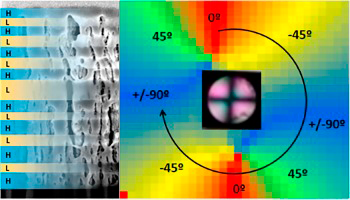
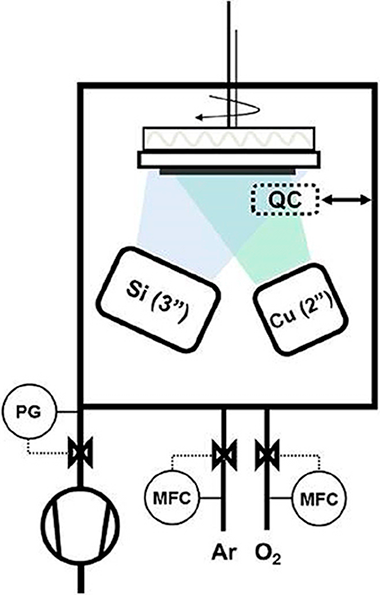
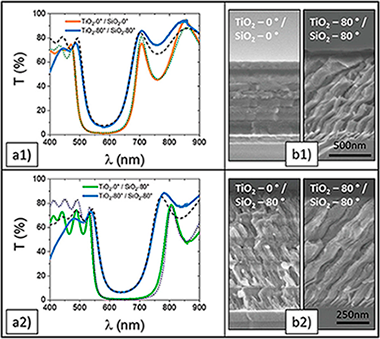
Environmentally Tight TiO2-SiO2 Porous 1D-Photonic Structures

Although thin film porosity is the basis of many optical sensors, it can be deleterious for a stable optical behavior of passive optical elements due to the condensation of water and other vapors in their pores. This paper proposes a new strategy for the magnetron sputtering (MS) fabrication of environmentally tight SiO2-TiO2 porous multilayers. Thin…