The wrinkling concept applied to plasma-deposited polymer-like thin films: A promising method for the fabrication of flexible electrodes

In this communication, we report on an innovative solvent-free method that allows for the design of nano-/micropatterns with tuneable dimensions. Our approach is based on the spontaneous wrinkling phenomenon taking place in a bilayer system formed by a mechanically responsive bottom plasma polymer layer and a top aluminum thin film. The dimensions of the wrinkles can be adjusted in a wide range (i.e., from nanometer to micrometer range) by modulating the cross-linking density as well as the thickness of the plasma polymer layer. Finally, it is demonstrated that these wrinkled…

Chemistry and Electrocatalytic Activity of Nanostructured Nickel Electrodes for Water Electrolysis

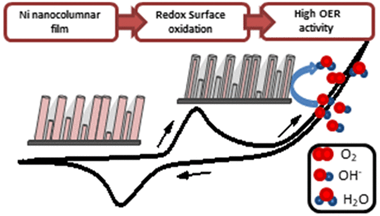
Herein we have developed nanostructured nickel-based electrode films for anion exchange membrane water electrolysis (AEMWE). The electrodes were prepared by magnetron sputtering (MS) in an oblique angle configuration and under various conditions aimed at preparing metallic, oxide, or oxyhydroxide films. Their electrochemical analysis has been complemented with a thorough physicochemical characterization to determine the effect…

Supported Porous Nanostructures Developed by Plasma Processing of Metal Phthalocyanines and Porphyrins

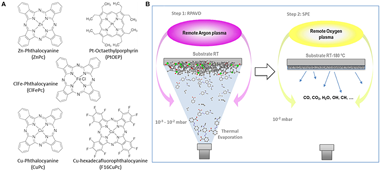
The large area scalable fabrication of supported porous metal and metal oxide nanomaterials is acknowledged as one of the greatest challenges for their eventual implementation in on-device applications. In this work, we will present a comprehensive revision and the latest results regarding the pioneering use of commercially available metal phthalocyanines and porphyrins as solid precursors…

Optical properties of molybdenum in the ultraviolet and extreme ultraviolet by reflection electron energy loss spectroscopy

Optical properties of polycrystalline molybdenum are determined from ultraviolet up to extreme ultraviolet by reflection electron energy loss spectroscopy (REELS). Calculations are performed within the dielectric response theory by means of the quantitative analysis of electron energy losses at surfaces QUEELS-epsilon (k, omega)-REELS software [Surf. Interface Anal. 36, 824 (2004)] that allows the simulation of…

Advanced Strategies in Thin Films Engineering by Magnetron Sputtering

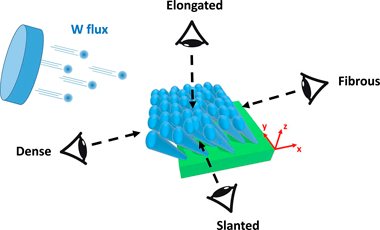
This Special Issue contains a series of reviews and papers representing some recent results and some exciting perspectives focused on advanced strategies in thin films growth, thin films engineering by magnetron sputtering and related techniques. Innovative fundamental and applied research studies are then reported, emphasizing correlations between structuration process parameters, new ideas and approaches for…

Positron annihilation analysis of nanopores and growth mechanism of oblique angle evaporated TiO2 and SiO2 thin films and multilayers

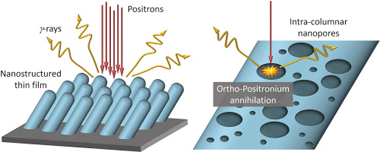
The nano-porosity embedded into the tilted and separated nanocolumns characteristic of the microstructure of evaporated thin films at oblique angles has been critically assessed by various variants of the positron annihilation spectroscopy. This technique represents a powerful tool for the analysis of porosity, defects and internal interfaces of materials, and has been applied to different…

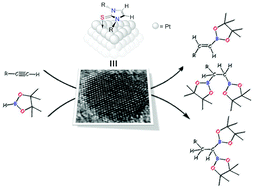
Platinum nanoparticles stabilized by N-heterocyclic thiones. Synthesis and catalytic activity in mono- and di-hydroboration of alkynes

N-Heterocyclic Thiones (NHT) proved to be efficient ligands for the stabilization of small platinum nanoparticles (1.3-1.7 nm), synthesized by decomposition of [Pt(dba)(2)], under a H-2 atmosphere, in the presence of variable sub-stoichiometric amounts of the NHT. Full characterization by means of TEM, HR-TEM, NMR, ICP, TGA and XPS have been carried out, providing information about the nature of the metal nanoparticles and the interaction of the NHT ligands to the metal surface. Importantly, DFT calculations indicate that some NHT ligands interact with…