Active sites and optimization of mixed copper-cobalt oxide anodes for anion exchange membrane water electrolysis

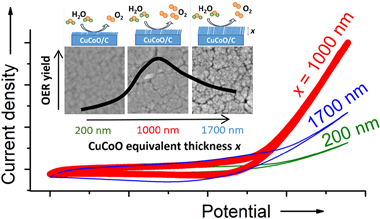
The optimization of the catalysts incorporated to the electrodes for anion exchange membrane water electmlysers is a key issue to maximize their performance through the improvement of the oxygen evolution reaction (OER) yield. In this work, we show that the modification of the microstructure and the chemical properties of a mixed copper-cobalt oxide anode may…

Patterning and control of the nanostructure in plasma thin films with acoustic waves: mechanical vs. electrical polarization effects

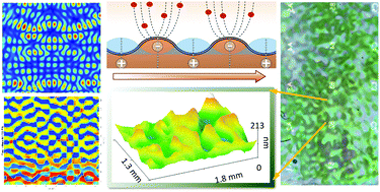
Nanostructuration and 2D patterning of thin films are common strategies to fabricate biomimetic surfaces and components for microfluidic, microelectronic or photonic applications. This work presents the fundamentals of a surface nanotechnology procedure for laterally tailoring the nanostructure and crystalline structure of thin films that are plasma deposited onto acoustically excited piezoelectric substrates. Using magnetron sputtering…

Physicochemical surface analysis and germination at different irrigation conditions of DBD plasma‐treated wheat seeds

Plasma treatment is increasingly being explored as an effective presowing treatment improving seed germination. This study examines the synergetic effect of the irrigation condition and the physicochemical surface properties of wheat seeds subjected to atmospheric dielectric barrier discharge plasma activation on their water uptake and germination. Extensive surface analysis revealed a remarkably enhanced wettability of…

Anisotropic Resistivity Surfaces Produced in ITO Films by Laser-Induced Nanoscale Self-organization

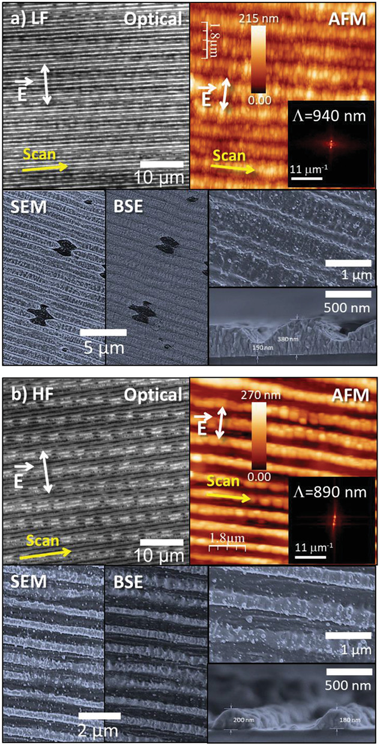
Highly anisotropic resistivity surfaces are produced in indium tin oxide (ITO) films by nanoscale self-organization upon irradiation with a fs-laser beam operating at 1030 nm. Anisotropy is caused by the formation of laser-induced periodic surface structures (LIPSS) extended over cm-sized regions. Two types of optimized structures are observed. At high fluence, nearly complete ablation at…

Wetting and spreading of liquid lithium onto nanocolumnar tungsten coatings tailored through the topography of stainless steel substrates

The use of liquid metal as an alternative to cover the plasma-exposed areas of fusion reactors has called for the development of substrates where refilling and metal spreading occur readily and at reasonably low temperatures. In the search for common materials for this purpose, we show that nanostructured tungsten coatings deposited on stainless steel (SS)…

Thin film electroluminescent device based on magnetron sputtered Tb doped ZnGa2O4 layers

Photoluminescent (PL) layers and electroluminescent (EL) systems prepared by different methods have been systematically studied for the fabrication of flat panel displays, monitoring screens, and lighting systems. In this work we report about a new procedure of preparing Tb doped ZnGa2O4 green luminescent thin films at low temperature that consists of the simultaneous reactive magnetron…

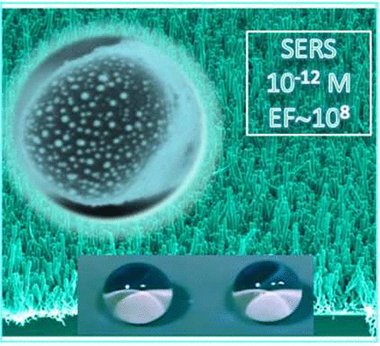
Plasma-Enabled Amorphous TiO2 Nanotubes as Hydrophobic Support for Molecular Sensing by SERS

We devise a unique heteronanostructure array to overcome a persistent issue of simultaneously utilizing the surface-enhanced Raman scattering, inexpensive, Earth-abundant materials, large surface areas, and multifunctionality to demonstrate near single-molecule detection. Room-temperature plasma-enhanced chemical vapor deposition and thermal evaporation provide high-density arrays of vertical TiO2 nanotubes decorated with Ag nanoparticles. The role of the TiO2 nanotubes is…

Thermo-optic response of MEH-PPV films incorporated to monolithic Fabry-Perot microresonators

Poly[2-methoxy-5-(2′-ethylhexyloxy)-1,4-phenylene vinylene] (MEH-PPV) is a semiconducting optically active polymer widely used in optoelectronics research. MEH-PPV can be commercially acquired in a large range of molecular weights. However, the influence of this property on the optical performance of the polymer is often disregarded. In this paper, the thermal dependence of the refractive index of MEH-PPV thin…

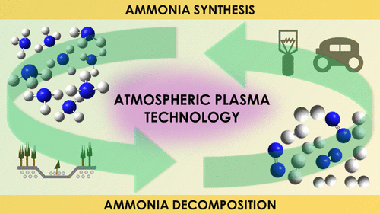
Unraveling Discharge and Surface Mechanisms in Plasma-Assisted Ammonia Reactions

Current studies on ammonia synthesis by means of atmospheric pressure plasmas respond to the urgent need of developing less environmentally aggressive processes than the conventional Haber-Bosch catalytic reaction. Herein, we systematically study the plasma synthesis of ammonia and the much less investigated reverse reaction (decomposition of ammonia into nitrogen and hydrogen). Besides analyzing the efficiency…