Design and Characterization of ITO-Covered Resonant Nanopillars for Dual Optical and Electrochemical Sensing

In this work we present a dual optical and electrochemical sensor based on SiO2/Si3N4 resonant nanopillars covered with an indium tin oxide (ITO) thin film. A 25-30 nm thick ITO layer deposited by magnetron sputtering acts as an electrode when incorporated onto the nanostructured array, without compromising the optical sensing capability of the nanopillars. Bulk…

Optimization of anion exchange membrane water electrolyzers using ionomer-free electrodes

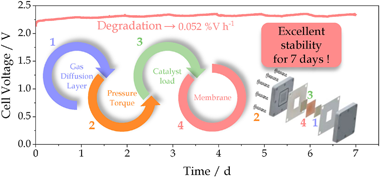
This work is carried out in the context of the anion exchange membrane water electrolysis (AEMWE) and pursuits to determine the influence of different cell components on the global electrochemical performance. Ionomer-free electrodes consisting of anodic Ni-Fe and cathodic Ni electrocatalysts deposited by magnetron sputtering in an oblique angle deposition configuration were utilized for this study. In addition to the characteristics and equivalent thickness of the electrocatalysts, other factors affecting the…

One-Dimensional Photonic Crystal for Surface Mode Polarization Control

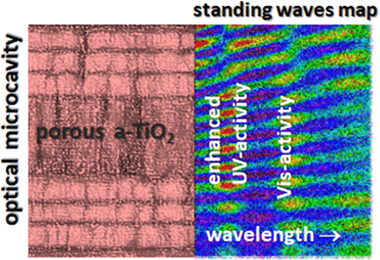
Bloch surface waves sustained by truncated 1D photonic crystals (1DPCs) are well known tools for surface-enhanced spectroscopy. They provide strongly confined fields with uniform distribution over a large surface area, a characteristic exploited in standard refractometric sensing. However, their application to polarization-sensitive investigations is not straightforward because the transverse electric (TE) and magnetic (TM) surface…

Nanostructured nickel based electrocatalysts for hybrid ethanol-water anion exchange membrane electrolysis

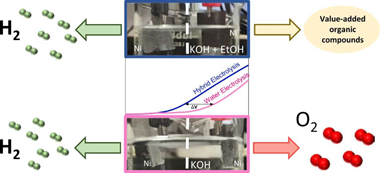
Ni and Ni-Fe nanostructured layers prepared by magnetron sputtering in an oblique angle deposition configuration (MS-OAD) have been used as anode and cathode catalysts for hybrid ethanol-water electrolysis in an anion exchange membrane (AEM) electrolyser. Physico-chemical and electrochemical characterization in a threeelectrode cell has been carried out to determine the optimal characteristics of the anodic…

Electron beam evaporated vs. magnetron sputtered nanocolumnar porous stainless steel: Corrosion resistance, wetting behavior and anti-bacterial activity

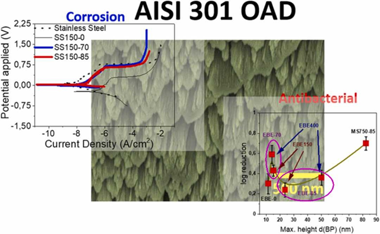
Stainless steel (SS), widely used because of its outstanding corrosion protection properties, does not possess any particular anti-stain or anti-bacterial activity as required for household and sanitary applications. This work reports the fabrication of SS thin films that, keeping a similar corrosion resistance than the bulk material, presents hydrophobicity and anti-bacterial activity. These thin films…

Influence of Femtosecond Laser Modification on Biomechanical and Biofunctional Behavior of Porous Titanium Substrates

Bone resorption and inadequate osseointegration are considered the main problems of titanium implants. In this investigation, the texture and surface roughness of porous titanium samples obtained by the space holder technique were modified with a femtosecond Yb-doped fiber laser. Different percentages of porosity (30, 40, 50, and 60 vol.%) and particle range size (100-200 and…