Multiple pollutants removal by functionalized heterostructures based on Na-2-Mica

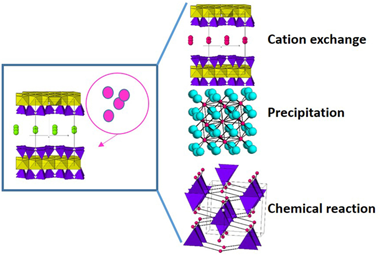
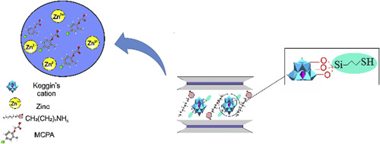
Organomica, C8-2-Mica, was obtained from a high charged synthetic mica, Na-2-Mica, by cation exchange reaction with octylammonium cations and these were used to host other bulky guest species such as polyhydroxy aluminium cations, Al(13)20. The hydrolization of 3-mercaptopropyltrimethoxysilane (MPTMS) allowed the covalent attachment with hydroxyl groups of the oligomeric cation, providing thiol groups that create…

Novel procedure for laboratory scale production of composite functional filaments for additive manufacturing

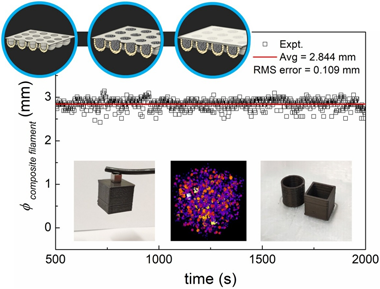
Successful 3D printing by material extrusion of functional parts for new devices requires high quality filaments. Uniform homogeneity and good dispersion of particles embedded in filaments typically takes several cycles of extrusion or well-prepared feedstock by injection molding, industrial kneaders or twin-screw compounding. These methods need specific production devices that are not available in many…

Elucidating esterification reaction during deposition of cutin monomers from classical molecular dynamics simulations

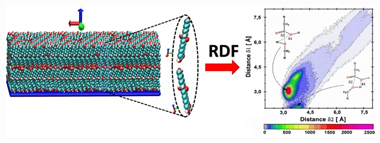
The structural behavior of some cutin monomers, when deposited on mica support, was extensively investigated by our research group. However, other events, such as esterification reaction (ER), are still a way to explore. In this paper, we explore possible ER that could occur when these monomers adsorb on support. Although classical molecular dynamics simulations are…

An electrochemical evaluation of nitrogen-doped carbons as anodes for lithium ion batteries

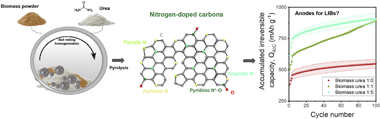
New anode materials beyond graphite are needed to improve the performance of lithium ion batteries (LIBs). Chemical doping with nitrogen has emerged as a simple strategy for enhancing lithium storage in carbon-based anodes. While specific capacity and rate capability are improved by doping, little is known about other key electrochemical properties relevant to practical applications.…

Performance trends in wall-flow diesel particulate filters: Comparative analysis of their filtration efficiency and pressure drop

Soot and particulate emissions from the transport sector are a major concern worldwide, given their harmful effects on public health and the environment. On-road vehicles are the main contributing source to this kind of pollution. They are strictly regulated in many countries, with limitations on the number and concentration of released particles, and they must…

Sustainable, High-Barrier Polyaleuritate/Nanocellulose Biocomposites

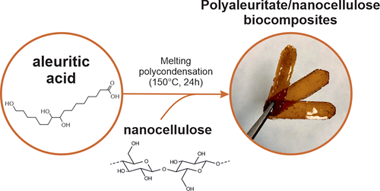
Free-standing and flexible biocomposite films formed by a polyaleuritate matrix and nanocellulose fillers (i.e., cellulose nanofibrils) have been fabricated by a sustainable process. For this, 9,10,16-trihydroxyhexadecanoic (aleuritic) acid from shellac and nanocellulose were blended at different ratios in water through a sonication process. Polymerization of the polyhydroxylated fatty acid into polyaleuritate was induced by a…

New biomorphic filters to face upcoming particulate emissions policies: A review of the FIL-BIO-DIESEL project

With a high number of diesel vehicles worldwide, particulate emission control is an urgent issue with a global impact, from the health of citizens to commercial future of this technology in some transport segments. Particulate filters are widely used in automotive engines to comply emissions regulations, but current technologies have room for improvement as they…

Bio-Based Coatings for Food Metal Packaging Inspired in Biopolyester Plant Cutin

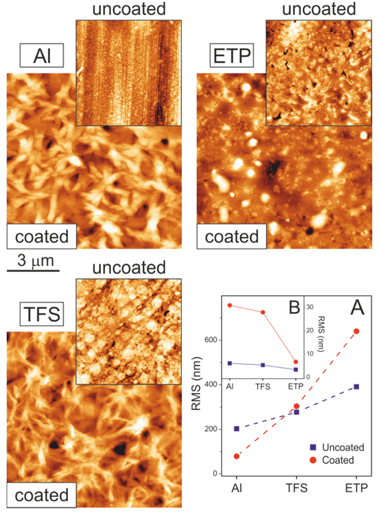
Metals used for food canning such as aluminum (Al), chromium-coated tin-free steel (TFS) and electrochemically tin-plated steel (ETP) were coated with a 2-3-mu m-thick layer of polyaleuritate, the polyester resulting from the self-esterification of naturally-occurring 9,10,16-trihydroxyhexadecanoic (aleuritic) acid. The kinetic of the esterification was studied by FTIR spectroscopy; additionally, the catalytic activity of the surface…