A zirconia/tantalum biocermet: in vitro and in vivo evaluation for biomedical implant applications

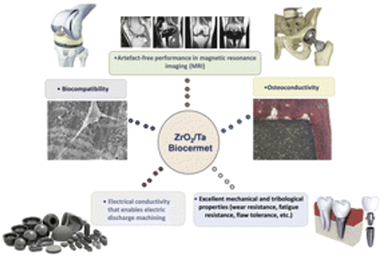
A biocermet made of zirconia/20 vol% tantalum (3Y-TZP/Ta) is a new composite with exceptional capabilities due to a combination of properties that are rarely achieved in conventional materials (high strength and toughness, cyclic fatigue resistance and flaw tolerance, wear resistance, corrosion resistance, electrical conductivity, etc.). In this study, for the first time, the biomedical performance…

Direct laser writing of MnOx decorated laser-induced graphene on paper for sustainable microsupercapacitor fabrication

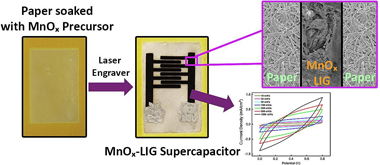
Laser-induced graphene (LIG) on paper is a popular choice for fabricating flexible micro-supercapacitors (MSCs) as it is a simple and sustainable process. However, carbon-based MSC electrodes have limited energy densities. To address this challenge, this study presents a highly reproducible and cost-effective method for decorating manganese oxide (MnOx) x ) on interdigital LIG MSC electrodes,…

Transparent, plasticized cellulose-glycerol bioplastics for food packaging applications

Free-standing films have been obtained by drop-casting cellulose-glycerol mixtures (up to 50 wt% glycerol) dissolved in trifluoroacetic acid and trifluoroacetic anhydride (TFA:TFAA, 2:1, v:v). A comprehensive examination of the optical, structural, mechanical, thermal, hydrodynamic, barrier, migration, greaseproof, and biodegradation characteristics of the films was conducted. The resulting cellulose-glycerol blends exhibited an amorphous molecular structure and a…

Materials for 3D Printed Metal and Metal-Ion Batteries

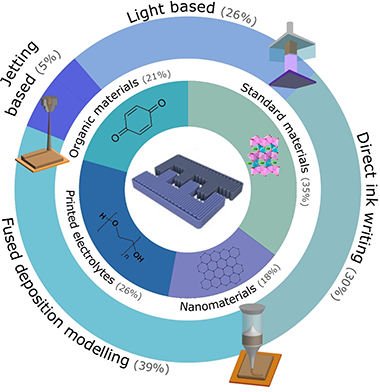
The review provides an overview of the latest innovations, trends, and challenges in the field of 3D-printed metal and metal-ion batteries. It focuses on the materials used in the printing of batteries, including electrodes, electrolytes, and other electroactive components. Compared to other high-quality reviews on the topic, this review provides a broader selection of materials…

Green Fabrication of Stackable Laser-Induced Graphene Micro-Supercapacitors under Ambient Conditions: Toward the Design of Truly Sustainable Technological Platforms

Extensive research into green technologies is driven by the worldwide push for eco-friendly materials and energy solutions. The focus is on synergies that prioritize sustainability and environmental benefits. This study explores the potential of abundant, non-toxic, and sustainable resources such as paper, lignin-enriched paper, and cork for producing laser-induced graphene (LIG) supercapacitor electrodes with improved…

Direct Laser Writing: From Materials Synthesis and Conversion to Electronic Device Processing

Direct Laser Writing (DLW) has been increasingly selected as a microfabrication route for efficient, cost-effective, high-resolution material synthesis and conversion. Concurrently, lasers participate in the patterning and assembly of functional geometries in several fields of application, of which electronics stand out. In this review, recent advances and strategies based on DLW for electronics microfabrication are…

Synergistic Effect of He for the Fabrication of Ne and Ar Gas-Charged Silicon Thin Films as Solid Targets for Spectroscopic Studies

Sputtering of silicon in a He magnetron discharge (MS) has been reported as a bottom-up procedure to obtain He-charged silicon films (i.e., He nanobubbles encapsulated in a silicon matrix). The incorporation of heavier noble gases is demonstrated in this work with a synergistic effect, producing increased Ne and Ar incorporations when using He–Ne and He–Ar…

Optimising anode supported BaZr1-xYxO3-δ electrolytes for solid oxide fuel cells: Microstructure, phase evolution and residual stresses analysis

Yttrium-doped BaZrO3 is a promising electrolyte for intermediate-temperature protonic ceramic fuel cells. In the anode-supported configuration, a slurry containing the electrolyte is deposited on the surface of a calcined porous anode and sintered. Differences in sintering behaviour and thermal expansion coefficients for the anode and electrolyte result in elastic residual stresses that can impact the long-term…

Revalorization of Yerba Mate Residues: Biopolymers-Based Films of Dual Wettability as Potential Mulching Materials

Biodegradable mulching films are a very attractive solution to agronomical practices intended to achieve more successful crop results. And, in this context, the employment of agricultural and industrial food residues as starting material for their production is an alternative with economic and environmental advantages. This work reports the preparation of bilayer films having two different…

Incorporation of bioactive compounds from avocado by-products to ethyl cellulose-reinforced paper for food packaging applications

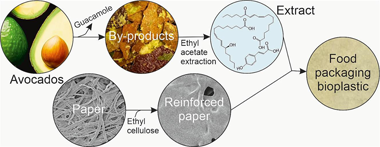
Reinforced films were fabricated by impregnating paper in ethyl cellulose solutions. After solvent evaporation, the infused ethyl cellulose acted as binder of the paper microfibres and occupied the pores and cavities, thus improving the mechanical and barrier properties. To prepare active films, avocado by-products from guacamole industrial production were extracted in ethyl acetate. Then, the…