Thermal conductivity of high-porosity heavily doped biomorphic silicon carbide prepared from sapele wood biocarbon

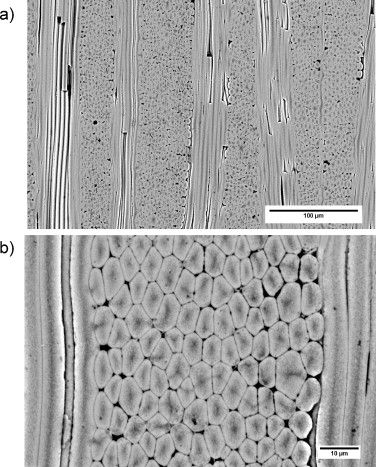
The electrical resistivity and thermal conductivity of high-porosity (~52 vol %, channel-type pores) bio-SiC samples prepared from sapele wood biocarbon templates have been measured in the temperature range 5-300 K. An analysis has been made of the obtained results in comparison with the data for bio-SiC samples based on beech and eucalyptus, as well as…

Interfacial characterization of silicon nitride/silicon nitride joints brazed using Cu-base active metal interlayers

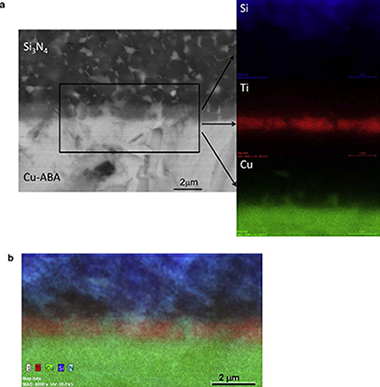
Silicon nitride/silicon nitride joints were vacuum brazed at 1317 K for 5 min and 30 min using ductile Cu-base active metal interlayers. The joints were characterized using scanning electron microscopy (SEM), energy dispersive spectroscopy (EDS), electron back scattered diffraction (EBSD), and transmission electron microscopy (TEM). An inhomogeneous Ti-rich reaction layer (similar to 2-3 mu m…

Remediation of metal-contaminated soils with the addition of materials – Part II: Leaching tests to evaluate the efficiency of materials in the remediation of contaminated soils

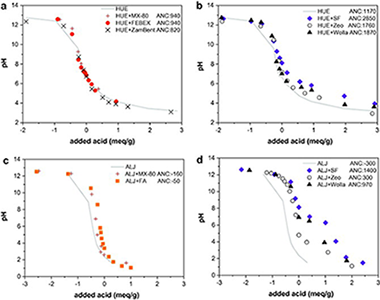
The effect of the addition of materials on the leaching pattern of As and metals (Cu, Zn, Ni, Pb, and Cd) in two contaminated soils was investigated. The examined materials included bentonites, silicates and industrial wastes, such as sugar foam, fly ashes and a material originated from the zeolitization of fly ash. Soil + material…

Synthetic high-charge organomica: Effect of the layer charge and alkyl chain length on the structure of the adsorbed surfactants

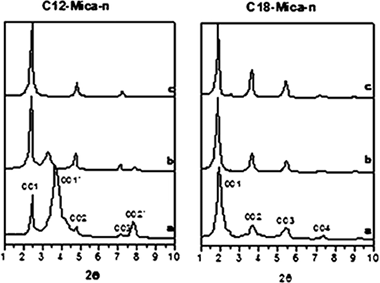
A family of organomicas was synthesized using synthetic swelling micas with high layer charge (NanSi8-nAlnMg6F4O20 center dot XH2O, where n = 2, 3, and 4) exchanged with dodecylammonium and octadecylammonium cations. The molecular arrangement of the surfactant was elucidated on the basis on XRD patterns and DTA. The ordering conformation of the surfactant molecules into…

Residual stresses in Al2O3-ZrO 2 (3mol.% Y2O3) directionally solidified eutectic ceramics as a function of temperature

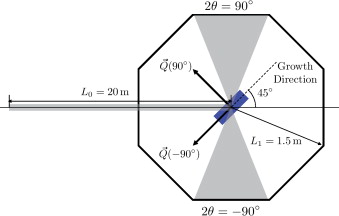
Directionally solidified eutectics are in situ composites grown from the melt. Due to the differences in the thermoelastic properties of the different phases present in the material, these composites often exhibit residual stresses that can affect their mechanical properties. In this work we use neutron diffraction to investigate residual stresses in Al 2O 3-ZrO 2…

Electrostatic Induced Molecular Tilting in Self-Assembled Monolayers of n-Octadecylamine on Mica

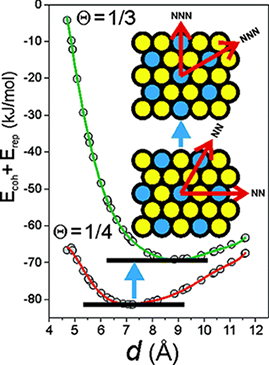
Self-assembled monolayers of n-octadecylamine on mica (ODA/mica SAMs) have been investigated by atomic force microscopy (AFM) and by attenuated total reflectance infrared (ATR-FTIR) and X-ray photoelectron (XPS) spectroscopies. Topographic data characterizes a stable configuration with the alkyl skeleton tilted approximate to 46 degrees from the surface normal that is rationalized according to a well established…

Effect of oxidation on the compressive strength of sintered SiC-fiber bonded ceramics

The compressive strength of SiC-fiber bonded ceramics obtained from hot-pressed amorphous Si-Al-C-O fibers and its degradation by high temperature exposure to an oxidizing environment was studied. Compressive strength was measured at room temperature as a function of strain rate, orientation, and oxidation temperature. Weight loss was monitored as a function of exposure time in atmospheric…

Microstructure, composition and P-T conditions of rutile from diamondiferous gneiss of the Saxonian Erzgebirge, Germany

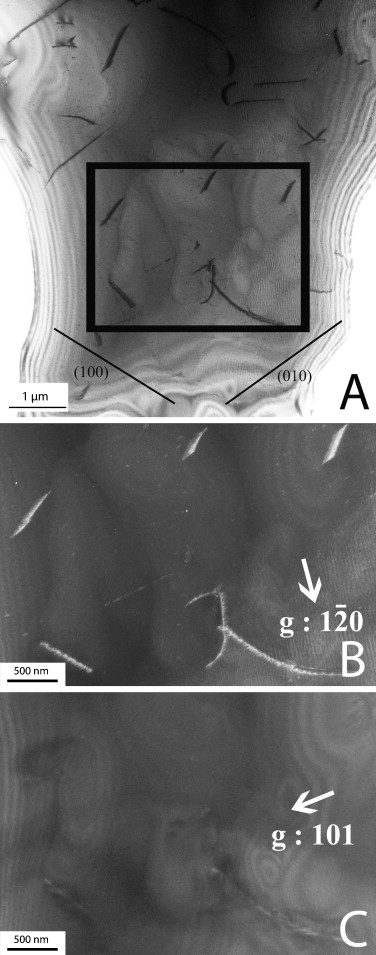
The chemical composition and microstructure of rutile grains in a ultra-high pressure metamorphic gneiss of the Saxonian Erzgebirge, Germany have been studied by Raman spectroscopy, SEM, EMPA and TEM. Rutile inclusions in garnet contain free dislocations, iron-enriched dislocations and exsolved ilmenite lamellae, while subgrain boundaries are observed in rutile grains of the rock matrix. The…