Heavy metal adsorption isotherms on tailor-made brittle micas in water treatment applications

The removal of heavy metals from water is a critical challenge because of their high toxicity, persistence, and bioaccumulation in biological systems. Adsorption is widely recognised as a cost-effective and efficient treatment method, and equilibrium isotherms are essential for evaluating the performance of adsorbents. Here, the equilibrium isotherms of Pb2+, Cd2+ and Hg2+ adsorbed onto…

Green exfoliation of 2D nanomaterials using cyrene as a solvent

Liquid-phase exfoliation (LPE) is a versatile and scalable method for producing high-quality two-dimensional materials (2DMs). However, commonly used solvents such as dimethylformamide (DMF) or N-methyl-2-pyrrolidone (NMP) are highly toxic, limiting their potential for large-scale industrial applications. In this study, we address this challenge using Cyrene (dihydrolevoglucosenone), a nontoxic and biodegradable solvent, for the exfoliation of several…

Multicomponent heavy metals adsorption on functionalized swelling micas: Mechanistic insights and structural evolution

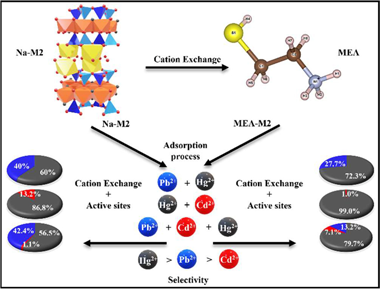
Heavy metal contamination is a critical environmental issue, often involving complex multicomponent systems. Swelling brittle micas, a family of designer sorbents, have demonstrated exceptional heavy metal removal capabilities, yet their behabior in competitive adsorption systems remains largely unexplored. This study systematically investigates the simultaneous uptake of Pb2*, Cd2*, and Hg2* on both as-synthesized brittle mica…

Cellulose and xylan nanofiber mats via electrospinning: Lignin-enhanced properties in wood-inspired biocomposites

Nanofiber mats were fabricated by combining cellulose, xylan, and organosolv lignin. The biopolymers, and a small amount (15 wt. %) of polyethylene oxide, were dissolved in a mixture of trifluoroacetic acid and trifluoroacetic anhydride, then blended in various ratios (keeping cellulose as the main component and changing the proportions of lignin and hemicellulose) and processed…

Enhanced Oxygen Ion Conductivity and Ionic Conduction Mechanistic Visualization in Tetragonal Zircon-Type Pr1-x Sr x VO4-0.5x

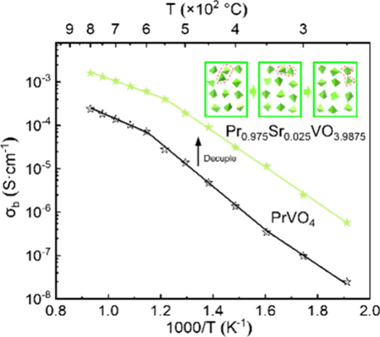
Oxide-ion conductors based on tetrahedral anion-related oxides have attracted considerable attention due to their high oxygen-ion conductivity and potential applications in clean energy devices, such as solid-state fuel cells. In this study, we report the improvement of oxide-ion conductivity by Sr2+ doping in isolated tetrahedral zircon-type PrVO4. It is found that Pr0.975Sr0.025VO4-delta features the highest…

Laser-Induced Graphene: A Promising Conductive Platform for Cell Culture

Cardiovascular mortality remains a major health challenge. Cardiomyocyte (CM)-based tissue engineering (TE) offers promising alternatives for developing therapies via in vitro models. However, the immature phenotype of CM in engineered tissues hampers progress. Recent studies introduce conductive materials like graphene to enhance CM maturation, but conventional graphene synthesis suffers from complexity, toxicity, and low yield.…

Graphene exfoliation in cyrene for the sustainable production of microsupercapacitors

Graphene and its composites have attracted much attention for applications in energy storage systems. However, the toxic solvents required for the exfoliation process have hampered the exploitation of its properties. In this work, graphene dispersions are obtained via liquid phase exfoliation (LPE) of graphite in cyrene, an environmentally friendly solvent with solubility parameters like those…

In situ TEM and synchrotron SAXS/WAXS study on the impact of different iron salts on iron-catalysed graphitization of cellulose

Carbon materials are essential for emerging energy applications and there is a pressing need to be able to produce carbons with controlled properties from sustainable precursors. Iron-catalysed graphitization of biomass is an attractive approach, where simple iron salts are used to convert organic matter to graphitic carbons at relatively low temperature. The choice of iron…

Microstructural control by freeze-casting of CaO architectures for improved and stable thermochemical energy storage performance

This study investigates the development of porous calcium-based monoliths via freeze-casting (FC) as a novel approach for thermochemical energy storage, particularly within the Calcium Looping (CaL) process. The freeze-casting technique enabled the fabrication of scaffolds with controlled porosity using polyvinyl alcohol (PVA) as a binder. Experimental results demonstrated that freeze-cast monoliths exhibited superior multicycle performance…