Combining dietary phenolic antioxidants with polyvinylpyrrolidone: transparent biopolymer films based on p-coumaric acid for controlled release

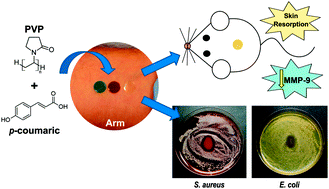
Polyvinylpyrrolidone (PVP) has probably been one of the most utilized pharmaceutical polymers with applications ranging from a blood plasma substitute to nanoparticle drug delivery, since its synthesis in 1939. It is a highly biocompatible, non-toxic and transparent film forming polymer. Although high solubility of PVP in aqueous environment is advantageous, it still poses several problems…

Transparent and Robust All-Cellulose Nanocomposite Packaging Materials Prepared in a Mixture of Trifluoroacetic Acid and Trifluoroacetic Anhydride

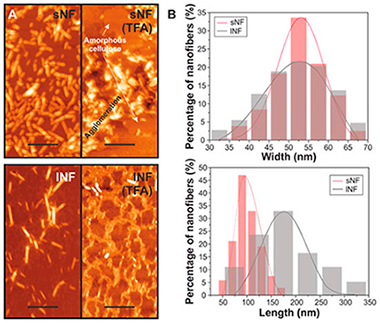
All-cellulose composites with a potential application as food packaging films were prepared by dissolving microcrystalline cellulose in a mixture of trifluoroacetic acid and trifluoroacetic anhydride, adding cellulose nanofibers, and evaporating the solvents. First, the effect of the solvents on the morphology, structure, and thermal properties of the nanofibers was evaluated by atomic force microscopy (AFM),…

Eu3+ Luminescence in High Charge Mica: An In Situ Probe for the Encapsulation of Radioactive Waste in Geological Repositories

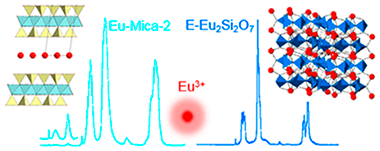
Isolation of high-level radioactive waste (HLW) in deep geological repositories (DGR) through a multibarrier concept is the most accepted approach to ensure long-term safety. Clay minerals are one of the most promising materials to be used as engineered barriers. In particular, high charge micas, as components of the engineered barrier, show superselectivity for some radioactive…

Influence of framework and interlayer on the colloidal stability of design swelling high-charged micas

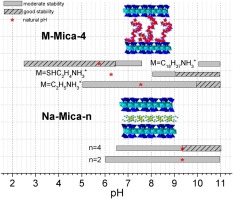
Stability of colloidal clay minerals dispersion of fundamental in many industrial processes. Therefore, surface charge of the synthetic swelling high-charged mica family, Na-Mica-n (n = 2 or 4, n is the total layer charge) were investigated to study its colloidal dispersion stability as a function of the framework and interlayer space composition. Na-Mica-n (n = 2 or 4) micas…

Environmentally friendly monolithic highly-porous biocarbons as binder-free supercapacitor electrodes

A simple, low-cost and environmentally friendly method has been used to obtain highly porous biomorphic carbon monoliths with a good combination of interconnected macro-, meso- and microporosity, and good electrical conductivity and mechanical strength, making these biocarbon materials interesting for electrochemical applications as binder-free electrodes. Highly porous monolithic biocarbons were obtained from beech wood precursors…

Sustainable Fabrication of Plant Cuticle-Like Packaging Films from Tomato Pomace Agro-Waste, Beeswax, and Alginate

Plant cuticles have been used as models to produce hydrophobic films composed of sodium alginate, the fatty acid fraction of tomato pomace agrowaste, and beeswax. The fabrication process consisted of the blending of components in green solvents (water and ethanol) and a subsequent thermal treatment (150 degrees C, 8 h) to polymerize unsaturated and polyhydroxylated…

Valorization of Tomato Processing by-Products: Fatty Acid Extraction and Production of Bio-Based Materials

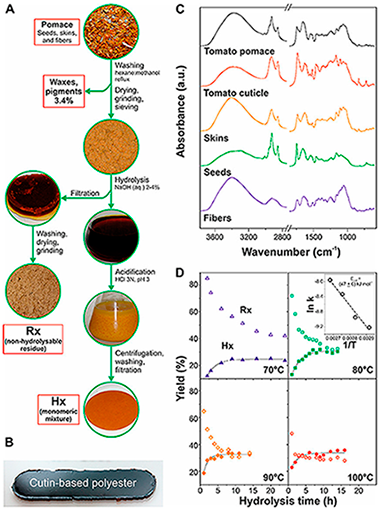
A method consisting of the alkaline hydrolysis of tomato pomace by-products has been optimized to obtain a mixture of unsaturated and polyhydroxylated fatty acids as well as a non-hydrolysable secondary residue. Reaction rates and the activation energy of the hydrolysis were calculated to reduce costs associated with chemicals and energy consumption. Lipid and non-hydrolysable fractions…

Nanoporous Pt-based catalysts prepared by chemical dealloying of magnetron-sputtered Pt-Cu thin films for the catalytic combustion of hydrogen

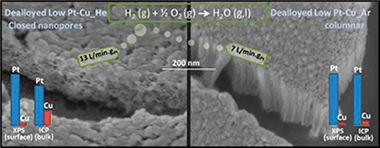
In this work, we prepared SiC-supported Pt-Cu thin films by magnetron sputtering for use as catalysts for the combustion of hydrogen under oxidizing conditions. We tested the catalysts as prepared and after chemical dealloying. A methodology is presented to fabricate catalytic thin films of a desired composition with tailored magnetron targets with lower Pt consumption.…

Behavior of High-Strength Polypropylene Fiber-Reinforced Self-Compacting Concrete Exposed to High Temperatures

In this study we analyzed the use of high-performance structural concrete reinforced with polypropylene fibers in applications requiring long exposure times to high temperatures, such as thermal energy storage systems. We analyzed the behavior of the concrete at different temperatures (hot tests: 100 degrees C, 300 degrees C, 500 degrees C and 700 degrees C),…