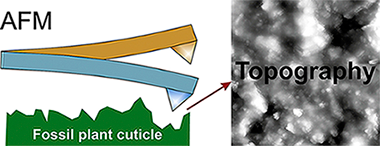
Applications and potentialities of Atomic Force Microscopy in fossil and extant plant cuticle characterization

Atomic Force Microscopy (AFM) is a versatile technique of surface characterization, providing accurate information about the topography and other wide variety of magnitudes at submicron scale. It is extensively utilized in materials science, but its use in other disciplines such as paleobotany is infrequent. In this review, we introduce the main concepts of AFM to…

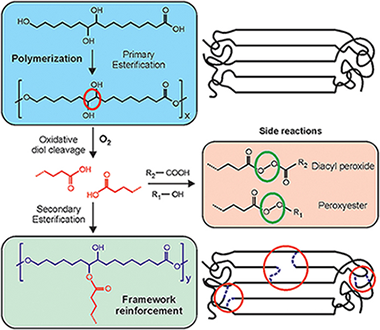
Insoluble and Thermostable Polyhydroxyesters From a Renewable Natural Occurring Polyhydroxylated Fatty Acid

To explore the potential of long chain polyhydroxyalkanoates as non-toxic food packaging materials, the characterization of polyesters prepared from a natural occurring polyhydroxylated C16 carboxylic acid (9,10,16-trihydroxyhexadecanoic or aleuritic acid) has been addressed. Such monomer has been selected to elucidate the reactivity of primary and secondary hydroxyl groups and their contribution to the structure and…

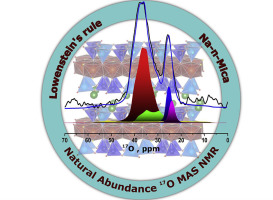
Natural abundance O-17 MAS NMR and DFT simulations: New insights into the atomic structure of designed micas

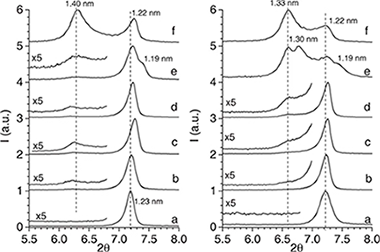
Combining O-17 Magic-Angle Spinning (MAS) NMR at natural abundance with DFT calculations is a promising methodology to shed light on the structure and disorder in tetrahedral sheets of designed micas with enhanced properties. Among brittle micas, synthetic mica is an important alternative to natural ones with a swelling sheet-like structure that results in many applications,…

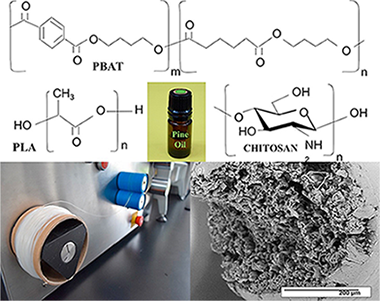
Bio-based composite fibers from pine essential oil and PLA/PBAT polymer blend. Morphological, physicochemical, thermal and mechanical characterization

Biodegradable aliphatic polyesters are an alternative to reduce the use of synthetic plastic materials that cause severe damage to the environment. Formulations based on poly (lactic acid) (PLA) and poly (butylene adipate-co-terephthalate) (PBAT), were mixed in a 60:40 ratio, adding different concentrations of pine essential oil through the use of extrusion technology to obtain biodegradable…

Bionanocomposites based on chitosan intercalation in designed swelling high-charged micas

Bionanocomposites based on layered inorganic components, as clays, and polymers of biological origin, as chitosan, have a major impact in medical and environmental fields, being economical and environmentally friendly materials. Na-Mn micas (n = 2 and 4) with controlled surface charge, high cation exchange capacity and swelling behaviour, are attractive inorganic composite components that exhibit…

Exchange bias and two steps magnetization reversal in porous Co/CoO layer

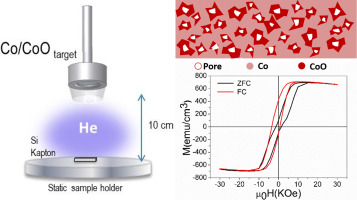
In this paper Co/CoO thick layers (hundreds of nanometers) of different porosity and oxidation degree were prepared in a magnetron sputtering deposition processby tailoring the DC sputtering power, as well as the process gas and target composition. The control of the synthesis parameters allowed the nanostructuration of the films with a singular distribution of closed pores and a controlled…

Low molecular weight epsilon-caprolactone-p-coumaric acid copolymers as potential biomaterials for skin regeneration applications

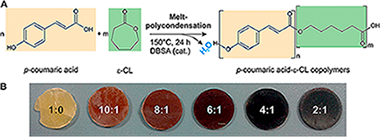
epsilon-caprolactone-p-coumaric acid copolymers at different mole ratios (epsilon-caprolactone: p-coumaric acid 1:0, 10:1, 8:1, 6:1, 4:1, and 2:1) were synthesized by melt-polycondensation and using 4-dodecylbenzene sulfonic acid as catalyst. Chemical analysis by NMR and GPC showed that copolyesters were formed with decreasing molecular weight as p-coumaric acid content was increased. Physical characteristics, such as thermal and…

Combining dietary phenolic antioxidants with polyvinylpyrrolidone: transparent biopolymer films based on p-coumaric acid for controlled release

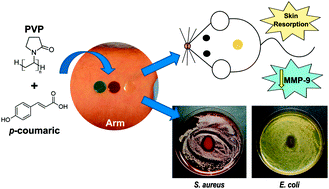
Polyvinylpyrrolidone (PVP) has probably been one of the most utilized pharmaceutical polymers with applications ranging from a blood plasma substitute to nanoparticle drug delivery, since its synthesis in 1939. It is a highly biocompatible, non-toxic and transparent film forming polymer. Although high solubility of PVP in aqueous environment is advantageous, it still poses several problems…

Sustainable polycondensation of multifunctional fatty acids from tomato pomace agro-waste catalyzed by tin (II) 2-ethylhexanoate

Bioplastics were prepared from the fatty fraction (i.e., unsaturated and polyhydroxylated fatty acids) of tomato pomace agro-wastes. Aliphatic polyesters were synthesized at different temperatures (125, 150, and 175 °C), reaction times (0.25, 0.5, 0.75, 1, 3, 5, and 7 h), and amounts of tin (II) 2-ethylhexanoate (0, 0.02, 0.05, and 0.10 mmol) used as a catalyst. The rate…