Vegetable hierarchical structures as template for bone regeneration: New bio‐ceramization process for the development of a bone scaffold applied to an experimental sheep model

Long bone defects still represent a major clinical challenge in orthopedics, with the inherent loss of function considerably impairing the quality of life of the affected patients. Thus, the purpose of this study was to assess the safety and potential of bone regeneration offered by a load‐bearing scaffold characterized by unique hierarchical architecture and high…

Binder-free supercapacitor electrodes: Optimization of monolithic graphitized carbons by reflux acid treatment

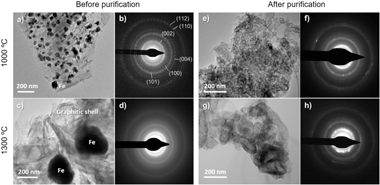
The rational design of electrodes mimicking the cellular structure of natural bio-resources has been a matter of increasing interest for applications in energy storage. Due to their anisotropic and hierarchical porosity, monolithic carbon materials from natural wood precursors are appealing as electrodes for supercapacitor applications due to their interconnected channels, relatively low cost and environmentally…

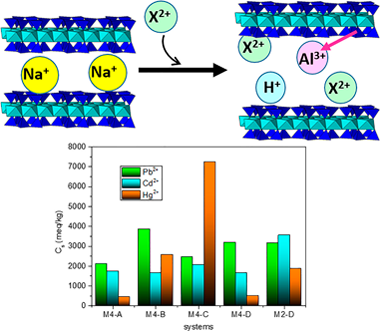
An insight on the design of mercapto functionalized swelling brittle micas

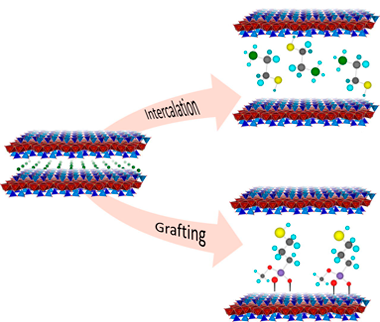
Surface modification of natural clay minerals with reagents containing metal chelating groups has great environmental value. The functionalization by adsorption or grafting guarantees a durable immobilization of the reactive organic groups, preventing their leaching when they are used in liquid media. The aim of this research was the designed mercapto functionalization of swelling brittle micas,…

Preparation and Characterization of Bio-Based PLA/PBAT and Cinnamon Essential Oil Polymer Fibers and Life-Cycle Assessment from Hydrolytic Degradation

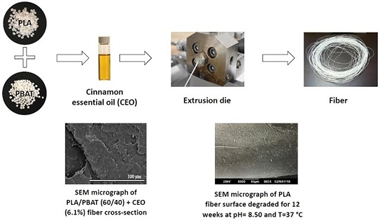
Nowadays, the need to reduce the dependence on fuel products and to achieve a sustainable development is of special importance due to environmental concerns. Therefore, new alternatives must be sought. In this work, extruded fibers from poly (lactic acid) (PLA) and poly (butylene adipate-co-terephthalate) (PBAT) added with cinnamon essential oil (CEO) were prepared and characterized,…

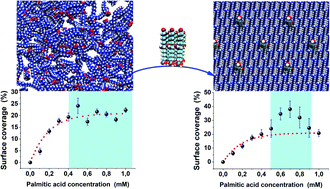
Understanding segregation processes in SAMs formed by mixtures of hydroxylated and non-hydroxylated fatty acids

In this paper, we focus on the segregation processes emerging when preparing mixtures with different compositions of aleuritic (9,10,16 trihydroxyhexadecanoic) (ALE) and palmitic (hexadecanoic) (PAL) acids. The combination of atomic force microscopy (AFM) and molecular dynamics (MD) simulations enabled us to prove the role of the functional groups in the formation of self-assembled monolayers (SAMs)…

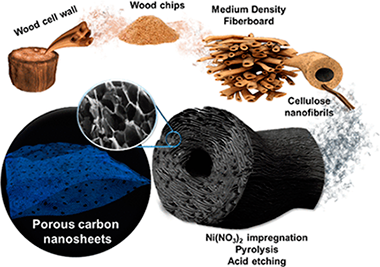
Porous Graphene-like Carbon from Fast Catalytic Decomposition of Biomass for Energy Storage Applications

A novel carbon material made of porous graphene-like nanosheets was synthesized from biomass resources by a simple catalytic graphitization process using nickel as a catalyst for applications in electrodes for energy storage devices. A recycled fiberboard precursor was impregnated with saturated nickel nitrate followed by high-temperature pyrolysis. The highly exothermic combustion of in situ formed…

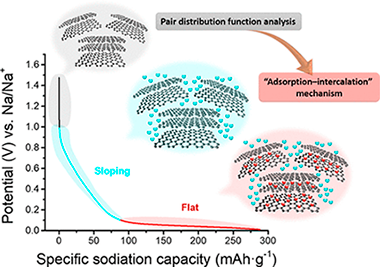
Correlation of Structure and Performance of Hard Carbons as Anodes for Sodium Ion Batteries

Hard carbons are the material of choice as negative electrode in sodium ion batteries. Despite being extensively studied, there is still debate regarding the mechanisms responsible for storage in low- and high-potential regions. This work presents a comprehensive approach to elucidate the involved storage mechanisms when Na ions insert into such disordered structures. Synchrotron X-ray…