Nanofibrous Matrix of Defined Composition Sustains Human Induced Pluripotent Stem Cell Culture

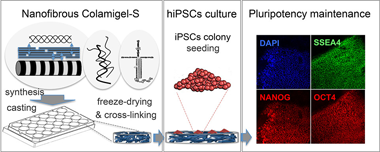
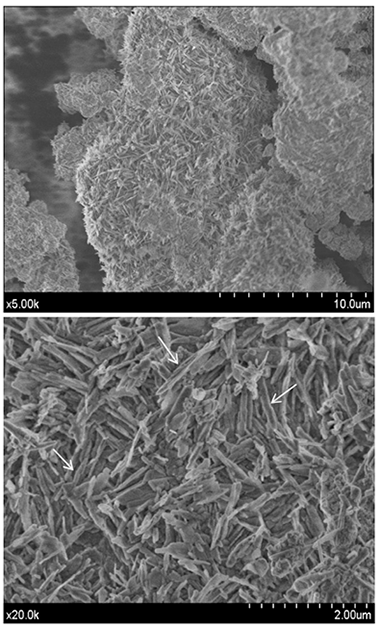
Human induced pluripotent stem cells (hiPSCs) represent the most promising biological material for regenerative medicine applications. In this work, a 3D solid nanofibrous matrix of defined composition (Colamigel-S) consisting of 97 wt % gelatin, 2.6 wt % atelocollagen, and 0.4 wt % laminin has been reproducibly processed and characterized and exhibits a homogeneous nanofibrillar network…

Nanofibrous Gelatin-Based Biomaterial with Improved Biomimicry Using D-Periodic Self-Assembled Atelocollagen

Design of bioinspired materials that mimic the extracellular matrix (ECM) at the nanoscale is a challenge in tissue engineering. While nanofibrillar gelatin materials mimic chemical composition and nano-architecture of natural ECM collagen components, it lacks the characteristic D-staggered array (D-periodicity) of 67 nm, which is an important cue in terms of cell recognition and adhesion…

Sponge-like processed D-periodic self-assembled atelocollagen supports bone formation in vivo

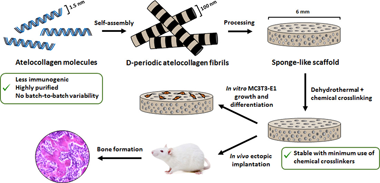
Fibrous biopolymeric collagen extracted from animal tissues has been widely used for fabricating matrices for bone tissue engineering (BTE). However, animal extracted collagens can trigger immune reactions when implanted in vivo and the presence of native crosslinks leads to batch-to-batch variability. Atelocollagen, a monomeric form of collagen, is free of telopeptides, which are mainly responsible…

A Microstructure Insight of MTA Repair HP of Rapid Setting Capacity and Bioactive Response

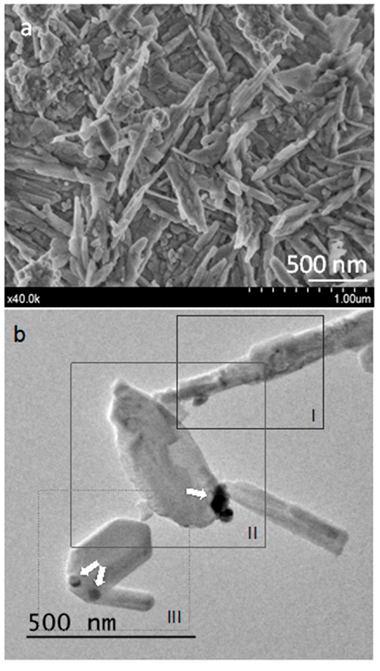
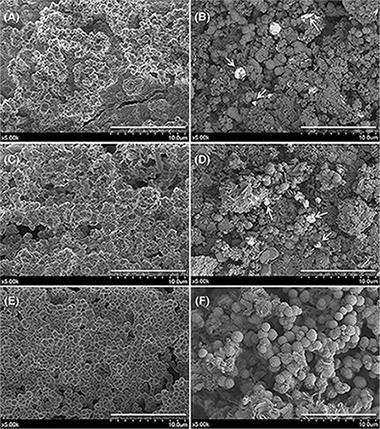
Mineral trioxide aggregate (MTA) is considered a bioactive endodontic material, which promotes natural mineralization at the material-tooth tissue interface. MTA Repair HP stands out because of the short setting time and the quick and effective bioactive response in vitro. The bioactivity, depens on material composition and microstructure. This work is devoted to analyze MTA Repair…

Physicochemical parameters – hydration performance relationship of the new endodontic cement MTA Repair HP

Background: To characterize the chemical composition and textural parameters of the MTA Repair HP precursor powder and their influence to hydration performance. Material and Methods: Un-hydrated precursor material was characterized by X-ray diffraction (XRD), Fourier transform infrared spectroscopy (FT-IR), X-ray fluorescence (XRF), laser diffraction (LD), N2 physisorption and field emission gun scanning electron microscopy (FEG-SEM). Setting…

Higher hydration performance and bioactive response of the new endodontic bioactive cement MTA HP repair compared with ProRoot MTA white and NeoMTA plus

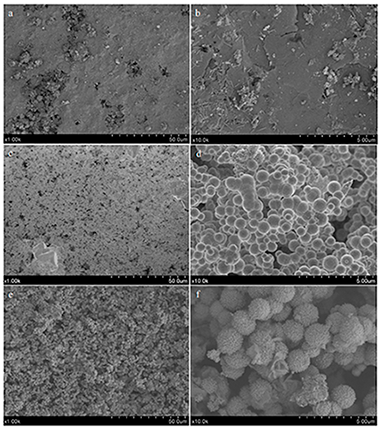
The aim of this study was to characterize the hydration performance and the bioactive response of the new bioactive endodontic cement MTA HP repair (HP), comparing its physicochemical parameters with those of ProRoot MTA White (Pro) and NeoMTA Plus (Neo). Un-hydrated precursor materials were characterized by X-ray fluorescence, laser diffraction, N2 physisorption and field emission…

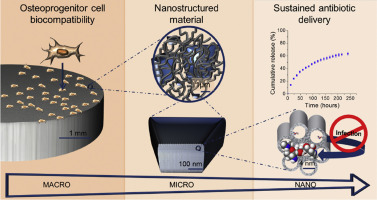
Nanostructured hybrid device mimicking bone extracellular matrix as local and sustained antibiotic delivery system

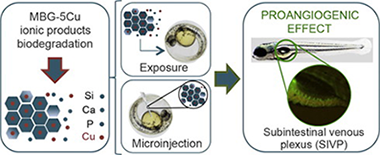
A fluidic permeable and stable in wet media, MBG-NfGel, device consisting of a mesoporous ceramic embodied in a nanofibrillar biodegradable polymer has been processed using appropriate thermally induced phase separation (TIPS) processing variables of 5.4% (wt/v) gelatin in 50/50 water/ethanol (v/v) ratio. The device comprises high surface area mesoporous bioactive glass (MBG) microparticles within a…