Highly Nonstoichiometric YAG Ceramics with Modified Luminescence Properties

Y3Al5O12 (YAG) is a widely used phosphor host. Its optical properties are controlled by chemical substitution at its YO8 or AlO6/AlO4 sublattices, with emission wavelengths defined by rare-earth and transition-metal dopants that have been explored extensively. Nonstoichiometric compositions Y3+xAl5-xO12 (x not equal 0) may offer a route to new emission wavelengths by distributing dopants over…

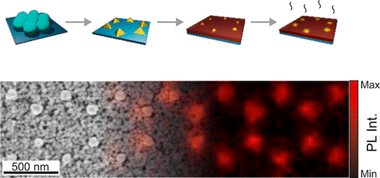
Nanoantennas Patterned by Colloidal Lithography for Enhanced Nanophosphor Light Emission

Transparent coatings made of rare-earth doped nanocrystals, also known as nanophosphors, feature efficient photoluminescence and excellent thermal and optical stabi l i t y . Herein, we demonstrate that the optical antennas prepared by colloidal lithography render thin nanophosphor films with a brighter emission. In particular, we fabricate gold nanostructures in the proximity of GdVO4:Eu3+…

Enhanced red-UC luminescence through Ce3+ co-doping in NaBiF4:Yb3+/Ho3+(Er3+)/Ce3+ phosphors prepared by ultrafast coprecipitation approach

Series of Yb3+/Ho3+(Er3+)/Ce3+ co-doped NaBiF4 phosphors were synthesized through an ultrafast co-precipitation reaction technique at room temperature. The effect of the Ce3+ ions on the crystal structure and upconversion (UC) luminescence properties of the studied samples were investigated in detail. FTIR and XPS demonstrated the pre-formation of NaBiF4 and the introduction of Yb3+, Ho3+, Er3+ and Ce3+ all as dopants in…

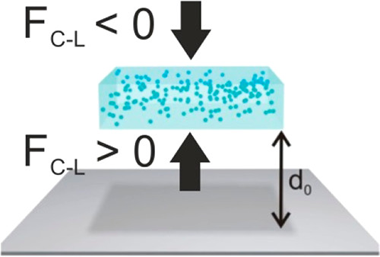
Effect of Spatial Inhomogeneity on Quantum Trapping

An object that is immersed in afluid and approaching a substrate mayfind apotential energy minimum at a certain distance due to the balance between attractive and repulsiveCasimir-Lifshitz forces, a phenomenon referred to as quantum trapping. This equilibriumdepends on the relative values of the dielectric functions of the materials involved. Herein, westudy quantum trapping effects in…

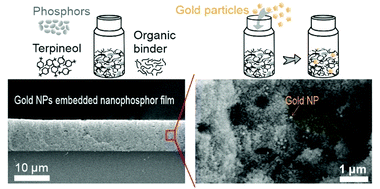
Enhanced up-conversion photoluminescence in fluoride-oxyfluoride nanophosphor films by embedding gold nanoparticles

Owing to their unique non-linear optical character, lanthanide-based up-converting materials are potentially interesting for a wide variety of fields ranging from biomedicine to light harvesting. However, their poor luminescent efficiency challenges the development of technological applications. In this context, localized surface plasmon resonances (LSPRs) have been demonstrated as a valuable strategy to improve light conversion.…

Transparent Phosphor Thin Films Based on Rare-Earth-Doped Garnets: Building Blocks for Versatile Persistent Luminescence Materials

Afterglow properties of persistent phosphors are attracting a great deal of attention in the fields of bioimaging, sensing, labeling, safety, or security. Complex garnet oxides, especially those doped with Ce3+ and Cr3+, are particularly relevant to this end since their persistent luminescence can be tuned through matrix composition and activated by visible light, in contrast to…

Molecular Interface Engineering via Triazatruxene-Based Moieties/NiOx as Hole-Selective Bilayers in Perovskite Solar Cells for Reliability

Interface engineering is an effective approach to decrease nonradiative recombination and the energy barrier at the perovskite/hole transporting layer (HTL) interfaces. To overcome such limitations, an organic semiconductor (DTT-EHDI2) is proposed, which is, composed of dithienothiophene (DTT) as the core and a planar triazatruxene incorporating an alkyl chain as the side group. This is noted…

Nanophotonics for current and future white light-emitting devices

Photonic nanostructures have proven useful to enhance the performance of a wide variety of materials and devices for sensing, catalysis, light harvesting, or light conversion. Herein, we discuss the role of nanophotonics in current and next-generation designs of white light-emitting diodes (LEDs). We discuss recent developments on luminescent materials designed as alternatives to rare earth-doped…