Enhancement of upconversion photoluminescence in phosphor nanoparticle thin films using metallic nanoantennas fabricated by colloidal lithography

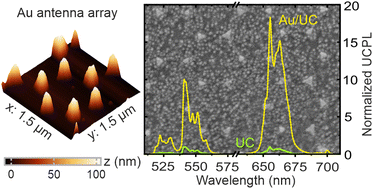
Lanthanide-doped upconversion nanoparticles (UCNPs), as multifunctional light sources, are finding utility in diverse applications ranging from biotechnology to light harvesting. However, the main challenge in realizing their full potential lies in achieving bright and efficient photon upconversion (UC). In this study, we present a novel approach to fabricate an array of gold nanoantennas arranged in…

Inkjet-Printed and Nanopatterned Photonic Phosphor Motifs with Strongly Polarized and Directional Light-Emission

Herein a versatile and scalable method to prepare periodically corrugated nanophosphor surface patterns displaying strongly polarized and directional visible light emission is demonstrated. A combination of inkjet printing and soft lithography techniques is employed to obtain arbitrarily shaped light emitting motifs. Such predesigned luminescent drawings, in which the polarization and angular properties of the emitted…

Measurement principles for quantum spectroscopy of molecular materials with entangled photons

Nonlinear spectroscopy with quantum entangled photons is an emerging field of research that holds the promise to achieve superior signal-to-noise ratio and effectively isolate many-body interactions. Photon sources used for this purpose, however, lack the frequency tunability and spectral bandwidth demanded by contemporary molecular materials. Here, we present design strategies for efficient spontaneous parametric downconversion…

Ultrapure Green High Photoluminescence Quantum Yield from FAPbBr3 Nanocrystals Embedded in Transparent Porous Films

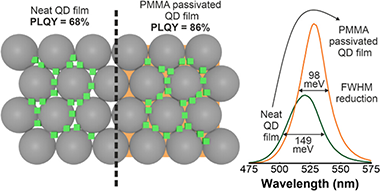
Achieving highly transparent and emissive films based on perovskite quantum dots (PQDs) is a challenging task since their photoluminescence quantum yield (PLQY) typically drops abruptly when they are used as building blocks to make a solid. In this work, we obtain highly transparent films containing FAPbBr(3) quantum dots that display a narrow green emission (lambda…

Modeling Weakly Scattering Random Media: A Tool to Resolve the Internal Structure of Nanoporous Materials

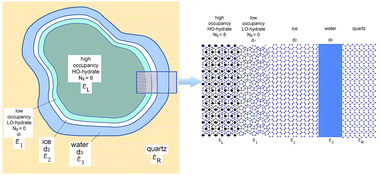
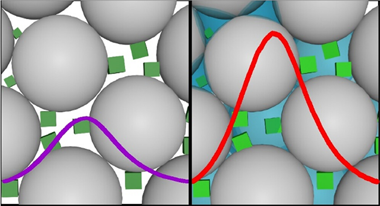
Nanoporous media scatter a small fraction of the light propagating through them, even if pore sizes are significantly smaller than the characteristic visible wavelengths. The disordered spatial modulation of the refractive index at the few or few tens of nanometers length scale, resulting from the presence of randomly distributed air bubbles or solid aggregates within…

Oxidation and coordination states assumed by transition metal dopants in an invert ultrabasic silicate glass

An ultrabasic invert silicate glass (46SiO2.11Na2O.21CaO.22BaO, optical basicity index equal to 0.71) was synthesized (O2 atmosphere) and used as host for various transition metal dopants. Optical absorption, emission and electron paramagnetic spectroscopies were used to characterize oxidation and coordination states. Some of the dopants displayed only their maximal oxidation state (Ti4+, V5+, Cr6+, Mo6+ and…

Collective plasmonic resonances enhance the photoluminescence of rare-earth nanocrystal films processed by ultrafast annealing

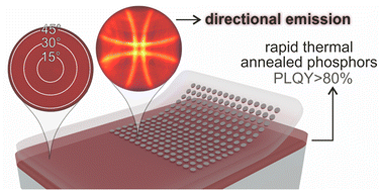
Herein, we demonstrate that rapid thermal annealing allows achieving close-to-one photoluminescence quantum yield while preserving the transparency of rare-earth nanocrystal films, which further enables their integration with nanophotonics. The combination with periodic arrays of aluminum nanodisks that support collective plasmonic resonances leads to enhanced directional emission.

Responsive Optical Materials Based on Ligand-Free Perovskite Quantum Dots Embedded in Mesoporous Scaffolds

Herein we show that dispersing inorganic cesium lead bromide (CsPbBr3) perovskite quantum dots (QDs) in optical quality films, possessing an accessible and controlled pore size distribution, gives rise to fluorescent materials with a controlled and highly sensi t i v e response to ambient changes. A scaffold-based synthesis approach is employed to obtain ligand-free QDs, whose pristine surface endows them with high sensit i v i t…