Role of Inter-Particle Connectivity in the Photo-Carrier Cooling Dynamics in Perovskite Quantum Dot Solids

Intraband carrier relaxation in quantum dots (QDs) has been a subject of extensive spectroscopic investigation for several decades, and have been used to optimize the efficiency of opto-electronic processes. In the past few years, metal halide perovskites-based QDs have been shown to exhibit slow hot-carrier cooling characteristics that are desirable for photo-energy harvesting technologies. While…

Effect of the interaction between basicity and reductive character of melting atmosphere – both extreme – on the oxidation and coordination states assumed by transition metals when doped to silicate glasses

The influence of an extremely reductive melting atmosphere on the oxidation and coordination states adopted by transition metals in an ultrabasic host was evaluated. An invert glass (46SiO(2)center dot 11Na(2)O center dot 21CaO center dot 22BaO, basicity = 0.71) was synthesized in container-less conditions, on a jet of Ar 5%H-2. Performed measurements included optical absorption,…

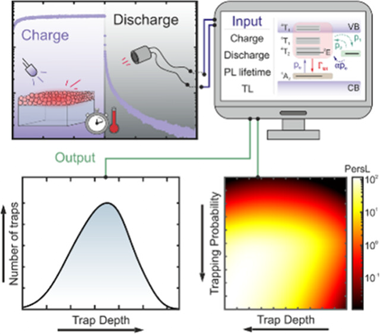
Trap Depth Distribution Determines Afterglow Kinetics: A Local Model Applied to ZnGa2O4:Cr3+

Persistent luminescence materials have applications in diverse fields such as smart signaling, anticounterfeiting, and in vivo imaging. However, the lack of a thorough understanding of the precise mechanisms that govern persistent luminescence makes it difficult to develop ways to optimize it. Here we present an accurate model to describe the various processes that determine persistent…

Exciton-carrier coupling in a metal halide perovskite nanocrystal assembly probed by two-dimensional coherent spectroscopy

The surface chemistry and inter-connectivity within perovskite nanocrystals play a critical role in determining the electronic interactions. They manifest in the Coulomb screening of electron-hole correlations and the carrier relaxation dynamics, among other many-body processes. Here, we characterize the coupling between the exciton and free carrier states close to the band-edge in a ligand-free formamidinium lead bromide nanocrystal assembly via two-dimensional coherent spectroscopy. The optical signatures observed in this work show: (i) a nonlinear spectral lineshape reminiscent of…

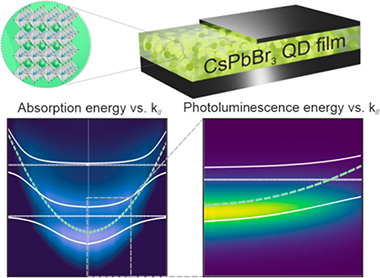
Strong Light-Matter Coupling in Lead Halide Perovskite Quantum Dot Solids

Strong coupling between lead halide perovskite materials and optical resonators enables both polaritonic control of the photophysical properties of these emerging semiconductors and the observation of fundamental physical phenomena. However, the difficulty in achieving optical-quality perovskite quantum dot (PQD) films showing well-defined excitonic transitions has prevented the study of strong light-matter coupling in these materials,…

Casimir-Lifshitz Optical Resonators: A New Platform for Exploring Physics at the Nanoscale

The Casimir-Lifshitz force, FC − L, has become a subject of great interest to both theoretical and applied physics communities due to its fundamental properties and potential technological implications in emerging nano-scale devices. Recent cutting-edge experiments have demonstrated the potential of quantum trapping at the nano-scale assisted by FC − L in metallic planar plates immersed in fluids through appropriate stratification of…

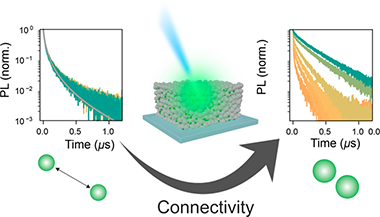
Effect of Connectivity on the Carrier Transport and Recombination Dynamics of Perovskite Quantum-Dot Networks

Quantum-dot (QD) solids are being widely exploited as a solution-processable technology to develop photovoltaic, light-emission, and photodetection devices. Charge transport in these materials is the result of a compromise between confinement at the individual QD level and electronic coupling among the different nanocrystals in the ensemble. While this is commonly achieved by ligand engineering in…

Scattering Spheres Boost Afterglow: A Mie Glass Approach to Go Beyond the Limits Set by Persistent Phosphor Composition

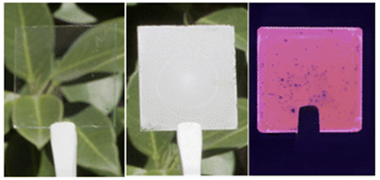
Persistent luminescence phosphor nanoparticles (PersLNPs) offer exciting opportunities for anticounterfeiting, data storage, imaging displays, or AC-driven lighting applications owing to the possibility to process them as shapable thin coatings. However, despite unique delayed and long-lasting luminescence, the relatively low storage capacity of persistent phosphor nanoparticles combined with the difficulty of harvesting photons from transparent thin…