Role of Y in the oxidation resistance of CrAlYN coatings

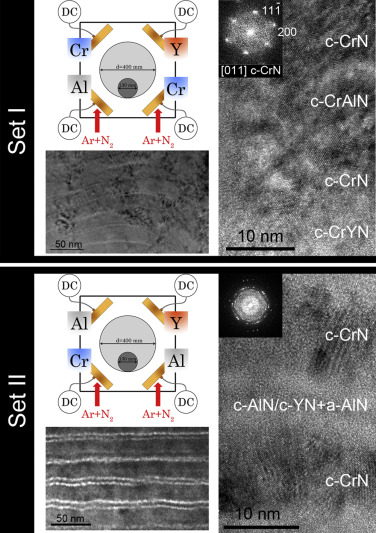
CrAlYN coatings with different aluminum (4–12 at.%) and yttrium (2–5 at.%) contents are deposited by d.c. reactive magnetron sputtering on silicon and M2 steel substrates using metallic targets and Ar/N2 mixtures. The influence of the nanostructure and chemical elemental distribution on the oxidation resistance after heating in air at 1000 °C is studied by means of cross-sectional scanning electron…

Full solution processed mesostructured optical resonators integrating colloidal semiconductor quantum dots

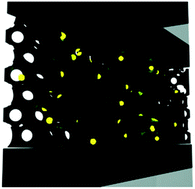
Herein we show a solution based synthetic pathway to obtain a resonant optical cavity with embedded colloidal semiconductor quantum dots (CSQDs). The optical cavity pore network, surrounded by two dense Bragg mirrors, was designed ad hoc to selectively host the quantum dots, while uncontrolled infiltration of those in the rest of the layered structure was prevented. Coupling…

Direct observation of doping incorporation pathways in self-catalytic GaMnAs

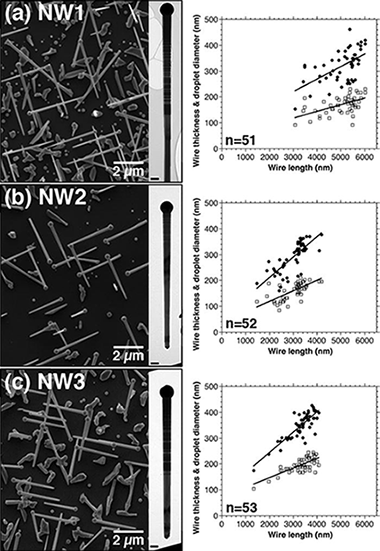
Doping mechanisms of Mn in GaAs nanowires (NWs) that have been grown self-catalytically at 600 °C by molecular beam epitaxy (MBE) are investigated using advanced electron microscopy techniques and atom probe tomography. Mn is found to be incorporated primarily in the form of non-magnetic tetragonal Ga0.82Mn0.18 nanocrystals in Ga catalyst droplets at the ends of the NWs, while trace amounts of Mn (22 ± 4 at. ppm) are also distributed randomly…

Removing the effects of the «dark matter» in tomography

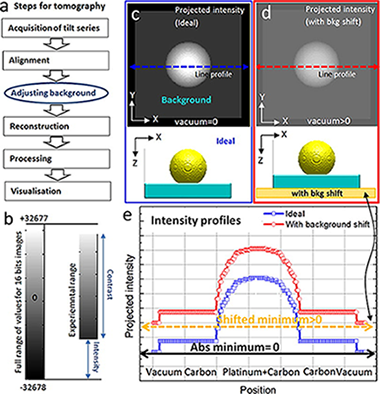
Electron tomography (ET) using different imaging modes has been progressively consolidating its position as a key tool in materials science. The fidelity of a tomographic reconstruction, or tomogram, is affected by several experimental factors. Most often, an unrealistic cloud of intensity that does not correspond to a real material phase of the specimen («dark matter»)…

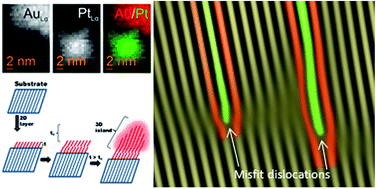
Island-type growth of Au–Pt heterodimers: direct visualization of misfit dislocations and strain-relief mechanisms

Structural and analytical characterization related to the formation mechanism of Au–Pt heterodimers from polyhedral Pt nanocrystals is reported. The observation of specific lattice strain effects and the emergence of misfit dislocations point to the relevance of the Stranski–Krastanov growth mode as a means of explaining the previously reported dimerisation reaction between Au and Pt. Two…

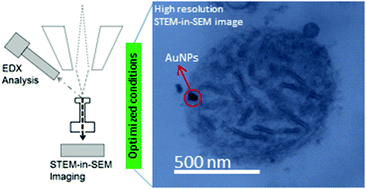
STEM-in-SEM high resolution imaging of gold nanoparticles and bivalve tissues in bioaccumulation experiments

The methodology termed scanning transmission electron microscopy in scanning electron microscopy (STEM-in-SEM) has been used in this work to study the uptake of citrate stabilized gold nanoparticles (AuNPs) (average particle sizes of 23.5 ± 4.0 nm) into tissue samples uponin vitro exposure of the dissected gills of the Ruditapes philippinarum marine bivalve to the nanoparticle suspensions. The STEM-in-SEM…

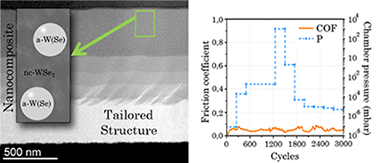
Self-lubricity of WSex nanocomposite coatings

Transition metal chalcogenides with lamellar structure are known for their use in tribological applications although limited to vacuum due to their easy degradation in the presence of oxygen and/or moisture. Here we present a tailored WSex coating with low friction (0.07) and low wear rates (3 × 10⁻⁷ mm3 Nm–1) even in ambient air. To understand the low…

Hydrogen production through sodium borohydride ethanolysis

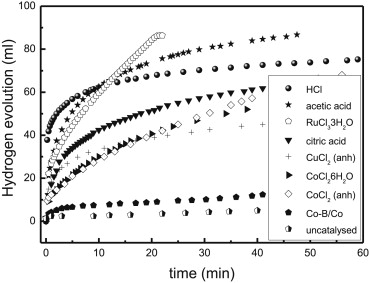
In this work, sodium borohydride (SB) ethanolysis was explored for the first time as a method to generate hydrogen for Polymer Exchange Membrane Fuel Cells. Ethanolysis by-product was characterized by Fourier Transform Infrared Spectroscopy, X-Ray Diffraction, and Nuclear Magnetic Resonance. Metal and acid catalysts were tested. RuCl3 center dot 3H(2)O was the best metal catalyst.…