Investigation of use of coal fly ash in eco-friendly construction materials: fired clay bricks and silica-calcareous non fired bricks

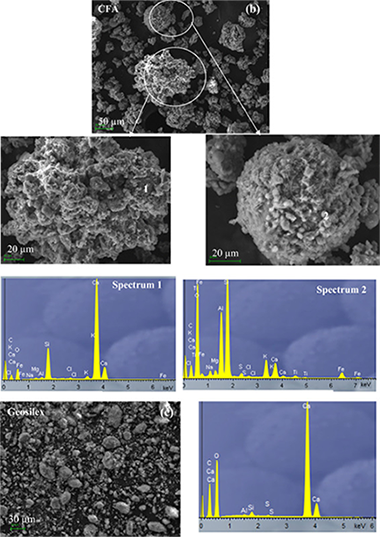
The use of coal fly ash (CFA) as raw material for the manufacture of two construction materials, fired clay bricks and silica-calcareous non-fired bricks, was investigated. Fired clay bricks were manufactured using a commercial clay and different waste ratios (0-50 wt%), moulded at 10 MPa and fired at 1000 degrees C (4 h). Silica-calcareous non…

Characterization of ashes from greenhouse crops plant biomass residues using X-ray fluorescence analysis and X-ray diffraction

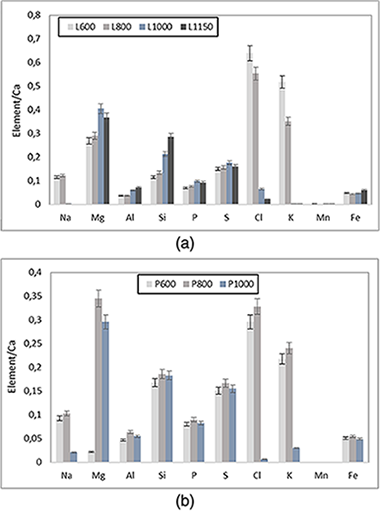
A characterization of ashes obtained by thermal treatments on greenhouse crops plant biomass residues is presented. The chemical analysis, by X-ray fluorescence (wavelength-dispersive X-ray fluorescence), and phase analysis, by X-ray diffraction, of the resultant ashes are reported. Thermal treatments of selected samples of these residues increase the relative amounts of inorganic Mg, Si, P, and…

Thermal study of residues from greenhouse crops plant biomass

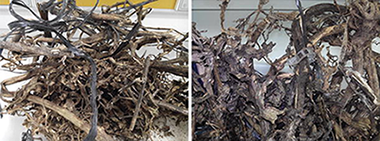
The principal aim of this work is to examine the effect of thermal treatments using a muffle furnace (static heating) and by simultaneous TG/DTA (dynamic heating) on selected greenhouse crops plant biomass investigated here as the first time. The effect of fractionation by sieving (<25 and <2.5 mm), preheating at 150 °C for 48 h and leaching with…

Surface functionalizing of a lipid nanosystem to promote brain targeting: step-by-step design and physico-chemical characterization

The use of lipid nanosystems as drug delivery to the central nervous system may be advantageous over the current strategies. The aim of this study was to develop and characterize functionalized liposomes for treatment of brain diseases. The covalent method of coupling IgG to liposomes via the derivatized lipid 1,2-dioleoyl-sn-glycero-3-phosphoethanolamine-N-[4-(p-maleimidophenyl)butyramide](MPB-PE) was investigated. Optimized coupling conditions…

Surface functionalization of a lipid nanosystem to promote brain targeting: step-by-step design and physico-chemical characterization

The use of lipid nanosystems as drug delivery to the central nervous system may be advantageous over the current strategies. The aim of this study was to develop and characterize functionalized liposomes for treatment of brain diseases. The covalent method of coupling IgG to liposomes via the derivatized lipid 1,2-dioleoyl-sn-glycero-3-phosphoethanolamine-N-[4-(p-maleimidophenyl)butyramide](MPB-PE) was investigated. Optimized coupling conditions…

Preparation of calcium carbonate as nanoparticles from inorganic precursors and sucrose as additive with potential application as biomaterial

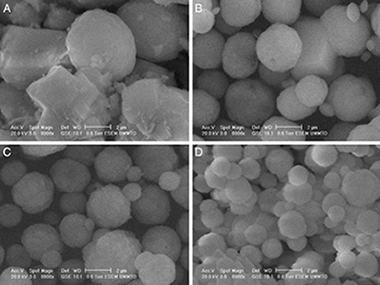
En esta comunicación se presentan unos primeros resultados de interés relevante sobre la obtención de carbonato de calcio precipitado como nanopartículas de los polimorfos vaterita y calcita. Se parte de precursores inorgánicos, nitrato de calcio tetrahidratado y bicarbonato de sodio, en presencia de sacarosa empleada como aditivo orgánico en disolución acuosa. Las fases cristalinas formadas…

Correlation between chemical and mineralogical characteristics and permeability of phyllite clays using multivariate statistical analysis

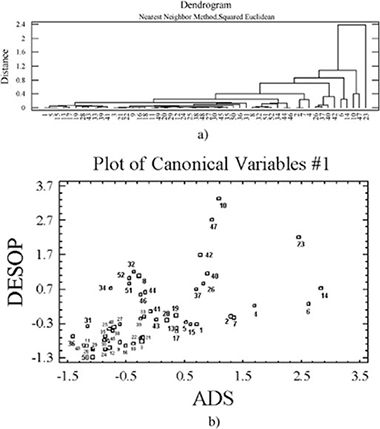
Phyllite clays are applied as a layer on a surface to be waterproofed and subsequently compacted. For this purpose, phyllite clays deposits can be grouped by their chemical and mineralogical characteristics, and these characteristics can be connected with their properties, mainly permeability, in order to select those deposits with the lowest permeability values. Several deposits…

Effect of lime on stabilization of phyllite clays

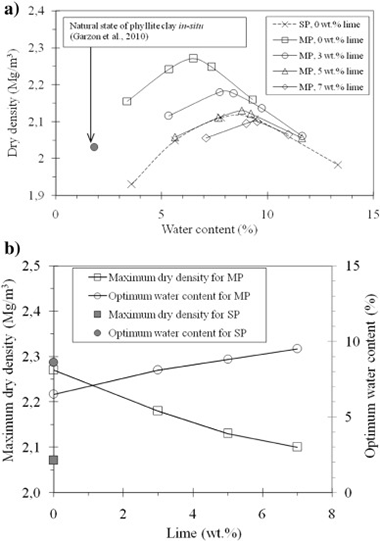
This paper represents a new advance in the study of engineering properties and material applications of phyllite clays. Considering their potential use as construction materials for structures subjected to low stress levels, this laboratory research investigated the stabilization and improvement in engineering properties of a Spanish phyllite clay achieved by the addition of 3, 5…

Ceramics from clays and by-product from biodiesel production: Processing, properties and microstructural characterization

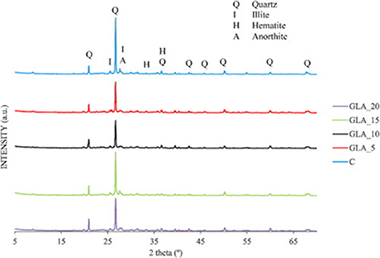
The production of biodiesel generates a by-product called glycerine which contains glycerol that cannot be reintegrated into the same manufacturing process. The ceramic bricks are an interesting option to set in their structure a wide range of by-products and residues materials and composites, sometimes serving only as a reservoir for the inert residue, and other,…