


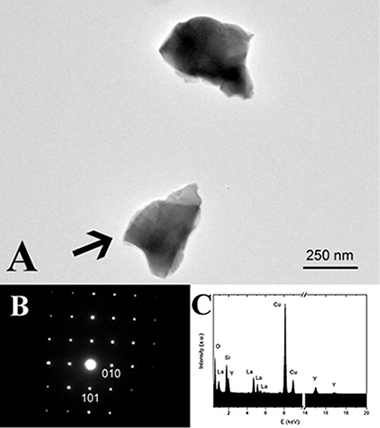
Phase transitions in LaYSi 2O 7 have been investigated as a function of temperature using XRD, NMR and TEM. Previously described empirical crystal structure guidelines based on average cation radius in rare-earth RE 2Si 2O 7-type disilicates predict a stable tetragonal A-LaYSi 2O 7 polymorph at temperatures below 1500°C. This study demonstrates that A-LaYSi 2O 7 is not thermodynamically stable at these temperatures and suggests that guidelines based on average cation size do not accurately describe the equilibrium behaviour of this silicate system. The A to G-type polymorph transition is extremely sluggish; complete transformation requires ~250h at 1200°C, and more than 3 weeks of calcination at 1100°C. This observation is important when this type of material is used as environmental barrier coating (EBC) of advanced ceramics. Analysis of XRD and TEM data reveal complete substitution of Y and La on the rare-earth cation sites in both LaYSi 2O 7 polymorphs, but indicate preferential site occupancies in the G-type polymorph.