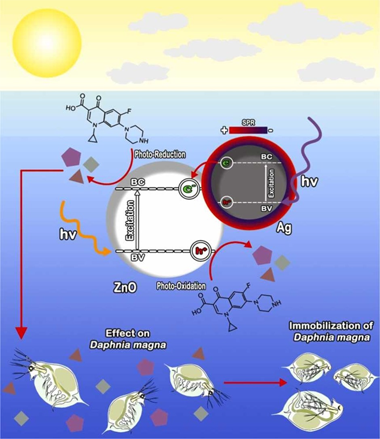



Advanced nanostructured materials that demonstrate useful activity under solar excitation in fields concerned with the elimination of pollutants, partial oxidation and the valorization of chemical compounds, water splitting and CO 2 reduction processes, are discussed. Point defects present in nanoparticulated anatase present both 5-fold- and 6-fold-coordinated titanium atoms, as well as 2-fold- and 3-fold-coordinated oxygens. The requirement of using sunlight as the excitation source for the degradation reaction demands, as a principal requirement, the modification of the electronic characteristics of a UV absorber system such as anatase-TiO 2. Some reports also indicate the need for large doping concentrations for N-doping in specific cases where notable changes in the valence band onset are subsequently observed. The effect of cetyltrimethylammonium bromide (CTAB) on the crystallization is reported by Yin et al. They showed that the presence of CTAB induces the appearance of BiOBr during the synthesis at 80°C using an aqueous method.