Catalyzed hydrothermal carbonization of sewage sludge: structural modification of hydrochar and its derived selective pyrolytic product distribution

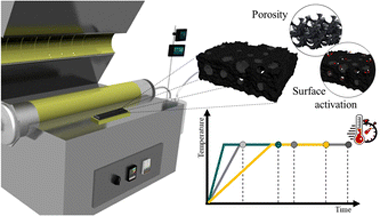
  The pressing demand for sustainable alternatives to fossil fuels coupled with environmental risks associated with inappropriate sewage sludge (SS) disposal calls for innovative valorization strategies that transform waste into value-added products. This study introduces a novel approach by directly incorporating zeolite catalysts (HZSM-5 and USY) into the hydrothermal carbonization (HTC) of SS, followed by…

Polyaniline coated tungsten trioxide as an effective adsorbent for the removal of orange G dye from aqueous media

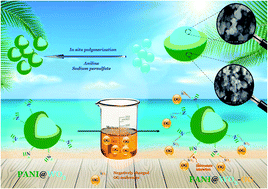
In this work, the core–shell PANI@WO3 composite was obtained from the reaction of aniline monomer polymerization with WO3 particles; sodium persulfate was used as an oxidant. Various analytical techniques such as scanning electron microscopy (SEM-EDS), X-ray diffraction (XRD), Fourier transform infrared spectroscopy (FTIR), Brunauer–Emmett–Teller (BET), and X-ray photoelectron spectroscopy (XPS) were used to characterize the as-prepared PANI@WO3 adsorbent,…

Understanding segregation processes in SAMs formed by mixtures of hydroxylated and non-hydroxylated fatty acids

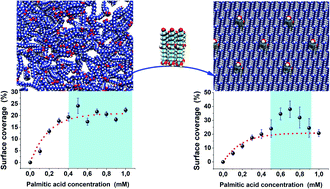
In this paper, we focus on the segregation processes emerging when preparing mixtures with different compositions of aleuritic (9,10,16 trihydroxyhexadecanoic) (ALE) and palmitic (hexadecanoic) (PAL) acids. The combination of atomic force microscopy (AFM) and molecular dynamics (MD) simulations enabled us to prove the role of the functional groups in the formation of self-assembled monolayers (SAMs)…

Tailor-made preparation of Co-C, Co-B, and Co catalytic thin films using magnetron sputtering: insights into structure-composition and activation effects for catalyzed NaBH4 hydrolysis

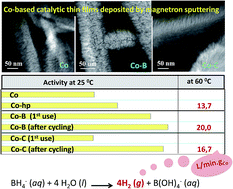
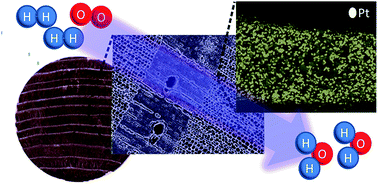
The magnetron sputtering (MS) methodology is a powerful tool for tailor-made fabrication of Co-based thin film catalysts with controlled microstructures and compositions for sodium borohydride (SBH) hydrolysis. In particular, Co-C catalysts were tested in this reaction and compared to Co-B and Co catalyst coatings. The microstructural and chemical analyses by X-ray diffraction (XRD), scanning and…

Timing of calcium nitrate addition affects morphology, dispersity and composition of bioactive glass nanoparticles

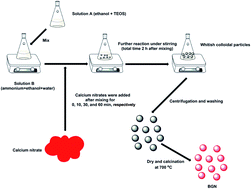
Bioactive glass nanoparticles (BGN) are promising materials for a number of biomedical applications. Many parameters related to the synthesis of BGN using sol–gel methods can affect their characteristics. In this study, the influence of timing of calcium nitrate (calcium precursor) addition during processing on BGN characteristics was investigated. The results showed that the addition timing…

Constant rate thermal analysis of a dehydrogenation reaction

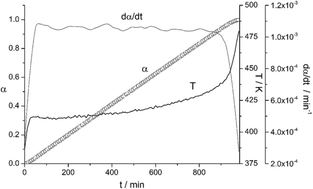
The Constant Rate Thermal Analysis (CRTA) procedure has been employed for the first time to study the kinetics of MgH2 dehydrogenation by thermogravimetry under high vacuum. CRTA implies controlling the temperature in such a way that the decomposition rate is maintained constant all over the process, employing the mass change as the experimental signal proportional to…

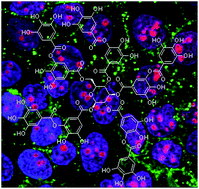
Targeted multifunctional tannic acid nanoparticles

Tannic acid (TA) has multiple effects against cancer, being especially promising in those types that overexpress the epidermal growth factor receptor (EGFR), as TA modulates its activation and downstream signaling pathways, triggering apoptosis. Nonetheless, despite the important role of this receptor in the pathogenesis and progression of a wide variety of tumors, no TA systems…