Treatment of Dairy Industry Wastewater and Crop Irrigation Water Using AgBr-Coupled Photocatalysts

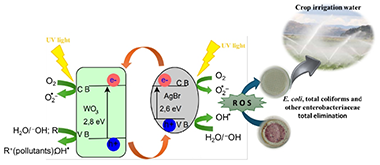
This work describes the application of three different AgBr heterojunctions with TiO2, SnO2 and WO3 in the treatment of two water sources: wastewater from a dairy industry facility (WDI) and water from a polluted river (WPR). All heterojunctions were widely characterised, and it was observed that the physicochemical properties of all the coupled materials were similar; however,…

Finely Tunable Carbon Nanofiber Catalysts for the Efficient Production of HMF in Biphasic MIBK/H2O Systems

This work proposes catalytic systems for fructose dehydration to 5-hydroxymethylfurfural using a series of functionalized carbon nanofibers. The catalysts were synthesized via finely selected covalent grafting in order to include a variety of functionalities like pure Bronsted acid, tandem Br & oslash;nsted/Lewis acid, and tandem Lewis acid/Lewis base catalysts. After the characterization and evaluation of…

Synergistic Effect of He for the Fabrication of Ne and Ar Gas-Charged Silicon Thin Films as Solid Targets for Spectroscopic Studies

Sputtering of silicon in a He magnetron discharge (MS) has been reported as a bottom-up procedure to obtain He-charged silicon films (i.e., He nanobubbles encapsulated in a silicon matrix). The incorporation of heavier noble gases is demonstrated in this work with a synergistic effect, producing increased Ne and Ar incorporations when using He–Ne and He–Ar…

Advanced Cellulose-Nanocarbon Composite Films for High-Performance Triboelectric and Piezoelectric Nanogenerators

Natural polymers such as cellulose have interesting tribo- and piezoelectric properties for paper-based energy harvesters, but their low performance in providing sufficient output power is still an impediment to a wider deployment for IoT and other low-power applications. In this study, different types of celluloses were combined with nanosized carbon fillers to investigate their effect…

Facile Synthesis of Heterogeneous Indium Nanoparticles for Formate Production via CO2 Electroreduction

In this study, a simple and scalable method to obtain heterogeneous indium nanoparticles and carbon-supported indium nanoparticles under mild conditions is described. Physicochemical characterization by X-ray diffraction (XRD), X-ray photoelectron microscopy (XPS), scanning electron microscopy (SEM) and transmission electron microscopy (TEM) revealed heterogeneous morphologies for the In nanoparticles in all cases. Apart from In-0, XPS…

Functionalized Biochars as Supports for Ru/C Catalysts: Tunable and Efficient Materials for γ-Valerolactone Production

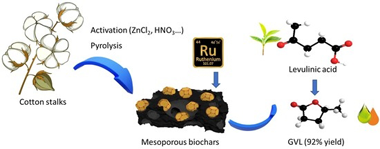
Cotton stalks-based biochars were prepared and used to synthetize Ru-supported catalysts for selective production of gamma-valerolactone from levulinic acid in aqueous media. Different biochars’ pre-treatments (HNO3, ZnCl2, CO2 or a combination of them) were carried out to activate the final carbonaceous support. Nitric acid treatment resulted in microporous biochars with high surface area, whereas the…

Flexible NiRu Systems for CO2 Methanation: From Efficient Catalysts to Advanced Dual-Function Materials

CO2 emissions in the atmosphere have been increasing rapidly in recent years, causing global warming. CO2 methanation reaction is deemed to be a way to combat these emissions by converting CO2 into synthetic natural gas, i.e., CH4. NiRu/CeAl and NiRu/CeZr both demonstrated favourable activity for CO2 methanation, with NiRu/CeAl approaching equilibrium conversion at 350 degrees…

Determination of the Primary Excitation Spectra in XPS and AES

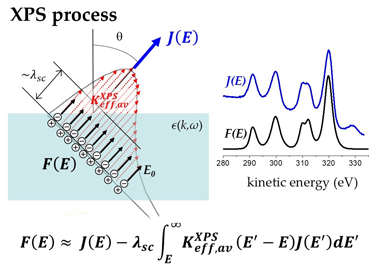
This paper reviews a procedure that allows for extracting primary photoelectron or Auger electron emissions from homogeneous isotropic samples. It is based on a quantitative dielectric description of the energy losses of swift electrons travelling nearby surfaces in presence of stationary positive charges. The theory behind the modeling of the electron energy losses, implemented in…