The Possible Detriment of Oxygen in Creep of Alumina and Zirconia Ceramic Composites Reinforced with Graphene

This paper aims to give an answer to the following question: is the oxidation of graphene a critical issue for high-temperature plasticity in graphene-reinforced ceramics? To give a convincing reply, we will focus on two very different graphene-based ceramic composites: reduced graphene oxide (rGO)-reinforced alumina (alpha-Al2O3) and reduced graphene oxide (rGO)-reinforced yttria tetragonal zirconia (t-ZrO2).…

Critical Influence of the Processing Route on the Mechanical Properties of Zirconia Composites with Graphene Nanoplatelets

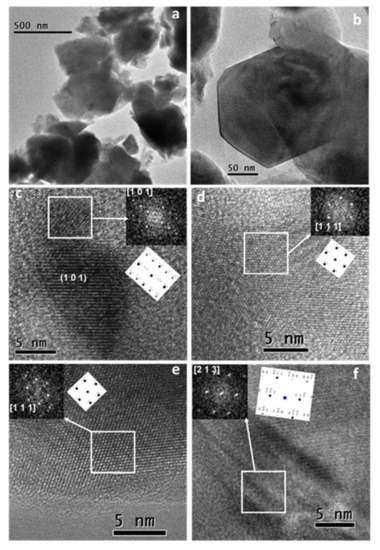
Graphene-based nanostructures, used as potential reinforcement in ceramic composites, have a great tendency to agglomerate. This requires the use of homogenization techniques during the powder processing, posing the need to evaluate how these techniques affect the microstructure and the mechanical properties of the resulting composites. The influence of the processing route on the properties of…

A Microstructure Insight of MTA Repair HP of Rapid Setting Capacity and Bioactive Response

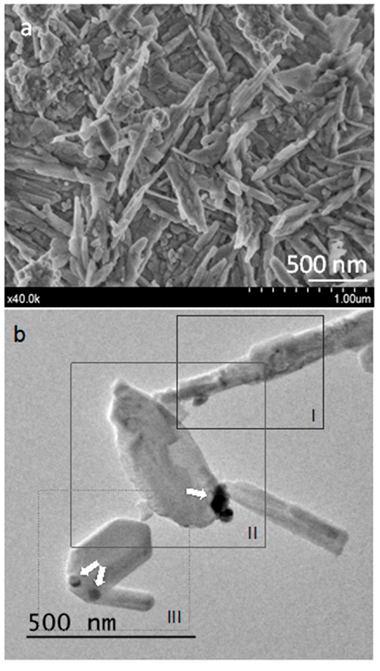
Mineral trioxide aggregate (MTA) is considered a bioactive endodontic material, which promotes natural mineralization at the material-tooth tissue interface. MTA Repair HP stands out because of the short setting time and the quick and effective bioactive response in vitro. The bioactivity, depens on material composition and microstructure. This work is devoted to analyze MTA Repair…

Valorization of Tomato Processing by-Products: Fatty Acid Extraction and Production of Bio-Based Materials

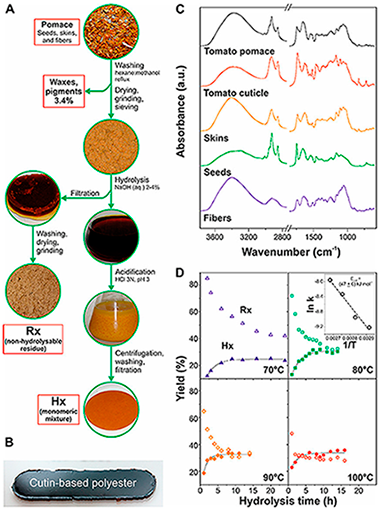
A method consisting of the alkaline hydrolysis of tomato pomace by-products has been optimized to obtain a mixture of unsaturated and polyhydroxylated fatty acids as well as a non-hydrolysable secondary residue. Reaction rates and the activation energy of the hydrolysis were calculated to reduce costs associated with chemicals and energy consumption. Lipid and non-hydrolysable fractions…

In Vitro Comparative Study of Oxygen Plasma Treated Poly(Lactic-Co-Glycolic) (PLGA) Membranes and Supported Nanostructured Oxides for Guided Bone Regeneration Processes

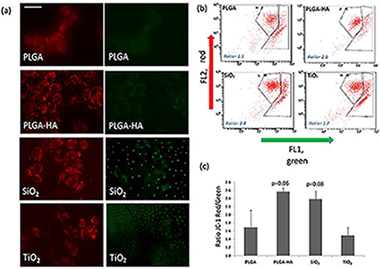
(1) Background: The use of physical barriers to prevent the invasion of gingival and connective tissue cells into bone cavities during the healing process is called guided bone regeneration. The objective of this in-vitro study was to compare the growth of human osteoblasts on Poly(Lactic-co-Glycolic) (PLGA) membranes modified with oxygen plasma and Hydroxyapatite (HA), silicon…

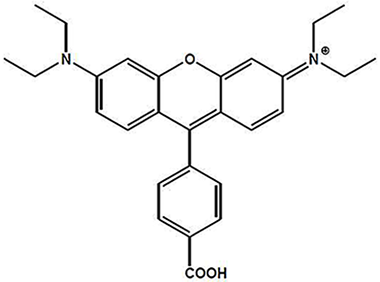
Preparation and Optimization of Fluorescent Thin Films of Rosamine-SiO2/TiO2 Composites for NO2 Sensing

The incorporation of a prototypical rosamine fluorescent dye from organic solutions into transparent and microstructured columnar TiO2 and SiO2 (MO2) thin films, prepared by evaporation at glancing angles (GAPVD), was evaluated. The aggregation of the adsorbed molecules, the infiltration efficiency and the adsorption kinetics were studied by means of UV-Vis absorption and fluorescence spectroscopies. Specifically,…

Osteoblasts Interaction with PLGA Membranes Functionalized with Titanium Film Nanolayer by PECVD. In vitro Assessment of Surface Influence on Cell Adhesion during Initial Cell to Material Interaction

New biomaterials for Guided Bone Regeneration (GBR), both resorbable and non-resorbable, are being developed to stimulate bone tissue formation. Thus, the in vitro study of cell behavior towards material surface properties turns a prerequisite to assess both biocompatibility and bioactivity of any material intended to be used for clinical purposes. For this purpose, we have…