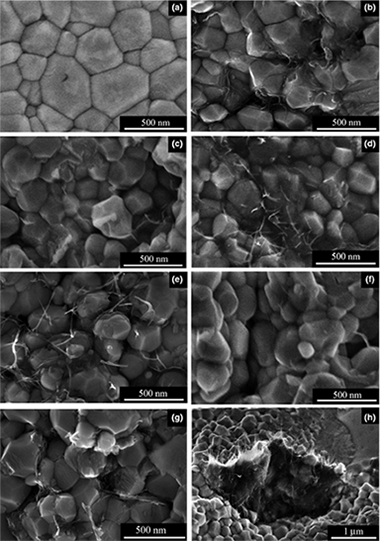
Influence of the Processing Route on the Carbon Nanotubes Dispersion and Creep Resistance of 3YTZP/SWCNTs Nanocomposites

3YTZP matrix composites containing 2.5 vol% of single-walled carbon nanotubes (SWCNT) were fabricated by Spark Plasma Sintering (SPS) at 1250°C, following different processing routines with the aim of optimizing the SWCNTs dispersion throughout the ceramic matrix. Microstructural characterization of the as-fabricated samples has been performed by means of scanning electron microscopy (SEM). The specimens have been…

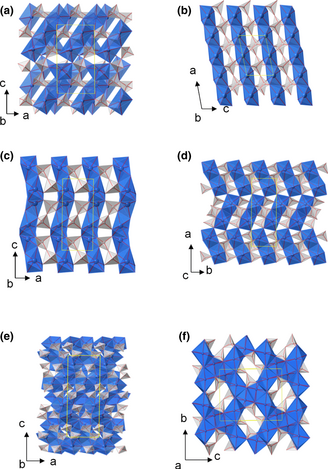
Thermal Expansion of Rare-Earth Pyrosilicates

The use of RE2Si2O7 materials as environmental barrier coatings (EBCs) and in the sintering process of advanced ceramics demands a precise knowledge of the coefficient of thermal expansion of the RE2Si2O7. High-temperature X-ray diffraction (HTXRD) patterns were collected on different RE2Si2O7 polymorphs, namely A, G, α, β, γ, and δ, to determine the changes in…

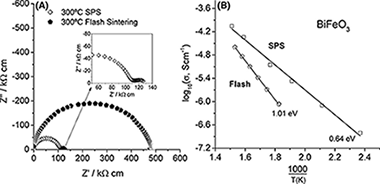
Electrical Properties of Stoichiometric BiFeO3 Prepared by Mechanosynthesis with Either Conventional or Spark Plasma Sintering

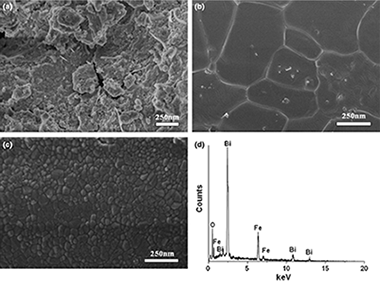
Phase-pure powders of stoichiometric BiFeO3 have been prepared by mechanosynthesis. Ceramics sintered by either conventional heating in air or spark plasma sintering (SPS) followed by oxidative anneal in air are highly insulating at room temperature with resistivity, extrapolated from the Arrhenius plots, of ~1016 Ωcm and activation energy 1.15(2) eV, comparable with those of a…

In Situ Synthesis of Ceramic Composite Materials in the Ti-B-C-N System by a Mechanically Induced Self-Sustaining Reaction

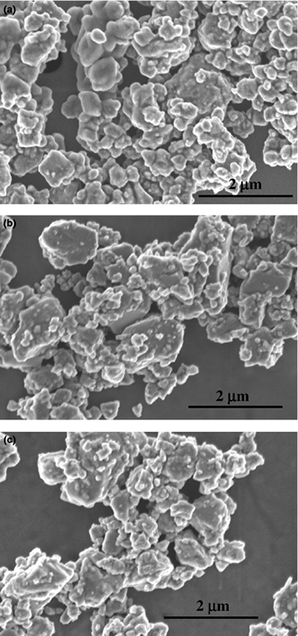
The synthesis of multicomponent ceramic materials in the titanium-diboride-carbide-nitride-carbonitride system by the mechanochemical process known as the mechanically induced self-sustaining reaction (MSR) was investigated. Ceramic composite powders containing TiB 2and TiC, TiN or TiC xN 1-xwere prepared from a blended mixture of the elements by exploiting the highly exothermic nature of the formation reactions. The…

Nanostructured Spark Plasma Sintered Ce-TZP Ceramics

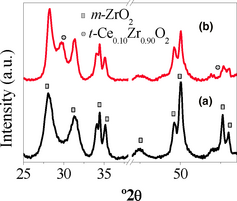
In this work, spark plasma sintering (SPS) of 10 mol% CeO 2-doped ZrO 2 nanocrystalline powders, obtained by a two-step synthesis procedure, allows the preparation of fully densified nanostructured ceramics. The CeO 2-ZrO 2 powders with particle size below 100 nm are obtained after CeO 2 deposition on hydrothermally synthesized ZrO 2 particles by the…

Stability of Rare-Earth Disilicates: Ionic Radius Effect

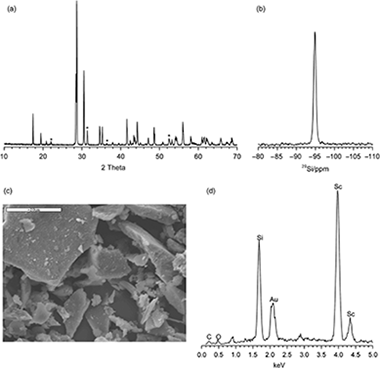
Rare-earth (RE) disilicates, of general formula RE2Si 2O7, are one of the products of the chemical reaction between RE (elements), which are actinide simulators, and the silicates used in the engineered barrier systems of deep geological repositories (DGPs). The aim of this paper is to establish the stability range of the disilicate phase as function…

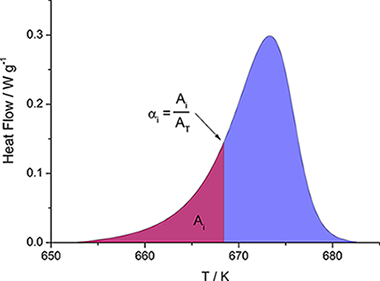
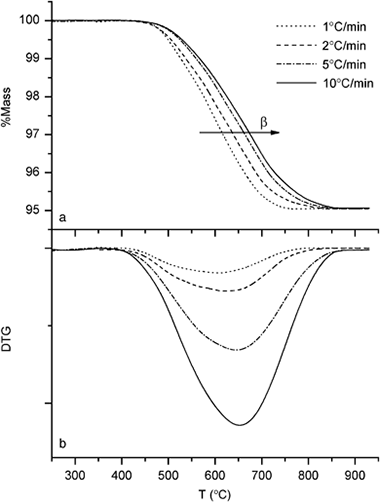
Study of the Dehydroxylation-Rehydroxylation of Pyrophyllite

Pyrophyllite is a raw material of significant interest due to its large number of applications. Most of these applications require a thermal transformation of pyrophyllite; this thermal transformation implies the release of structural OH groups and the formation of new phases. In this paper, we report on the dehydroxylation of pyrophyllite and the reversibility of…

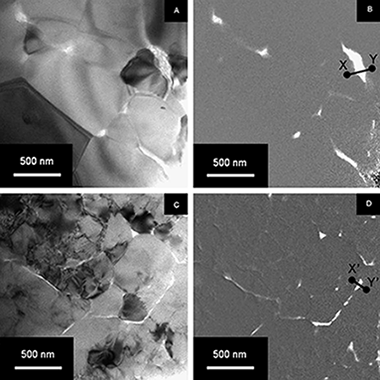
Microstructural Effects on the Creep Deformation of Alumina/Single-Wall Carbon Nanotubes Composites

The enhanced high-temperature creep resistance in alumina/single-wall carbon nanotubes (SWNTs) composites has been attributed to the unprecedented grain-boundary structure of these composites, where the SWNTs bundles segregated at the alumina grain boundaries partially impede grain-boundary sliding. In this study, the effect of SWNTs distributions at alumina grain boundaries on the creep behavior of alumina/SWNTs composites…