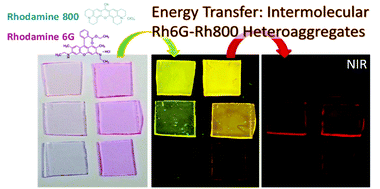
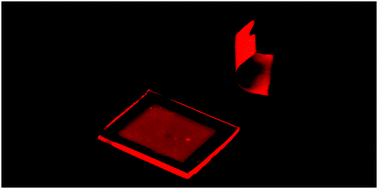
Rhodamine 6G and 800 intermolecular heteroaggregates embedded in PMMA for near-infrared wavelength shifting

The opto-electronic properties of small-molecules and functional dyes usually differ when incorporated into solid matrices with respect to their isolated form due to an aggregation phenomenon that alters their optical and fluorescent properties. These spectroscopic modifications are studied in the framework of the exciton theory of aggregates, which has been extensively applied in the literature…

Efficient third harmonic generation from FAPbBr(3) perovskite nanocrystals

The development of versatile nanostructured materials with enhanced nonlinear optical properties is relevant for integrated and energy efficient photonics. In this work, we report third harmonic generation from organic lead halide perovskite nanocrystals, and more specifically from formamidinium lead bromide nanocrystals, ncFAPbBr(3), dispersed in an optically transparent silica film. Efficient third order conversion is attained…

Localized surface plasmon effects on the photophysics of perovskite thin films embedding metal nanoparticles

Herein we provide direct experimental evidence that proves that the photophysical properties of thin methylammonium lead iodide perovskite films are significantly enhanced by localized surface plasmon resonances (SPRs). Observations are well supported by rigorous calculations that prove that improved light harvesting can be unequivocally attributed to plasmonic scattering and near field reinforcement effects around silver…

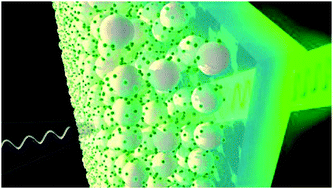
Flexible nanophosphor films doped with Mie resonators for enhanced out-coupling of the emission

Herein, we present a general method to prepare self-standing flexible photoluminescent coatings of controlled opacity for integration into light-emitting diodes (LEDs) employing cost-effective solution-processing methods. From colloidal suspensions of nano-sized phosphors, we fabricate light-emitting transparent films that can be doped with spherical scatterers, which act as Mie resonators that trigger a controlled photoluminescence enhancement, evidenced…

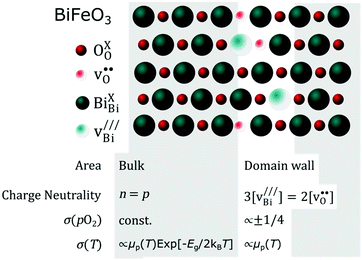
Defect chemistry and electrical properties of BiFeO3

BiFeO3 attracts considerable attention for its rich functional properties, including room temperature coexistence of magnetic order and ferroelectricity and more recently, the discovery of conduction pathways along ferroelectric domain walls. Here, insights into the defect chemistry and electrical properties of BiFeO3 are obtained by in situ measurements of electrical conductivity, sigma, and Seebeck coefficient, a,…

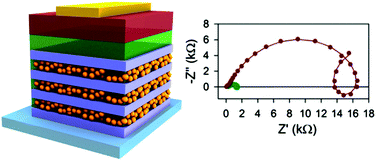
Electron injection and scaffold effects in perovskite solar cells

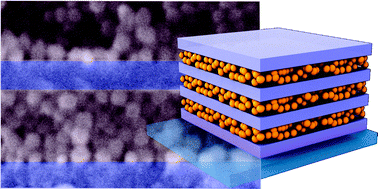
In spite of the impressive efficiencies reported for perovskite solar cells (PSCs), key aspects of their working principles, such as electron injection at the contacts or the suitability of the utilization of a specific scaffold layer, are not yet fully understood. Increasingly complex scaffolds attained by the sequential deposition of TiO2 and SiO2 mesoporous layers onto transparent…

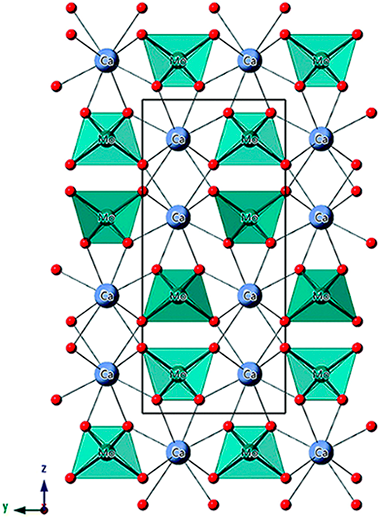
Transparent polycrystalline SrREGa3O7 melilite ceramics: potential phosphors for tuneable solid state lighting

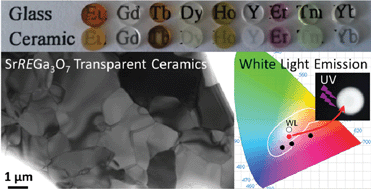
Full and congruent crystallization from glass is applied to the SrREGa3O7 melilite family (RE = Eu, Gd, Tb, Dy, Ho, Er, Tm, Yb and Y). This innovative process enables the synthesis of polycrystalline ceramics exhibiting high transparency both in the visible and near infrared regions, despite tetragonal crystal structures and micrometer scale grain sizes. Moreover, glass crystallization…